


 Francais
 Deutsch
 Italiano
Refine Your Search
-Cebu,-Philippines stock footage and images
- Showing 21547 to 21552 of 58887 results more
more Hide
Hide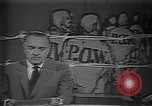
North Vietnamese soldiers patrol a village in Vietnam during the war.
American soldier after being captured by North Vietnamese in Vietnam. A news bulletin shows a news anchor as he talks about Americans in Viet Cong prison camps. Carts move away from a village. Viet Cong soldiers patrol the village. An American soldier after being captured by North Vietnamese soldiers. (Vietnam War period).
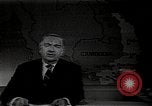
South Vietnamese soldiers patrol a village in Vietnam during the war.
Operation Phoenix in Vietnam. A news bulletin shows a news anchor with a map of south Asia in the background. South Vietnamese soldiers in a village as they question the local people. Soldiers move into a dense jungle. They catch hold of a VCI ( Viet Cong Infrastructure ) man and try to seek intelligence information from him. Soldiers torture the man and bury him in ground. (Vietnam War period).
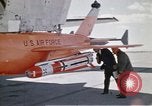
AGM 65 Maverick missile being test fired from a Ryan Firebee in the United States.
Test firing of air to ground missile AGM 65 Maverick in the United States. Men look at the AGM 65 Maverick missile under the wing of a Ryan Firebee ( BQ-34A ), an unmanned aerial vehicle. A DC-130 E aircraft takes off with a Ryan Firebee under its wing. The plane in flight. Ryan Firebee detaches and in flight. Smoke rises from the tail of the firebee as AGM 6 Maverick missile launches from the vehicle. The missile hits the range target and explosion occurs.

Lockheed DC-130 E aircraft in flight in the United States.
Aircraft in flight in the United States. Lockheed DC-130 E aircraft in flight over sea and land. An aerial view of the landscape. Planes in flight.

German submarine UB-35 leaves port on mission during World War I
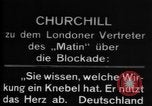
Early slates allude to failed attempts at peaceful resolution of issues between Germany and England, in World War 1, and the Kaiser's consequent decision on February 1, 1917, to intensify German submarine warfare against Britain. Slate refers to Churchill's admitted concerns expressed in the "Sunday Pictorial," about the resulting constraint on England's control of the seas around the British Isles, referring to the U-boats creating a magic girdle (Magischen Gurtel) around England, which becomes the title for the film. In the first part, Captain, Lothar von Arnauld de la Periere of the German U-boat UB-35, stands in a skiff as he is rowed out to his submarine. He exchanges salutes with his officers, as he boards the U-35, nestled against a German ship. He gives the order to cast off the lines and proceed half power in reverse. The crew scrambles to get underway. German sailors on the nearby ship watch from her railings. Sailors use a long pole to help move the submarine away from the ship. Officers and men on the ship wave as the U-boat pulls away. Views from the submarine deck as it moves on the surface of the water heading toward the Mediterranean Sea. (World War i; World War 1; WWI; WW1)
German submarine, U-35, stops and sinks the British ship, "Parkgate, "during World War I
The British armed steamer "Parkgate" is seen from the deck of the German U-35, U-Boat, under command of Captain Lothar von Arnauld de la Periereon, on April 4, 1917, during World War 1. The Parkgate has been forced to heave to in the Mediterranean Sea, between Malta and Gibraltar, following a gun battle with the U-boat. Members of the Parkgate crew come alongside the U-boat in lifeboats. An officer of the Parkgate presents the ship's papers to the U-35 Captain, on the conning tower of the U-boat. Next, the Captain of the Parkgate is seen being taken captive, and an explosives team from the U-boat rows to the Parkgate to set demolition charges that will help sink her. the U-boat crew fires their deck gun to strike the Parkgate low at the waterline. She begins to take on water and list. Her 7.6 cm gun can be seen on the stern of the Parkgate. In final stages, the Parkgate's bow tilts upwards and she sinks, with a large detonation as her boilers explode. (World War i; World War 1; WWI; WW1)
CRITICALPAST.COM: About Us | Contact Us | FAQs - How to Order | License Agreement | My Account | My Lightboxes | Shopping Cart | Advanced Search | Featured Collections | Website Terms & Conditions | Privacy Policy ©2026 CriticalPast LLC.
License Agreement |
Terms & Conditions |
Privacy Policy
©2026 CriticalPast LLC.