


 Francais
 Deutsch
 Italiano
Refine Your Search
-Cebu,-Philippines stock footage and images
- Showing 22099 to 22104 of 58986 results more
more Hide
Hide
Eddie Mathews homer lifts Milwaukee Braves over New York Yankees, game 4 of the 1957 Baseball World Series
Newsreel clip on game four of baseball's 1957 World Series between the New York Yankees and the Milwaukee Braves at County Stadium in Milwaukee. Exterior view of the stadium, surrounded by big 1950s style cars. Shots of Braves' teepee and Indian logos. Closeup of Elston Howard, the first African American man to play for the Yankees. Howard hits a three-run homer in the top of the ninth inning to tie the game. Medium shot of fans in the stands. The Yankees go ahead in the top of the tenth but Braves third baseman Eddie Mathews blasts a three-run homer in the bottom of tenth to win the game and even the series at 2-2. Mathews mobbed by jubilant teammates at home plate.

William Knowland announces his name for the Governor of California in the United States.
Election of the Governor of California. Senator William Fife Knowland announces his candidacy for the office of the Governor of California. Governor Goodwin Knight prepares for the election as a senator thus beginning a political controversy. Attorney General Edmund Brown at his office as he reads a newspaper.

Manufacturing component houses in the United states; family entertaining guests in vintage late 1950s suburban home
'Homes for Growing America' about the importance and the manufacturing of component houses in the United States. The anchor, Frank Blair, speaks about how America produces economic and better homes. Henry Addison, editor of "Architectural Age" at a desk talks about fine architectural standards of homes in the United States. Different styles of houses in America including cape cones, contemporary and regional architectural styles of houses. Various homes in the suburbs outside of American cities are shown. Sketches of various components of a component home like air conditioner, wall panels and kitchen. Jack Lowe, in Lafayette, Indiana reports about the manufacturing of the components of home. Aerial view of Lafayette Indiana, and of the huge home factory there: National Homes Corporation, Lafayette, Indiana. Views inside the National Homes Corporation pre-fabricated home factory, as workers manufacture wall panels from lumber in a factory. Window and door sections being cut out in the panels with a machine. Manufactured panels being inspected for quality. The panels being loaded onto trucks for transportation to markets. Frigidaire appliance boxes are added to the load, along with cabinets from Youngstown Kitchens. A truck loaded with components for one home leaves the factory. A sign on a truck reads 'National Homes'. Another reporter Tom Hadely reports about the fitting procedure of the component houses on site in the field. Men unload the panels. Nails being hammered to erect the wall panels of a new home in the suburbs. The panels being affixed to the pre-poured foundation and nailed. A roof being laid out. Frank Blair in a studio. Bill Moody reports about the component house of James and Margaret Bryan. Mr. And Mrs. Bryan in their well made house. A bedroom and a bathroom of the house. Vintage late 1950s styles in home and fashions are seen. Guests arrive at their house and they show them around the house. Teenage or early 20s couple on the back porch is seen dancing a Lindy Hop swing dance together. Housewife and a woman guest in the kitchen using refrigerator, built-in oven, and counter top spaces. Food being served to the guests. Guests seated in the living room. View of the separate dining room in the house. Blair talks about how component houses allow individuality in construction and in decoration of houses.
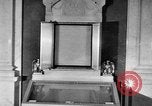
A copy of the Declaration of Independence at the Library of Congress in Washington D.C., United States.
The Library of Congress in Washington D.C., United States. A copy of the Declaration of Independence of the United States dated July 4, 1776 is displayed at the library. People in a gallery of the Library of Congress (101 Independence Ave SE, Washington, DC 20540, USA). A sign reads 'Library of Congress'.
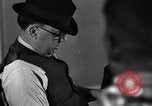
John A Lomax and Huddie William Ledbetter (Lead Belly) reenact events from 1934, in their relationship.
Musicologist John A. Lomax and LeadBelly also known as Huddie William Ledbetter, an American folk and blues musician, reenact events in their relationship in the United States. Lomax works on a typewriter as Lead Belly comes in and says he has been pardoned from prison and asks to work for Lomax for life. Lomax asks if he has a pistol.Leadbelly says no, only a knife. Lomax asks him to give it to him, which Leadbelly does. LeadBelly promises to sing for him and Lomax agrees to provide him a job.
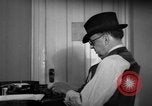
John Lomax and Lead Belly reenact events in their relationship
Reenactment of events in relationship between Huddie William Ledbetter (Lead Belly), American folk and blues musician, and Musicologist John A. Lomax.. Lomax sits at a typewriter as Lead Belly comes in and asks for a job. Lead Belly says Lomax gave a recording of his songs to the Governor, who pardoned him from prison. In thanks, he says he will work for Lomax for life. Lomax refuses because of Lead Belly having killed two men.. Lead Belly claims that he has changed and promises to sing for him. Lomax relents and provides him a job.
CRITICALPAST.COM: About Us | Contact Us | FAQs - How to Order | License Agreement | My Account | My Lightboxes | Shopping Cart | Advanced Search | Featured Collections | Website Terms & Conditions | Privacy Policy ©2026 CriticalPast LLC.
License Agreement |
Terms & Conditions |
Privacy Policy
©2026 CriticalPast LLC.