


 Francais
 Deutsch
 Italiano
Refine Your Search
-Cebu,-Philippines stock footage and images
- Showing 24139 to 24144 of 58986 results more
more Hide
Hide
The Seabees construct an airstrip at Munda Point in the Solomon Islands during World War II. Daily progress seen over 5 days.
Activities of the Seabees at Munda Point in the Solomon Islands during World War 2. Views of utter destruction from the U.S bombardment of Munda. Destroyed buildings, facilities, Japanese airplanes and dead Japanese soldiers. Leafless trees and damaged wooded area. Seabees commence cleanup and construction. They cremate and bury the dead Japanese. Trucks and bulldozers move over muddy terrain to level the land to construct an airstrip. Views of the steady progress of construction over the period from August 8 to August 12, 1943. The airstrip is completed within 5 days. On the 5th day a Navy F4F aircraft lands on the coral runway. . The pilot in the cockpit smiles. The Spirit of 76 is painted on his airplane. Views of other F4Fs landing on the coral runway.
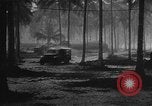
Seabees work to control malaria in the Solomon Islands during World War II.
Activities of the U.S. Navy Seabees in the Solomon Islands during World War II. A jeep struggles through flooded muddy area in Solomon islands. Palm trees all around. A quonset hut in flooded waters. A man wades through thick mud over what had been a U.S. constructed road. A man suffering from malaria is examined. Malaria patients are cared for. A formal ceremony to honor U.S. troops who died from malaria. A soldier salutes and honor guard with rifles stands at attention. Following instructions from the Medical Command, Seabees commence battle against anopheles mosquitoes (blowup of one is shown). Seabees spray with various equipment and install water filtering systems. Scenes show success of the anti-mosquito measures. Numerous explosions are seen as Seabees use explosives to clear jungle for construction. A Douglas SBD Dauntless aircraft takes off (machine gun in rear cockpit).Seabees bulldoze Palm trees to clear jungle and build numerous quonset huts to house U.S. forces.

Allied pre-invasion base and activities in Scotland,1941. Allies in Algeria preparing for invasion of Sicily,1943
Activities of the Seabees in Scotland in 1941 and in Algeria in 1943, during World War II. News headlines in 1943 read : ' Italy is out of war' and '17 more Italian towns taken'. An animated map. The Clyde valley in Scotland showing a base built by the U.S. Navy Seabees, in 1941. Numerous quonset huts and vehicles are seen. View of the River Clyde, where 2400 feet of oceangoing dock are being assembled. A ship anchored at a harbor displaying U.S. flag. Allied troops board a landing ship with their belongings. An animated map tracing travel of Allied invasion forces from Scotland to Oran, Algeria, where Seabees are seen testing a floating causway that would be used for invasion of Sicily. Scuttled axis ships and other obstacles and damage that Seabees must repair in occupied ports. Allied ships and troops proceeding for invasion of Sicily. Allied warships bombarding Sicilian coast.
Allied forces amphibious landing in Sicily in 1943. German Stuka aircraft dive bomb and destroy an allied LST.
Activities of the Seabees during Allied invasion of Sicily, in World War II. Seabees lash sections of floating causeway to LST. Allied troops landing on the beach of Sicily shores between Licata and Gela. Seabees install floating causeway from LST to the beach. A bulldozer goes from the LST to the beach over the causeway. "Enemy" Italian troops volunteer to help with the unloading. German stuka dive bombers attack the allied beachhead and destroy an LST. Sherman tanks reach the beachhead from other LSTs using the floating causeways. Vehicles, artillery, and troops move ashore over the causeways.
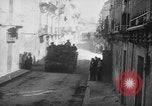
Allies, including U.S. Fifth Army, encounter heavy enemy resistance in amphibious assault at Salerno, Italy, in World War 2
Allied invasion at Salerno, Italy, during 2nd World War. Scenes of U.S. Sherman tanks, military vehicles and troops, moving easily through Sicily. Animated map depicts allied invasion routes from Bizerte, North Africa, to two points on opposite sides of Italy mainland. Convoys emerge from smoke screens in bay of Salerno, Italy. Allied warship creating heavy black smoke screen. Decks of LSTs crammed with trooops and vehicles. Allied warships bombard Salerno coastline. Commandos, Rangers and Seabees, in first assault wave are targets of German guns and dive bombers. Pontoon boat dropped from LST, with 35 Seabees aboard, strikes a mine, and is destroyed, setting off conflagration on the LST. Other LSTs (Landing Ship Tank) discharging vehicles to the beach over floating causeways, under enemy fire. Destroyed U.S. Sherman tanks, vehicles and a U.S. P-40 aircraft , litter the beach. A Seabee uses semaphore flags to direct an LST to beach area. Seabees build shelters for war materiel and dressing stations where allied wounded are treated. Seabees continue to unload supplies to beachhead. Brief view of Lieutenant General Mark Clark, 5th Army commander, on the beachhead. Allied casualties being tended. Stretcher bearers carry wounded. Allied troops advancing on roads in Italy. Admiral Moreell, chief of the U.S. Navy's Bureau of Yards and Docks, concludes narration of the Seabee documentary, from his office in Washington, DC
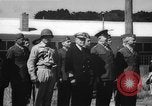
Admiral William Frederick Halsey Jr., army and navy officers reviews troops in North Africa during World War II.
William Frederick Halsey Jr., U.S. Naval officer reviews troops in North Africa during the World War II. Admiral Halsey along with army and navy officers watch tanks roll by. Views of tanks rolling by. Admiral Halsey, army and navy officers stand and pose for camera. Enlisted men at attention to . Admiral Halsey and army and navy officers salute. They review the tanks. Mobile equipment roll by. Soldiers laden jeeps ride in review towards Admiral Halsey. Views of mobile equipment in review. Admiral Halsey standing in front of a cabin plane and makes a speech. He gets into plane with other naval officer. Plane taxis on runway. Plane takes off.
CRITICALPAST.COM: About Us | Contact Us | FAQs - How to Order | License Agreement | My Account | My Lightboxes | Shopping Cart | Advanced Search | Featured Collections | Website Terms & Conditions | Privacy Policy ©2026 CriticalPast LLC.
License Agreement |
Terms & Conditions |
Privacy Policy
©2026 CriticalPast LLC.