


 Francais
 Deutsch
 Italiano
Refine Your Search
-Cebu,-Philippines stock footage and images
- Showing 2515 to 2520 of 58885 results more
more Hide
Hide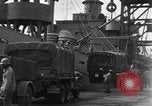
Floating crane lowers truck onto ship at Harbor in France.
Floating crane lowers truck onto ship at Harbor in France. United States soldiers on deck of ship. (World War II period).

Destroyer Escort USS Frament, DE 677, is built and launched. Destroyer Escorts fitted out, readied for shakedown cruise
U.S. Destroyer Escort USS Brennan, DE-13,underway. U.S. navy crew aboard the ship. View at shipbuilding area of Bethlehem Steel in Quincy, Massachusetts. Keel is laid and shipbuilders busy on day 60 of construction of DE-677, the USS Frament. Scenes of construction. Welding steel plate. DE-677 is christened USS Frament and launched on June 28, 1943. Destroyer Escorts at pier, being fitted out. New ship's crew assembled on pier and boards for shakedown cruise. Supplies and munitions loaded on board the ship, including ammunition, depth charges, and torpedoes ("tin fish").
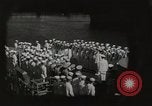
Shakedown cruise of Destroyer Escort, USS Frament (DE-677) during World War II
Destroyer Escort,USS Frament (DE 677) is commissioned during World War 2. Lieutenant Commander S. T. McAdam, Jr., in command, reads his orders to crew assembled on deck. Tug boats move the ship away from the pier. DE-677 underway in shakedown cruise.Officers review daily plans for shakedown cruise. General Quarters alarm is sounded and crew mans battle stations. Gun crews at 1.1 inch, 40mm, and 3 inch guns. Crew members positioned to launch depth charges ("ash cans") , torpedoes, and to fire "hedge hogs" (clusters of bombs). Navy aircraft tows a canvas sleeve target for crew to practice fire against. Antiaircraft gun crews shoot down target.
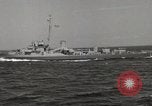
Shakedown cruise of Destroyer Escort USS Frament (DE-677). Practice firing against surface target.
Crew aboard U.S. Destroyer Escort USS Frament (DE-677), load and practice firing at a floating target. Crew fires deck guns, launches torpedoes and depth charges, and fires "hedge hog" bomb clusters. Shells hit water surface and explode. Aerial view of large explosions in water. (World War II period).
C-5 Aircraft taxis on runway. General description of C-5 with emphasis on its 28 wheel landing gear
C-5 Aircraft taxis to come to the runway. Narrator describes features of the C-5. Pilot and Copilot seated inside cockpit. 'Beware of Blast' written on side of the C-5 Aircraft. Airman explains about the flexibility and 28 wheels of the aircraft with the help of a model. Adapting to crosswind landing. Forward, aft, and level "kneeling" of the aircraft is shown. View of control panels inside the aircraft.
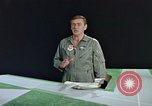
Pilot explains safe taxiing of C-5, emphasizing its extreme size and potential for damage from obstacles and foreign objects
Pilot explains safe taxiiing of the C-5, with the help of a model. He emphasizes the need to care due to the sheer size of the overall aircraft, from nose to very high tail section and wing tip to wing tip, where outboard engines can be operating only 9 feet above areas outside of runway where foreign object damage could occur.
CRITICALPAST.COM: About Us | Contact Us | FAQs - How to Order | License Agreement | My Account | My Lightboxes | Shopping Cart | Advanced Search | Featured Collections | Website Terms & Conditions | Privacy Policy ©2026 CriticalPast LLC.
License Agreement |
Terms & Conditions |
Privacy Policy
©2026 CriticalPast LLC.