


 Francais
 Deutsch
 Italiano

Refine Your Search
-Cebu,-Philippines stock footage and images
- Showing 25609 to 25614 of 58986 results more
 Hide
U.S. B-24 aircraft bomb targets in Japanese occupied Hanoi and Haipong, Indochina, during World War 2
U.S. Army Air Force B-24s bombing targets in Japanese-held areas of Indochina, during the Second World War. View of U.S. Army Air Force B-24 from waist gun position of another B-24. View from B-24 (below 10,000 feet) over an airfield. Waist gunner poses, without oxygen mask, at his machine gun (not firing). View from 17,500 feet as B-24s bomb a supply depot in Hanoi. Clouds of smoke rise from numerous bomb explosions. B-24s on mission to bomb Haiphong, Indochina. Aerial view of B-24 named "80 Days," with two dice (a Five and a Three) pictured under its name. Bombs falling from B-24s as they bomb smelting and foundry plants from 17,000 feet over port city of Haiphong. Smoke rising from targets.
U.S. reconstructs captured Japanese airfield at Munda Point, New Georgia Island, in World War II.
Wreckage and debris on Munda Point airfield, New Georgia Island, after its capture by U.S. forces during World War 2. Dead Japanese soldiers. Destroyed aircraft on island as result of U.S. bombing. Reconstruction workers clear and enlarge runway and operations tower as Americans improve and expand the airbase for their own operations. U.S. flag raised on pole. Seen are the first aircraft to land at Munda Point (on August 14, 1943). The first is a Royal New Zealand Air Force P-40 with letter K and white stripe on fuselage and a white tail. It is followed by a J2F Duck carrying U.S.Marine Brigadier General Francis P. Mulcahy to set up his new headquarters at Munda Point.
U.S. supply and ammunition base in Munda, New Georgia Island in World War II.
Wreckage and debris in Munda, New Georgia Island, during World War 2. Workers clear field at Munda Point. Air Force construction team clear area using power shovel and road graders. Supply and ammunition base of the island. TBF planes taxi on runway. C-47 crew unload bomb carriers. Loaded bomb carriers move out towards flight line. Control Tower operators look at a P-39. It taxis and takes off. B-25 (Mitchell Bomber) makes forced belly landing.
B-24s of U.S. 5th Bombardment Group operating from Munda Point airfield, New Georgia Island, in World War II.
A B-24 Liberator bomber with nose art painted name "Laden Maiden,"of the USAAF 5th Bombardment Group, sits with engines running,on Munda Point airfield, New Georgia Island, preparing to take off to bomb Japanese shipping near Truk, during World War 2. Broader view shows two squadrons of B-24s preparing for the mission as a rain storm sweeps the island. The aircraft begin taxiing for takeoff. One with nose art name "Tim-ber," shows 25 bombs, for missions, painted on its fuselage. One departing B-24 is seen to use a long takeoff run. Narrator describes difficulties encountered by one B-24 that had to ditch during the mission. Sequence shifts to post-mission scenes the day after the planes returned to Munda.Injured crew members from the ditched B-24, who had been rescued by a Navy PBY, are being transferred to a C-47 aircraft for evacuation to a medical facility. A B-24 is seen taking off on a new mission to bomb Japanese Naval base at Rabaul. View of control tower with several B-24s in formation overhead.
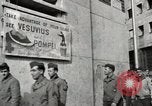
American soldiers on leave in Italy, board a train to visit Pompeii and Mt. Vesuvius
United States soldiers visit Italy. Soldiers pass and read a poster that says 'Take advantage of your Leave', 'See Vesuvius and Pompei', 'American Red Cross Tour Service'. View of Mount Vesuvius. American soldiers board a train identified as 'GI Special to Pompei.' View of soldiers inside the train. View of soldiers by the train holding up the sign reading 'GI Special to Pompei.' (Note: Pompeii is misspelled in the signs.) (World War II period).
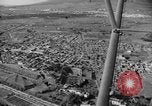
Aerial views of the ancient city of Pompeii
Views of the city of Pompeii taken from a military light plane flying overhead. Buildings in Pompeii.
CRITICALPAST.COM: About Us | Contact Us | FAQs - How to Order | License Agreement | My Account | My Lightboxes | Shopping Cart | Advanced Search | Featured Collections | Website Terms & Conditions | Privacy Policy ©2026 CriticalPast LLC.
License Agreement |
Terms & Conditions |
Privacy Policy
©2026 CriticalPast LLC.