


 Francais
 Deutsch
 Italiano

Refine Your Search
-Cebu,-Philippines stock footage and images
- Showing 25651 to 25656 of 58986 results more
 Hide

Ruins and rubble in Nagasaki, Osaka and Kure due to atomic bomb and conventional aerial bombing attacks over Japan.
Bomb damaged cities of Japan. Ruins in Nagasaki, attacked with an atomic bomb three days after Hiroshima. City of Osaka destroyed by conventional aerial bombardment. Fleet of ships in water at Kure. (World War II period).
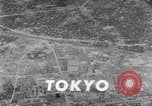
Ruins in the city, and free U.S. military prisoners leave for home, in Tokyo, Japan (WW2)
Bomb damaged cities of Japan during World War II. Aerial view of Tokyo. People in the damaged city of Tokyo. Ruins on ground. Damaged buildings. American planes fly over the Japanese Imperial Palace. People bow and pray in the garden. Group of happy, freed U.S. prisoners at the liberated Ofuna Japanese prisoner of war camp. Japanese prison guards bow as former prisoners leave in truck.
President Harry Truman attends baseball game between St. Louis Browns and Washington Senators in September 1945
U.S. President Harry Truman arrives at Washington's Griffith Stadium in a car flanked by several Secret Service agents. Announcer notes this is the first time a president has attended a baseball game since the start of World War Two. President Truman and first lady Bess Truman take seats. Truman signs an autograph. Truman, a lefty, receives baseball from Washington Senators' manager Ossie Bluege and throws out the ceremonial first pitch. Also in attendance is the commissioner of baseball, Albert "Happy" Chandler. Game begins as visiting St. Louis Browns take the field. The Senators' second baseman George Myatt gets a hit to advance George Case. Washington star Cecil Travis (playing in his very first game since returning from 3+ years military service) makes an infield out but drives in the Senators' first run. Washington goes on to win the game 4-1.
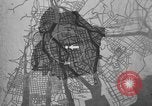
Damaged Hiroshima Castle, City Hall, and Yorozuya Bridge after atomic bomb attack during World War 2 in Hiroshima Japan.
Damage in Hiroshima, Japan after the atomic bomb attack in August 1945. A map shows the explosion range with in 1/6 miles. Buildings in Hiroshima after the atomic bomb strike. The wooden structure of Hiroshima Castle is demolished due to bombing. Less damaged Hiroshima City Hall. A soldier inspects the floor and railing of Yorozuya Bridge located 0.6 miles from the explosion zero point. Burn shadow marks from posts on the bridge indicate direction of the explosion. The soldier stands on a shadow area created by the stride of a pedestrian who had been crossing the bridge at the time of the explosion. The soldier marks in chalk the shoes prints from the shadow of the person who had been crossing the bridge at the moment of the blast.
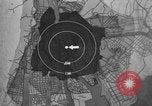
Damaged sides of a bridge, buildings and a hospital in Hiroshima after atomic bomb attack in Japan.
Survey of damage in Hiroshima, Japan after the atomic bomb attack in World War 2. Damage in the range of 1 mile from the center. Damaged side of a steel bridge on the Ota River. No damage signs visible on the other side of the bridge. Damaged Red Cross hospital building. Damage on the north east side of the hospital. Less damaged north west side of the building. Windows of the building blown on the south west side and the south east side. Burnt chairs on the window side. Interior partitions of the hospital not damaged. Ruins on the land. On the south side of the city only few missionary walls remain. A small industrial smoke stack stand undamaged. Damaged huts and houses.
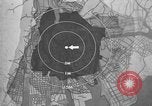
Damage in the range of 1 mile to 6 miles from impact in Hiroshima, following atomic bomb attack in Japan.
Damage in Hiroshima, Japan after the atomic bomb attack in August 1945. Views within 1 mile to 1.5 miles from center and 1.5 to 2 and 2 to 6 miles. Damaged wooden buildings in the 1.5 mile range. Damaged Hirosaki railway station. Damaged buildings. A steel beam twisted out of shape and a center wall stand undamaged. Building of a school with its north wall specially damaged. The school building is not damaged. A bent high school wall. Shattered glasses of a chapel on a hill 4 miles away from the center. (World War II period).
CRITICALPAST.COM: About Us | Contact Us | FAQs - How to Order | License Agreement | My Account | My Lightboxes | Shopping Cart | Advanced Search | Featured Collections | Website Terms & Conditions | Privacy Policy ©2026 CriticalPast LLC.
License Agreement |
Terms & Conditions |
Privacy Policy
©2026 CriticalPast LLC.