


 Francais
 Deutsch
 Italiano

Refine Your Search
-Cebu,-Philippines stock footage and images
- Showing 25909 to 25914 of 58986 results more
 Hide
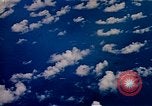
Operations Crossroads atomic test "BAKER" in Marshall Islands
Nuclear weapons test "BAKER" in Bikini Lagoon, on July 25, 1946. Ships anchored in the lagoon are seen from aircraft flying above. The nuclear device with yield of 23 thousand tons of TNT equivalent, is detonated from 90 feet below sea level. The screen goes white from the light of the resulting fireball. As that light dissipates, a huge wall of water is seen rising rapidly to create a mountainous ball of water, from which a mushroom cloud starts billowing upwards. A huge column of water is seen falling out of the mass, as the mushroom cloud continues to rise and spread.
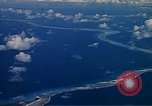
Operations Crossroads, nuclear test "Able" at Bikini Atoll, Marshall Islands, in the Pacific Ocean.
Operation Crossroads nuclear bomb test "Able" at Bikini Atoll, Marshall Islands in the Pacific Ocean. Aerial view of atoll. White light spreads due to blast. Shock waves in the lagoon. Ships grouped together at anchor. Blast goes off amid ships as it throws out a huge shock wave in all directions. Mushroom cloud forms immediately over the ships.

U.S. Nuclear test "Cherokee" in Operation Redwing, off Namu Island, Bikini Atoll, Marshall Islands.
First air drop test of a thermonuclear weapon. The Hydrogen bomb nuclear weapon was dropped from a USAF B-52 bomber (not seen) that flew from Fred Island, Eniwetak (sometimes spelled Enewetak or Eniewetok), on May 21, 1956. View appears to be from an aircraft flying above altocumulus clouds, below higher stratiform layers. The film begins with a complete whiteout from the initial fireball. As that subsides, local stratiform clouds take on a rosy hue and the center fireball is seen rising above them. As the fireball rises, it takes on a somewhat hemispherical shape, flat on the bottom, from which a straight stem-like column extends toward the ground. The light of the explosion slowly fades and complete darkness ensues. Official accounts state that the intended ground zero was directly over Namu Island, but the flight crew mistook an observation facility on a different island for their targeting beacon with the result that the weapon delivery was grossly in error. The bomb detonated some 4 miles off target over the ocean northeast of Namu. As a result essentially all of the weapons effects data was lost. ( Note: According to ancillary reports, the delivery error resulted in blast overpressures and thermal effects on the 6 structural response targets between Iroij and Namu Islands, greatly exceeding specifications for any use in scientific military modeling of high yield aerial detonations. Plans for graded damages analysis failed when all the structures collapsed. Effects cameras also failed from the intense fireball heat.)
Operation Redwing Nuclear Test: Zuni
United States conducts nuclear test shot "Zuni" as part of Operation Redwing nuclear tests at the Pacific Proving Grounds. Bright flash appears due to the Zuni shot bomb blast, the first ever of a three-stage thermonuclear design. Huge fireball boils upward into the sky. Spots of fire in sky as darkness spreads. Zuni was a 3.5 Megaton Hydrogen bomb with 85% of its yield from fusion. This was a companion test to the "dirty" (87% fission) Tewa shot using the same bomb design.

United States Nuclear Test Operation Ivy: King test
United States conducts nuclear tests for Operation King at Enewetak Atoll (sometimes spelled Eniwetok or Eniewetok) in the Marshall Islands. Footage of King test, which involved a prototype of a Mk 18 Super Oralloy bomb ("SOB") dropped by a B-36H bomber. Broken clouds in sky. Whiteness of blast from atomic bomb obscures the area. Shock wave spreads over the water, the mushroom cloud with its thin trunk extends up from the water, top of the cloud becomes very white. Mushroom cloud churns up further skyward.
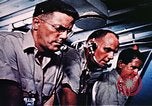
Detonation of liquid thermonuclear device MIKE, the first hydrogen bomb, at Enewetak Atoll, Marshall Islands.
Full-scale thermonuclear test of ultracold liquid deuterium, codenamed Ivy MIKE at Enewetak Atoll in the Pacific Proving Ground in the Marshall Islands (sometimes spelled Eniwetok or Eniewetok). (Left to right) Chief engineering and firing commander, Stan Burris -- later the leader of the Strategic Ballistic Missile development, including Polaris and later editions; retired as CEO of Rockwell Aerospace -- military firing and security commander, Colonel Richard Lunger, and ultracold refrigeration engineering commander for thermonuclear liquid fuel state monitoring, Robert Gibney. The intense nuclear radiation ignited the atmosphere around the device, creating a fireball 4.2 miles across. A remote firing control was created, using a televison tower beam signal to safely trigger the detonation from the USS Estes, approximately 35 miles south/southeast of the detonation. White hot device remnant specks are visible throughout the surface of the fireball. Shockwave from Operation Ivy Mike explosion is seen spreading across the water, then a white mushroom cloud spreading above. View of crew on ship deck observing blast. Device yield: 10.4 megatons.
CRITICALPAST.COM: About Us | Contact Us | FAQs - How to Order | License Agreement | My Account | My Lightboxes | Shopping Cart | Advanced Search | Featured Collections | Website Terms & Conditions | Privacy Policy ©2026 CriticalPast LLC.
License Agreement |
Terms & Conditions |
Privacy Policy
©2026 CriticalPast LLC.