


 Francais
 Deutsch
 Italiano

Refine Your Search
-Cebu,-Philippines stock footage and images
- Showing 26323 to 26328 of 58986 results more
 Hide

An instructor lectures the students on the operation of a generator at a psychological warfare program in Saigon, Vietnam.
Psychological warfare (Psy War) program in Saigon, Vietnam. Students seated on benches in a classroom. An instructor gives them a lecture on the operation of a generator. The generator is kept in the center and the students stand around it. The instructor explains to them the operation. He points out at different parts and students make notes. They draw a sketch in their notebook and look at the functioning of the generator.

An instructor lectures the students on the preparation of posters and leaflets at a psychological warfare program in Vietnam.
Psychological warfare (Psy War) program in Saigon, Vietnam. Students seated in a classroom. An instructor gives them a lecture on the preparation of posters and leaflets. Posters on a board. Students at drawing boards and use improvised silk screen printer. A student paints letter 'A' on a sheet. Men make Christmas cards.

A man at a silk screen printer makes Christmas cards during a psychological warfare program in Saigon, Vietnam.
Psychological warfare (Psy War) program in Saigon, Vietnam. Exterior of a school building. A Vietnamese flag over the entrance. Students ride bicycles. A man gets off a car and enters the building. A man at a drawing board. A man at a silk screen printer makes Christmas cards.

Sailors in a submarine stand off a shore and they load and fire guns in the Pacific Ocean.
United States task force in the Pacific Ocean. Sailors in a submarine stand off a shore. They work with guns and shells. Sailors work at a center hoist. They load and fire guns. Shells kept in a row. Measurement gauges and dials. A sailor looks through a periscope. A sailor at the wheels with headphones. A radioman reads a gauge. (World War II period).
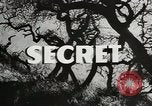
OSS Morale Operations led by American in Burma for psychological warfare to demoralize the Japanese troops.
OSS (Office of Strategic Services) film on Project Gold Dust gives details of the psychological warfare techniques used by OSS Morale Operations (MO) Unit and Kachin guerrillas in Burma during World War II to demoralize Japanese troops obstructing linkage to Burma and the Ledo Road. Kachin guerrillas including North Burmese killer tribesmen prepare for an operation. They are recruited, trained and led by an American officer. MO Detachment 101 troops. Burmese load shells, guns and artillery. 1st Field team of MO OSS personnel joins Detachment 101. An aircraft lands. The guerrillas board the aircraft and are transported all over Burma. Development of MO. A message from an American officer commanding a company of Kachin comes for Major Boldt. The message is dispatched to the Major and a distribution officer delivers it to the chief. A Production and Intelligence officer works. They discuss strategy about MO material best suited to reach the Japanese. The MO intelligence officer contacts Detachment 101 research and analysis branch. They discuss the accuracy and details of the operation. They go to interrogate a Japanese 18th Division soldier held prisoner. MO and the distribution officer discuss the strategy. Radio Major Haan consults Kachin. A detailed report is prepared and given to a pilot for dispatch. The message is given to Major Boldt. The MO staff at work. A lieutenant interrogates Japanese prisoners and gains their cooperation. The MO discusses Project Gold Dust. A forged surrender order to be given to Japanese. Production of the leaflets of forged order. Press prints the leaflets in the mobile production van. The leaflets are cut, dispatched and packaged. Burmese plant the forged order in a town. A lieutenant reads a report on the spread rumor. He talks to an Anglo Burmese woman. The rumor is spread in the town. Burma Jungle 101 patrol distributes the leaflets. A carrier pigeon for Major Boldt is sent. An aircraft arrives to pick up the prisoners who have surrendered.

The reactions of a cat under the influence of P-Methylphenethylamine at Aero Medical Laboratory in the United States.
Effect of mescaline analogues on the behavior of cats. A laboratory technician puts a cat in an observation case. A test conducted at Aero Medical Laboratory in the United States shows the reaction of the cat when annoyed by the laboratory technician while under the influence of P-Methylphenethylamine. The cat's reflex actions slow after the medicine.
CRITICALPAST.COM: About Us | Contact Us | FAQs - How to Order | License Agreement | My Account | My Lightboxes | Shopping Cart | Advanced Search | Featured Collections | Website Terms & Conditions | Privacy Policy ©2026 CriticalPast LLC.
License Agreement |
Terms & Conditions |
Privacy Policy
©2026 CriticalPast LLC.