


 Francais
 Deutsch
 Italiano

Refine Your Search
-Cebu,-Philippines stock footage and images
- Showing 35077 to 35082 of 58987 results more
 Hide
Color Sound
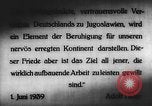
Tripartite (Axis) Pact signed between Germany, Italy and Japan; Nazi German invasion attacks in Yugoslavia, Russia, England
Nazi crimes against the nations of the world during World War II. View of the Peace Treaty between Germany and Yugoslavia which was signed on 1st June, 1939. The treaty breached on 6th April 1941, Germany launched a massive attack on Yugoslavia. German troops attack and advance. A map shows that most of the Europe was in the hands of Germany by 1941. View of September 27, 1940 signing ceremonies in Berlin of the Tripartite (Axis) Pact between Nazi Germany, Fascist Italy and Imperial Japan. Hitler and axis leaders shake hands and pose at pact signing table. Joachim von Ribbentrop signing the Axis Pact. Scene of German tank treads close-up rolling over battlefield and wider view of German armor and troops during Operation Barbarossa in June 1941, invading Russia, in violation of their non-aggression pact. German forces enter Russian territory. German Army forces setup and fire artillery at Russia. German rocket launchers fire rockets at Russian targets. Ground and aerial views of formations of German Luftwaffe aircraft on bombing runs. Between August-September 1941, Luftwaffe conducts blitzkrieg raids (blitz) on Great Britain. View of British landmarks like St Paul's Cathedral dome and Tower Bridge. Aerial views as Luftwaffe fighter aircraft roll and dive toward targets. British spotlights and search lights on the ground sweeping and catching German aircraft in their light beams. British anti aircraft batteries open fire on German planes over England. Alternating views of German plane point of view bombing England with bright flashes of light and explosions on the ground, and British anti-aircraft fire filling the air. Ground views in England, United Kingdom of buildings on fire from London blitz bombing, and British fire fighters moving to deploy fire hoses and extinguish fires. Flaming buildings collapse from bombs and fire. Whole blocks of buildings on fire. Scene change to December 7, 1941 bombing of Pearl Harbor by the Japanese. U.S. Navy ships bombed and on fire in Pearl Harbor.
Roman Rudenko presents counts against convicted Nazi criminals during Nuremberg Trials; flashback scenes during war.
Portion of the Nuremberg Trials held at the Palace of Justice in Nuremberg, Germany. Flashback scenes to a variety of Nazi crimes against humanity during World War II. Chief prosecutor from Russia, Roman A Rudenko, presents Counts 3 and 4 against the convicted Nazi criminals; charging commitment of war crimes in Germany and countries which Germany occupied; including abuse, starvation, and execution of prisoners of war. Faces of convicts in the courtroom are shown, including Hermann Goering, Rudolf Hess (or Heß), Joachim von Ribbentrop, Wilhelm Keitel, Karl Donitz, Erich Raeder, Baldur von Schirach and Fritz Sauckel. Flashback scenes shows German soldiers serving on screening teams, searching and separating eastern front prisoners of war. Group of Russian soldier prisoners being force run marched, following behind a German tank beside a prison camp. Aerial view through German bomber window of large numbers of Russian soldier prisoners assembled. Ground level views of overcrowded prison grounds filled with prisoners. German General Erwin von Lahousen on the witness stand during Nuremberg trials giving testimony about his attendance at conferences where crimes against populations were plotted. View of Wilhelm Canaris, Goering and Hitler in meeting room in discussion with German officers. Next scene shows a farmhouse and farm buildings. A car is parked beside a farm building with metal pipes extending from the automobile exhaust system, through the exterior wall of the farm building (to gas occupants with carbon monoxide). Starved, emaciated Polish prisoners from Nazi concentration camps arrive riding on the back of a horse cart. German staff in white coats made to look like medical staff assist naked and emaciated men and child prisoners climbing down from the horse cart. They put robes over some holocaust victims. They lead them to the door of the farm building. Next scene shows atrocity evidence as the car is seen running poison gas into the building. Scene of homes in a village burning in flames as German soldiers watch.
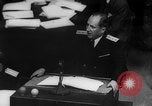
View of the Nazi Concentration Camps and its victims, and other atrocities committed by Nazi forces in World War 2.
Images and testimony related to the Nuremberg Trials held at the Palace of Justice in Nuremberg, Germany in October 1946. Flashbacks of a variety of Nazi crimes against humanity during the years of World War II. Reference to testimony of Kenaris and Hans Frank in describing Nazi policies and methods for exterminating Poles and others. Pictures recording the implementation and results of Nazi policies; atrocities and murder of victims in Ouradour Sur Glane in France, in Bande in Belgium, in the Catacombe of San Callisto in Italy and in Czechoslovakia. Nazi German soldiers seen leveling and destroying the town of Lidice in Czechoslovakia in 1942, after massacre of many residents, in retaliation for the assassination of SS Reich Protector Reinhard Heydrich. Corpses of the victims of the Nazi concentration camps, including Auschwitz, in 1945. Bones of humans in crematory ovens. Cramped starved women camp victims inside barracks. Stacks of luggage and suitcases of victims at a concentration camp, along with locks of hair, stacks of toothbrushes. Shaving cream brushes, shoes, clothing, and finally, piles of bones of camp victims. Testimony of Rudolf Franz Ferdinand Höss (sometimes spelled Höß or Hoess or Hess) describes concentration camps at Auschwitz in Poland. As scenes of victims in hospitals are shown, testimony of Rudolf Hoess is read, describing medical experiments include lowering the body temperature, injecting the body with poisons and infectious diseases and subjecting the body to high altitude pressure chambers. Shows pile of mutilated corpses.The "Arbeit Macht Frei" sign over the camp entrance of Auschwitz. Scenes of dead victims of Nazi brutality in the concentration camps.
Nuremberg Trials reveal the Nazi enslavement of people in occupied countries and atrocities against Jewish people during World War II.
Opening scene, in 1946, is the courtroom where Nazi officials are being tried for war crimes at the Palace of Justice in Nuremberg, Germany, where the procecutor has completed charges 3 and 4, concluding the indictment against them. Sitting in first row of the dock are Hermann Göring (or Goering) (hidden behind soldier), Rudolf Hess, Joachim Von Ribbentrop, and William Keitel. The camera focuses on Fritz Sauckel, as he is identified as the Nazi slave labor chief. Supporting documents are shown. Film footage scenes of slave workers being rounded up and working on shipping docks, emptying rail cars, repairing railroads, and digging in open pit mines, under Nazi military guard. Next are shown views of Hermann Goering walking in an occupied village in 1942, overseeing the confiscation of all of the livestock. German soldiers releasing and rounding-up cattle, sheep, and pigs that had belonged to citizens of an occupied village. Dr. Wilhelm Frick is shown. He is charged with eliminating elderly, insane, or uncurable sick Germans, considered "Useless Eaters" and subject to Nazi euthanasia programs. Several frail and sick or mentally disabled persons are shown. Crosses are shown marking burial places of these persons outside the institutions in which they died. Next, several German Jewish men in civilian clothes are seen rushing to a work site where they are put to work as slave labor digging with shovels under direction of a Nazi military officer. Scene shifts to Nazi Storm Troopers (Sturmabteilung) harrassing German Jewish shopkeepers, writing anti Jewish messages on the windows, encouraging boycott, and preventing their businesses from operating. More views of Nazi Storm Troopers causing trouble in the streets. Next scene is Hermann Goering reading some dictates as Hitler and Hess, along with other Nazi officials, sit in attendance. The so called "blood purity" rules or blood purity laws of the Nuremberg Laws define German citizens narrowly and prohibit marriage between "German Citizens" and Jews. An unseen audience roars its approval. Jewish people are next seen being rounded up and beaten, mistreated, harassed, and evicted from home. Back at the trial, the prosecutor speaks of Nazi SS Brigadier General Jürgen Stroop cleaning out the Warsaw Ghetto, in Warsaw, Poland, in utter ruthlessness in 1943. Scenes of Polish Jews people being driven and dragged out by SS and Gestapo forces, many unclothed, and the entire place being dynamited afterward. View of a detonation system, and then a huge explosion and walls of the Warsaw ghetto in Poland area are seen crumbling to the ground. Buildings burning and people leaving with injured on a stretcher. Scenes of Nazi agents, Gestapo, and Wehrmacht Army chasing Jews from sewers using tear gas and driving them from buildings using light tanks and armored vehicles. Jews are rounded up, beaten with clubs, and dragged by Nazi German SS and Gestapo authorities who capture them. Back in the courtroom, Rudolf Hess is seen describing how Nazi doctors would screen arrested Jews as they entered concentration camps. Views of crowds of Jews entering a concentration camp near a railroad train depot. A large group of Jewish children at a camp. Children hold up their arms and the boys and girls reveal tattoo numbers on their arms. More views of women and children moving through outside paths of a concentration camp, surrounded in barbed wire and fencing. Views of so-called camp shower baths in which prisoners were killed by poison gas. Clothing of prisoners hanging outside the gas chambers, which the prisoners were told were delousing chambers. Views of the gas chamber shower heads and gas output vents. Views of naked prisoners, some seated and some laying down, inside a gas chamber. View of dead, naked prisoner bodies stacked up in a room. View of bags filled with gold from rings and teeth of the dead. Canvas bags and chests containing the teeth and gold jewelry, held in the Reichs Bank. Closeup of corpses. Bodies being loaded and unloaded from flatbed trucks and being dragged by camp inmates and German soldiers, and thrown into mass graves.
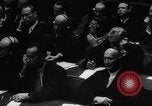
Nazi criminals are questioned during the Nuremberg Trials in Nuremberg, Germany.
Events related to the Nuremberg Trials held at the Palace of Justice (Fürther Str. 110, 90429 Nürnberg, Germany) in Nuremberg, Germany. German attorneys defend the accused. One by one the accused are cross examined. Rosenberg is examined on the count of high mortality rate among Russian prisoners of war. Joachim von Ribbentrop is questioned about the military pressure on Russian from Germany. Goering is questioned about his knowledge of the policy to exterminate Jews. Speer testifies about negative things Hitler said about Goering in response to Goering's telegram suggesting that Goering took power in April 1945.

During the Nuremberg Trials Nazi convicts express guilt on the crimes done by them.
Events related to the Nuremberg Trials held at the Palace of Justice in Nuremberg, Germany. Final statement of the tribunal is being prepared. The defendants express their guilt on the crimes done by them against humanity. View of the defendants in the dock including Herman Goring, Rudolf Hess, Joachim von Ribbentrop, Wilhelm Keitel, Karl Donitz, Erich Raeder, Baldur von Schirach and Fritz Sauckel.
CRITICALPAST.COM: About Us | Contact Us | FAQs - How to Order | License Agreement | My Account | My Lightboxes | Shopping Cart | Advanced Search | Featured Collections | Website Terms & Conditions | Privacy Policy ©2026 CriticalPast LLC.
License Agreement |
Terms & Conditions |
Privacy Policy
©2026 CriticalPast LLC.