


 Francais
 Deutsch
 Italiano

Refine Your Search
-Cebu,-Philippines stock footage and images
- Showing 42955 to 42960 of 58987 results more
 Hide
Color Sound
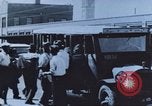
FDR announces formation of Civilian Conservation Corps (CCC) and many work in Forest Service improving fire control
Crews of American young men loading up and organizing for training in fire fighting duties, circa 1920. Unemployed workers in lines and waiting queues in 1933 during Great Depression. President Franklin D. Roosevelt announces the formation of Civilian Conservation Corps. Civilian Conservation Corps men of the forest service, at work, setting up telephone poles, stringing wire, building roads, building fire lookout towers, and helping to fight fires.

Tillamook Forest fire in Western Oregon. Logging activities. Firefighting activities
Discussion of the Tillamook Forest Fire of 1933 in Oregon. Men cutting huge fallen tree with two-man saw. A man works on a Steam Donkey, dragging cut logs. The end of a log in flames. Lumberjacks try to put out the fire. A ranger spots smoke rising from the forest. A phone call being made and organized firefighting crews including the Civilian Conservation Corps respond to fight fire. CCC men cross a log bridge and climb steep hill into the forest. Other responders seen in mule trains. Forester atop a burned out telephone pole, where wire had been destroyed. Firefighters using wireless radios. Smoke rises from the forests. Smoke rises from the hill. Suddenly, wind changes and fire explodes. Views of the actual Tillamook Forest fire storm of August 1933. Two weeks later, rain suppresses the fire. View of firefighters using shovels, axes and other tools to dig fire line by hand, next to smoking underbrush. View of man holding a "Pulaski" tool, half axe and half hoe. Men looking over the aftermath of the Tillamook burn. Lumberjacks chopping a huge standing tree with axes. Cut logs suspended from cables, being moved. Forester with backpack, hiking along trail. Firefighters suppressing small wild fires with hand tools. (Great Depression period)
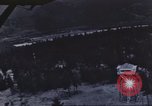
Firefighters parachute into forests from Ford trimotor airplane. Parachute training in Missoula, Montana
Aerial view of a lookout tower in a forest in United States . A Ford trimotor airplane takes off on a grass field. The airplane in flight and dropping supplies to firefighters, by parachute. Scenes of 1939 experimental tests with firefighters parachuting from a Ford trimotor, near Winthrop, Washington. They can be seen leaving the aircraft, chutes opening, and firefighters descending. Scenes from first operational use of parachuting firefighters, on July 12, 1940, when Smoke Jumpers, Rufus Johnson and Earl Cooley parachuted into the Nez Perce forest , in Idaho, where they successfully extinguished a small fire. Rufus Johnson was the first to jump from the airplane, followed immediately by Earl Cooley. Fire fighters being trained at a parachute training center in Missoula, Montana. Men learn to jump and run over wooden planks. An instructor gives directions to trainees on a loudspeaker. (World War II period).
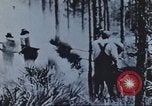
Various means of bringing water to fight forest fires. Back packs, pumping from streams, truck mounted pumps, and airplanes
Fire fighters using backpack manual pumps to fight forest fire in United States. Water being pumped by gasoline driven pump, from a stream. Water tanks mounted on trucks for use in fighting forest fires. Aerial view looking down on a Douglas O-2 aircraft in flight over forest. 1930s experiments in using aircraft to deliver water to fight a fire. A man carries a 10 gallon water bomb and another one fixes it below the wing of an aircraft.
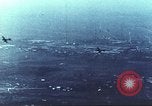
"Operation Firestop" experiments in aerial firefighting. Various aircraft used in firefighting.
World War II scenes of German Stuka dive bombers in operation. U.S. B-25 bomber in flight, and views of firestorms from Allied incendiary bombing of Axis targets. Scenes of the "Operation Firestop" project in 1954-55, in California. U.S. Forest Service and other agencies cooperate in a one-year project headquartered at Camp Pendleton, California. Aerial views of Camp Pendleton area, in Southern California. A modified Grumman TBM Avenger torpedo bomber in flight discharges water from its torpedo bays. Men installing fabric water container into the bomb bay of the TBM. The aircraft seen in low level pass, dropping water contents onto field. Cropduster pilot Floyd Nolta, seen flying his Stearman biplane over California landscape, and then taxiing in to park, after landing. On the ground, we see how he modified his airplane to release water from a hopper in its bottom. On August 13, Vance Nolta flies the Stearman on multiple sorties, dropping water on a fire in the Mendecino Forest. Nolta filling his water tank from a hose at Willow Airport, and dropping water from the air, above the fire. View at Willow Airport, of 7 Stearman and N3N airplanes modified for aerial firefighting. Views of these aircraft dropping chemically treated water from the air. TBM aircraft equipped with 400 gallon tanks drop water from the air. PBY flying boat seen in flight. A B-26 bomber passing low and dropping chemically treated water. A U.S. Navy Martin Mars flying boat passing overhead. The aircraft drops water from a 7000 gallon tank.

Operation Firestop at Camp Pendleton, California. Experimenting with use of helicopters for firefighting. Testing chemicals
"Operation Firestop" at Camp Pendleton, California. A helicopter lands and personnel board the helicopter. Helicopter in flight. Helicopter hovers near fire truck as pilot picks up an end of a hose and unreels it, laying it out over a hillside. Accordian-folded cotton hose uncoiled from a tray below a helicopter, as firefighter holds the hose. Fire retarding chemicals being tested by rotating treated materials through flames, in a laboratory at the University of California, Berkeley. Field testing by spraying fire retardants on a grass field at Camp Pendleton, and then observing their efficacy when the field is set afire. Large group of firefighters on hill, participating in "Operation Firestop," watch a helicopter flying below them during tests. A truck laden with bags of chemicals, makes its way up a hill through brush.
CRITICALPAST.COM: About Us | Contact Us | FAQs - How to Order | License Agreement | My Account | My Lightboxes | Shopping Cart | Advanced Search | Featured Collections | Website Terms & Conditions | Privacy Policy ©2026 CriticalPast LLC.
License Agreement |
Terms & Conditions |
Privacy Policy
©2026 CriticalPast LLC.