


 Francais
 Deutsch
 Italiano

Refine Your Search
-Cebu,-Philippines stock footage and images
- Showing 43009 to 43014 of 58987 results more
 Hide
Color Sound
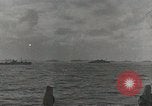
United States 1st Infantry Division soldiers land at Normandy, France during D-Day invasion of France in World War II.
The role of United States 1st Infantry Division (Big Red One) in various campaigns during World War II. Allied ships underway in the Atlantic Ocean. Soldier of United States 1st Infantry division practice an amphibious landing during training in England. Naval guns being fired on D-Day, June 6th , 1944. Troops of 1st Infantry Division climb down landing nets onto a landing craft. Soldiers land at Normandy Omaha beach in France on D-Day. Some soldiers drop to ground, shot crossing the beach. Troops move inland. Tanks being fired among hedge rows. Troops fire guns from dugouts and provide medical aid to a wounded soldier.
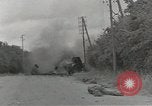
United States 1st Infantry Division soldiers advance into French cities and fight for Aachen during World War II.
The role of United States 1st Infantry Division (Big Red One) in various campaigns in Europe during World War II. United States 1st Infantry Division men fight in France as they advance further inland into the country. Soldiers relax, get a haircut and write a letter back home to their families. On July 25th , 1944 German aircraft launch an air attack. Infantrymen fight in the streets of a city in France. Combat engineers plant land mines. 1st Infantry Division soldiers enter Coutance, Mortain, Etampes, Meaux and Soissons. Soldiers around a monument at the Belgium border. 1st Infantry soldiers advance towards Aachen. Tanks fire as soldiers fight against the Germans in Aachen. Men on a machine gun. On October 25th 1944 Aachen surrenders to the Allies. U.S. Army armored vehicle drives over Nazi flag lying in a street.
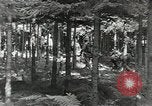
United States 1st Infantry Division soldiers fight to counter the German attack on Ardennes during World War II.
The role of United States 1st Infantry Division in various campaigns during World War II. United States 1st Infantry Division men fight in Hurtgen forest. Artillery being fired among trees. Soldiers help an injured soldier. Soldiers of the 1st Infantry Division advance amidst extreme weather conditions. Soldiers get a rest in Belgium. A map of Europe shows the German attack in Ardennes during World War II. Soldiers advance and fight in the counter attack.
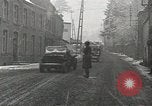
United States 1st Infantry Division soldiers cross the Ramegan bridge and enter into Germany during World War II.
The role of United States 1st Infantry Division in various campaigns during World War II. United States 1st Infantry Division men cross the Ludendorfff bridge at Remagen, over river Rhine in Germany. Smoke rises from the banks of the river. American soldiers move across Germany and enter Czechoslovakia. Closeup of faces of war weary United States Army infantrymen shown. A U.S, Army soldier sleeps.
Japanese A6M Zero planes take off aboard a Japanese carrier and attack Pearl Harbor in the Pacific Ocean during World War II.
Japanese attack on Pearl Harbor, December 7, 1941. View from carrier Akagi of two other Japanese aircraft carriers, the Kaga (front), and the Zuikaku (rear) underway in the Pacific Ocean. Japanese naval officers aboard a carrier. Japanese deck crews work on Japanese aircraft aboard a carrier. Japanese pilots assembled on the flight deck to receive final briefings before taking off. Information posted on a large blackboard as pilots are briefed. Japanese dive bombers and torpedo planes take off from the aircraft carrier. Planes in flight. View from Japanese airplanes as the attack on Pearl Harbor takes place. Smoke rising from explosions. View from aircraft flying directly overhead as bombs explode on Ford Island airbase.
Japanese forces occupy British and American areas of the Shanghai International Settlement, following attack on Pearl Harbor in World War II
Inhabitants of the International Settlement in Shanghai, China, line sidewalks to watch as Japanese Imperial marines enter and occupy the British and American controlled parts of the city in the wake of the attack on Pearl Harbor. Japanese marines in open trucks wave to the spectators. Camera focuses momentarily on a large Japanese flag displayed on one building, where Japanese guards stand outside. Japanese soldiers climb down from a truck and enter the building. Several armed Japanese marines walk in the street. Some people in the Settlement seem intent on going about their normal activities, notwithstanding the presence of the Japanese military. However, one street is empty except for Japanese soldiers who stand guard. At the doorway of a building there, a sign is posted in Japanese referring to its occupation by Japanese military. A Type 92 Chiyoda Armored Car proceeds down a street, heading a parade of Japanese marines, led by one carrying the Japanese Rising Sun flag. Camera pans over boats in the harbor. Most appear to passenger-carrying ferry boats. At the end, the narrator refers to the sinking of the HMS Peterel and the capture of the USS Wake, the last British and American gunboats in Shanghai. The British riverboat HMS Peterel, operating on the Yangtse river, refused to surrender and was sunk (although nobody was killed) and the American Gunboat, USS Wake (PR-3) is seen near the end of the film, flying the Japanese flag, at the Shanghai dock where it was captured by the Japanese.
CRITICALPAST.COM: About Us | Contact Us | FAQs - How to Order | License Agreement | My Account | My Lightboxes | Shopping Cart | Advanced Search | Featured Collections | Website Terms & Conditions | Privacy Policy ©2026 CriticalPast LLC.
License Agreement |
Terms & Conditions |
Privacy Policy
©2026 CriticalPast LLC.