


 Francais
 Deutsch
 Italiano

Refine Your Search
-Cebu,-Philippines stock footage and images
- Showing 45913 to 45918 of 58986 results more
 Hide

An audio visual officer and a librarian help two local men for an event organization in Japan.
A documentary film about public film production and use in Japan. Two Japanese people greet each other. Two men enter a library. A librarian asks them to take a seat. The men discuss. The librarian points to records on selves. He points a stick at the records. The librarian shows cards to the two men. The librarian writes the names of the records on a paper. The librarian along with the two men go to an audio visual officer. The officer talks to the two men and instructs them on how to run their motion picture event. Animation movie depicts seven steps to make a meeting successful. The officer shows them a guide. He points to a map on a wall. Men put a projector screen on a stand. A man plays a film. Men try to place the film projector in the correct position. People laugh at the confusion as the crew running the film is unprepared. The men try to focus picture on the screen. The officer tells about the failure of the meeting. A man introduces the film to people. People sit and watch the film. The men thank him for suggestions.

Crates of records are carried to different parts in Japan by different means of transport.
A documentary film about public film production and use in Japan. Men place crates of audio visual material on a cycle carriage. Men load crates on a truck. The truck is driven away. Men load crates in a bus. A man pushes a ski cart loaded with audio visual material . A bullock cart loaded with crates. People carry crates on their back. Crates loaded onto a ship. People in a boat carry audio visual material. Men take out crates from a vehicle. People watch films on projector screens in different parts of Japan.

Women work in various fields and Jessie Bernard and Edna Rostow discuss about the life style of women in the United States.
The film 'American Women and the social change-women and their family' about working women in the United States in new roles that do not fit traditional homemaker and housewife stereotypes, or that were traditionally jobs held by men. Women walk across a street. A woman laughs. Women practice dance. A woman works as a dentist. Two women bird trainers. A woman plays a violin and another woman sings. A woman officer takes an oath. A woman teaches. A woman works on equipment. A woman in a meeting. Women work in a workshop. A woman paints. A woman looks into a microscope. A doctor checks a child. American sociologist Jessie Bernard of the National institute of Education talks to Edna G. Rostow, a mental hygiene consultant at the Yale University, about the change in the life style of women and the reason behind it.

Jessie Bernard and Edna Rostow about discuss old traditions responsible for changes in the life of women in the United States.
A film about problems faced by working women in the United States. American sociologist Jessie Bernard and Edna G. Rostow, a mental hygiene consultant at the Yale University, discuss about old traditions responsible for the changes in the life of women and the democratic values that an American family inculcates in children. They talk about freedom given to American women and the difference in the environment in which they grow up from that in the rest of the world.
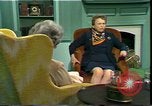
Jessie Bernard and Edna Rostow discuss about the role a woman plays and the need to cope up with the society in the U.S.
A film about problems faced by working women in the United States. American sociologist Jessie Bernard and Edna G. Rostow, a mental hygiene consultant at the Yale University, discuss about the increased dependency age of children on their parents. Prolonged education and industrialization being one of the reasons for the dependence. Children leave home as they realize their dependence. They talk about the role of women in the society and the changes needed in women to cope up with their children and the society. They talk about broadening the life of a woman and expanding her role in the society and the change in the relationship between a man and a woman. Jessie Bernard shares her personal experience and difficulties in being a single mother. Edna G. Rostow talks about the understanding between a husband and a wife while sharing her personal experience.

Jessie Bernard and Edna Rostow discuss problems women face to balance personal and professional life in the United States.
A film about problems and challenges faced by women in the United States in the 1970s, as the traditional roles of women are changing, with more women in the workplace working to balance home life. American sociologist Jessie Bernard and Edna G. Rostow, a mental hygiene consultant at the Yale University, discuss that often women don't think that men are contributing much towards their progress. The pattern of the society being industrialized and nuclear families creating more problem for women to balance between their social and professional work lives. They insist upon development of child care centers and fathers' contribution in the development of children. They discuss about women going to work in urban and industrial areas.
CRITICALPAST.COM: About Us | Contact Us | FAQs - How to Order | License Agreement | My Account | My Lightboxes | Shopping Cart | Advanced Search | Featured Collections | Website Terms & Conditions | Privacy Policy ©2026 CriticalPast LLC.
License Agreement |
Terms & Conditions |
Privacy Policy
©2026 CriticalPast LLC.