


 Francais
 Deutsch
 Italiano
Refine Your Search
-Cebu,-Philippines stock footage and images
- Showing 4609 to 4614 of 58885 results more
more Hide
Hide
Japan's possible shortages of material for clothing in World War 2. Japanese domestic production of cotton, wool, and silk
Illustrated discussion of Japan's limitations in natural resources prior to World War II. Workers shown in textile mills which employed more than half of Japan's factory workers prior to the war, satisfying domestic and export needs. Analysis of the natural resources. Cotton thread is rolled on the spindles in the Textile mills in Japan. Textile mills produce fabric in Japan. Japanese women work in the textile mills. Bales of raw cotton imported from Japanese possessions in Korea and Formosa, and from the United States,India, Brazil and China. They are transported via horse carts and manually pushed on small rail carts to storage buildings for stockpiling. People cultivating some of the small amount of cotton grown in Japan. Horses and cattle used to pull plows in rice paddies. Pigs used as scavengers. Woolen fabric is produced from wool. Some of Japan's very few sheep being sheared for wool. Women working in fields of mulberry trees where silk worms flourish on their leaves. Views of the silk being spun onto spindles in a factory. Silk fabrics being stacked. Illustrated summary highlights Japanese domestic shortages of cotton, wool, and leather needed for clothing.

Illustrated discussion of Japanese self-sufficiency in forest products prior to World War II.
Japanese women in kimonos viewing Sakura cherry blossom trees in full bloom. Japanese loggers felling a tree. Logs readied for transport to sawmills. Japanese men pushing backwards to move a load of finished wood on a dolly. Men cutting wood for sandals in a factory. Animated map illustrating three forest regions of Japan. View of column of men walking in forest of the subtropical zone, containing oak, camphor, bamboo, and palm trees. Views of temperate zone forests containing pine, cypress, arborvitae, cedar, fir, beech, ash, chestnut, and poplar trees. The arboreal area contains coniferous forests of fir and spruce. Japanese officials in dress clothing initiate a reforestation project, as other officials and Japanese military officers watch. Women and children participate in the project. Cross-section of a cut tree illustrating products derived therefrom. Animation depicts various uses of produces wood products like sandals, houses, barracks, and military uniform for the Japanese.
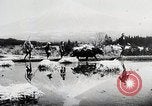
Agricultural scenes in Japan which is self-sufficient in food production prior to World War II.
Views of Japanese farmers at work in rice paddies and other agricultural fields in Japan before onset of World War 2. A line of women, in straw hats, labor in a rice field as a man pumps water into the paddy using a foot operated wheel. Rice being harvested and processed in the field. Farmers working in other fields containing grains such as wheat, barley, and oats and in vegetable patches. Japanese soldiers using grain straw to patch roofs. Other Japanese workers using such material for screens, parasols, and hats. Women harvesting fruit, in which Japan is 95% self-sufficient. Workers harvesting tea leaves. Workers at a seashore gathering salt evaporated from seawater. They carry some in wheelbarrows and some in containers using shoulder yoke.
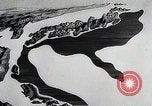
Commercial fishing industry of Japan before World War II
Animated map of fishing grounds around Japan that provide one fourth of the world's catch. Movement of the seasonal catch is tracked as it moves Northward during the year. Men and women engaged in commercial fishing, gathering in nets teeming with fish. Fishing boats plying waters of an inland sea. Fishing boats moored along the shores. Larger seagoing fishing boats leaving to operate along the coast of Honshu. Fishermen letting out nets from these boats and using cable winches to retrieve them. Views of refrigerated Japanese fishing ships that also freeze their catches, operatiing in the Siberian maritime provinces and in Alaskan and Arctic waters. Fishing boats, operating before World War 2, are seen pulling crabs aboard. View inside a floating cannery ship where salmon and crabmeat are being canned for export to places like the U.S.A. Closeup of a can displaying "ICEBOUNDBRAND" and text reading: " World Renowned Floating Cannery Pack Fresh from the Deep Sea Waters of Northern Japan. Net contents 13ounces. SELECTED CRABMEAT." Japanese wading in a river, and using trained cormorants, to catch fish. View of fisherman taking fish from his cormorant and placing them into a large jug. view of edible seaweed being harvested and laid out in the sun, in racks. Animated illustration of Japanese man and items included in his dinner of rice, soybean, fish, sea slugs, sea urchins, octopus, lily bulbs, bamboo shoots, bean curd and pickled fruits and vegetables, accompanied by a little saki (rice wine).
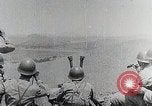
Role of metals in Japanese war against China during 2nd Sino-Japanese Conflict
Scenes of Second Sino-Japanese War, circa 1938. Japanese soldiers observing battlefield from a ridge. Japanese artillerymen firing field pieces. Flight of two Mitsubishi Ki-15-1 light bombers in formation, later called "Babs" by the Allies and known as a C5M in Japanese Navy usage. Aerial view of Japanese bombs falling on Chinese cities. Chinese citizens, including an injured woman, seeking shelter from bombing. Aerial view of Chinese ship being strafed by Japanese aircraft. The ship explodes. Downed Japanese warplanes burning. Scenes of destruction from bombing of oil facilities. Iron ore being moved in Japanese rail cars. Steel plants around Yawata, Japan. Numerous containers of molten steel inside a steel plant. Hot Steel ingots being moved. Animated map shows locations of iron ore deposits in Japan. Scrap steel being imported that, narrator states, helped boost Japanese wartime production to 12 million ingot tons in the Sino-Japanese war. More views of open rail cars moving alloying elements to a steel mill. Open mining using explosives. Mining operations for copper and bauxite (aluminum ore). Japanese miners shoveling ore by hand into open rail cars. Open rail cars moving in both directions on parallel tracks. (Note: Although some narration refers to 1941 Japanese production, the images are from earlier period.)
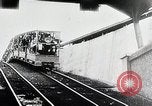
Electric Power Generation in Japan prior to World War II
A look at various sources of energy in Japan prior to World War 2. Japanese coal miners ride railcars down into a mine. View of miner using pneumatic drill to cut away coal at the face. Steam shovel bucket loading bituminous coal into open rail car. Animated map showing locations of Japan's coal mining areas in Kyushu and Hokkaido and small deposits in Honshu. Scene shifts to a river and water power generation site. View of turbines in water-powered electric generating plant. Generator buildings at side of river. Electric power transmission facilities. View from below a dam of a hydroelectric plant in central Honshu. Pipes carrying water down a mountainside. Reservoirs for storing water. Animated map depicting meager oil deposits in Japan and showing some of its oil processing and storage facilities.
CRITICALPAST.COM: About Us | Contact Us | FAQs - How to Order | License Agreement | My Account | My Lightboxes | Shopping Cart | Advanced Search | Featured Collections | Website Terms & Conditions | Privacy Policy ©2026 CriticalPast LLC.
License Agreement |
Terms & Conditions |
Privacy Policy
©2026 CriticalPast LLC.