


 Francais
 Deutsch
 Italiano
Refine Your Search
-Cebu,-Philippines stock footage and images
- Showing 4747 to 4752 of 58885 results more
more Hide
Hide
Progress of women in Japan
Busy streets in Tokyo, Japan. Japanese people shop, cross streets, and ride bicycles. Aerial view of Tokyo after World War 2. View of the Japanese National Diet Building (Nagatachō 1-chome 7–1, Chiyoda, Tokyo) in Chiyoda district. Japanese Prime Minister of Japan Yoshida Shigeru addresses the parliament. Japanese men, women and ministers attend the National Diet. A new bill is passed. Hand flips through the pages of the new bill written in Japanese. Contrasts the progress of women with that of men in Japan. A Japanese man and woman. Japanese children playing in playground. A woman holds her child. A salaryman father laughs with wife and two children at home. Japanese man wipes sweat off his head with a napkin. An old farmer working. People crossing a street. Japanese men and women crowd a busy street. View of Japanese women work as traffic police officer, as telephone operators, as caretaker of family,voting and as an architect.
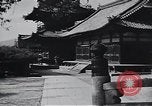
Traditional Japanese women wearing kimonos
Life of Japanese women depicted from the start of Emperor Meiji’s reign (Meiji Era- October 23, 1868 to July 30, 1912). Japanese women wearing kimono talk while walking together in the grounds of the Kiyomizu-dera Buddhist temple (294 Kiyomizu, Higashiyama Ward, Kyoto, 605-0862, Japan). A scroll written with Japanese calligraphy. Old Japanese ship in the ocean. Japanese men vote. A Japanese woman cleans floor. Photograph of a prominent Japanese feminist (probably Ichiyo Higuchi). A gathering of traditional Japanese suffragists or feminists wearing kimonos. View of the Tsuda University (2 Chome-1-1 Tsudamachi, Kodaira, Tokyo 187-0025, Japan), a private women's university in Tokyo. Photograph of Tsuda Umeko, educator and founder of Tsuda University. A young Japanese girl boards a ship.
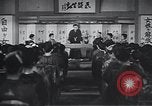
Documentary on status of women in Japan. Contrasts progressive efforts to past practices affecting lives of women.
Documentary on the status of women in Japan. It begins with a group of "progressive" women working to improve women's lot. Images of Meiji statesmen Fukuzawa Yukichi and Mori Arinori are shown with comment that they recognized the importance of women and worked towards their equality. The narrator states that in spite of their efforts, attitudes towards women were slow to change. The narrator cites centuries of repression of women as a reason for this. (In the Nara period, however, songs from the anthology called the Manyoshu, indicate men and women had a more equal relationship, which is illustrated by a couple relaxing in a park, while girls dance in the background.) With that exception, women are shown to have had generally difficult lives in the past. scenes of women being supressed are reenacted, such as one where a man eats dinner while his wife sits quietly behind him. Another shows a woman being scolded by her husband. A woman pulling a heavily laden cart up a hill. Women bowing low while a Samurai passes them.
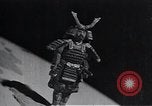
Tracing the opening of Japan to the outside world, from the time of the Shogun, to the modern era.
Symbolically Japanese Shogun secured the island empire from the outside world, as illustrated by a model with a fence around Japan. A model of early steamship and figures represent the visit to Japan of Commodore Matthew Perry, of the United States, in 1853, which resulted in a treaty opening Japan to broader commerce with the outside world. Japanese women read newspapers. Japanese Prime minister Hideki Tojo. Japanese Women as recruits. Japanese troops march. Japanese men and women queue up to vote.1950.
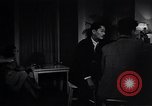
Modern Japanese women and their professions in the years after World War 2
Postwar Japanese women working in various professions in the early 1950s. Japanese women wear Western outfits, go to bars and restaurants for a drink and a smoke. The woman approach men inside a bar. Japanese women smoking with men. A Japanese woman opens sliding door and joins her family for dinner. She begins to talk about her day. Her father nods with disapproval while her younger sister, wearing a High School sailor-style Seifuku uniform, looks on. Men reading a newspaper. A Japanese couple walks in the park. They find a boy fishing on the lake. Japanese women in parliament. Japanese women working as scientists, as nurses and as doctors in hospitals and surgical operating rooms. Japanese woman heads a corporate company meeting. Japanese women work as corporate secretaries. Woman works with farmers. NHK radio station featuring a Japanese woman, who is seated in a broadcast booth. A Japanese woman at a newspaper operation inspects newspapers coming off a printing press. Japanese women as musicians and western ballet dancers. Japanese woman playing a violin with an orchestra. Japanese woman playing the piano. A Japanese woman painting while wearing a kimono. Japanese woman lecturer comes out of a college building. Japanese men gather and talk outside a building. A Japanese woman casts her vote in a ballot box. Japanese civilians in voting poll. The National Diet is filled with parliamentarians.
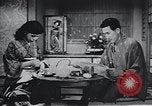
Progress of women in Japanese society
Discusses progress of women in Japanese society. View of Japanese parliament in session. Japanese woman works at home. Young women study in Japanese university. Women work in factories. Japanese woman raises an issue in a council meeting. Japanese women work in farms and company offices. A young Japanese couple.1950.
CRITICALPAST.COM: About Us | Contact Us | FAQs - How to Order | License Agreement | My Account | My Lightboxes | Shopping Cart | Advanced Search | Featured Collections | Website Terms & Conditions | Privacy Policy ©2026 CriticalPast LLC.
License Agreement |
Terms & Conditions |
Privacy Policy
©2026 CriticalPast LLC.