


 Francais
 Deutsch
 Italiano
Refine Your Search
-Cebu,-Philippines stock footage and images
- Showing 49105 to 49110 of 58884 results more
more Hide
Hide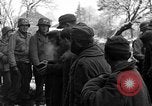
Prisoners of war being moved and searched by U.S. Army Military Police in WW2 and in Korean War
First scenes of clip show United States Military Police (MP) processing German prisoners of war (POW) during World War 2. German prisoners load into a U.S. Army truck under supervision of several MP, in cold winter weather conditions with snow on the ground. Next scene shows German prisoners of war enter a holding area in a large field under MP supervision. Scene changes to Korean War and activities of U.S. 8th Army Military Police. U.S. Army Military Police (MPs) and Korean or Chinese prisoners of war (POW) standing. The POWs board a truck. They are led by MPs. The POWs enter a camp area in a line. An MP frisks a prisoner. Prisoner of War documents being completed by an MP. Prisoner being fingerprinted. Elevated views of mass of prisoners running quickly into large column formation with Military Police watching at the head of the column. Prisoners standing on a road in groups. The MPs stand beside them. They check the identities of the prisoners. The prisoners are being searched by the MPs. Korean civilian refugee families fleeing an area. A young Korean child on a bicycle that is also laden with many belongings as a family evacuates. Families pulling open carts with Korean children laying on the carts bundled in blankets.
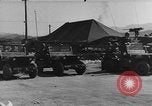
U.S. Army Military Police engage enemy during Korean War
Activities of the U.S. Army Military Police during the Korean War. Military Police (MP) jeeps loaded with Military Police drive away from a camp area. U.S. Army Military Police in armored personnel carriers on a road. MPs fire heavy machine gun in their vehicle at a ridge.
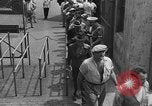
MPs inspect workers and monitor loading of cargo at a U.S. port during World War II
Activities of the U.S. Army Military Police in the United States during World War 2. Workers walk in lines and are being checked by Military Police (MPs) as they enter a port. An MP monitors loading of cargo at the port. An MP standing and traffic in the background.
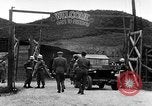
Military Police at Operation Big Switch in Korea. Exchange of prisoners of war at end of the Korean conflict.
Activities of the U.S. Army Military Police during the Korean War. MPs are active in Operation Little Switch repatriation effort involving exchange of prisoners of war. A sign on an entrance gate: "Welcome, Gate To Freedom". Military Police (MPs) standing at the entrance gate to Freedom Village. The U.S. and UN flags and Korean flags fly from flag poles. Red Cross vehicles arrive. Wounded are carried on stretchers. Men walk with belongings. Korean prisoners board buses. Red Cross workers transfer the wounded. (Operation Little Switch was a first phase and was followed by Operation Big Switch in August 1953).
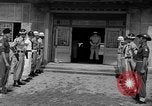
U.S. Army Military Police on duty in Korea and Beirut Lebanon
Honor Guard of UN troops from various nations stand at entrance to the so-called "Peace Pagoda," where negotiations were conducted to end the Korean conflict. U.S. Military Police Officers escort Major General George G. Finch, USAF, Chief negotiator for the U.S. followed by MP officers escorting Lieutenant General, William K. Harrison, Jr. United States Army, Senior Delegate, United Nations Command Delegation, who would sign the truce documents. Separate sequence shows U.S. Army MPs and U.S. Navy Shore Patrol (SP) patrolling streets in Beirut Lebanon, in 1958. MPs talk with a local policeman and point to a map of the Town of Beirut, posted on a wall
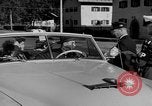
U.S. Army Military Police work with local Police at a checkpoint in Germany
Activities of the U.S. Army Military Police (MPs). A civilian family in a car is stopped at a check post by a U.S. Army MP accompanied by a local policeman, in Germany. The driver presents identifcation document. An American 1955 Oldsmobile convertible car stops at barrier on opposite side of road, and the MP and local policemen clear it to enter as they also raise the barrier for the first car. Family in the departing car wave at family in the Oldsmobile. A line of German cars awaits entry at the checkpoint.
CRITICALPAST.COM: About Us | Contact Us | FAQs - How to Order | License Agreement | My Account | My Lightboxes | Shopping Cart | Advanced Search | Featured Collections | Website Terms & Conditions | Privacy Policy ©2026 CriticalPast LLC.
License Agreement |
Terms & Conditions |
Privacy Policy
©2026 CriticalPast LLC.