


 Francais
 Deutsch
 Italiano
Refine Your Search
-Cebu,-Philippines stock footage and images
- Showing 53419 to 53424 of 58885 results more
more Hide
Hide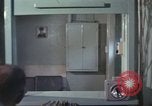
A U.S. Non Commissioned Officer gives assignments to ambulance crew at a medical post of Tan Son Nhut Air Base in Vietnam.
A U.S. Medical Post at Tan Son Nhut Air Base in Vietnam during operation 'Dust Off' of the Vietnam War. Two members of ambulance crew talk to an NCOIC (Non Commissioned Officer in Charge) at the medical post and board an ambulance. The ambulance pulls up. A red beacon on the ambulance. The NCOIC receives a call at the medical post. He writes on a paper and gives assignments to members of ambulance crew.
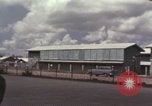
A wounded U.S. soldier is unloaded from a helicopter at a medical heliport of Tan Son Nhut Air Base in Vietnam.
A U.S. Army helicopter brings wounded soldiers to a medical heliport at Tan Son Nhut Air Base in Vietnam during operation 'Dust Off' of the Vietnam War. A U.S. Army UH-1 Iroquois helicopter lands at the heliport. A wounded soldier is carried out of the helicopter and loaded into an ambulance. The ambulance pulls away. The helicopter takes off.
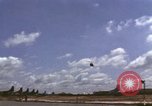
A wounded U.S. soldier is unloaded from a helicopter and loaded into an ambulance at Tan Son Nhut Air Base in Vietnam.
A U.S. Army helicopter brings wounded soldiers to a medical heliport at Tan Son Nhut Air Base in Vietnam during operation 'Dust Off' of the Vietnam War. A U.S. Army UH-1 Iroquois helicopter approaches and lands at the heliport. Aircraft parked in the background. A wounded soldier on a litter is carried out of the helicopter and loaded into an ambulance. A man closes the doors of the ambulance. The ambulance pulls away. The helicopter takes off.
Location, construction and organization of a U.S. Army evacuation hospital in the European Theater during World War II.
A film describes setting up of an evacuation hospital in the European Theater by the United States Army during World War II. U.S. soldiers getting wounded during a combat. Wounded soldiers are treated by medics and taken to battalion aid stations in army ambulances. Medics treat soldiers on litters. An ambulance pulls up to U.S. Army 128th Evacuation Hospital. Tents set up at the hospital. The procedure of setting up an evacuation hospital which is usually located outside artillery range shows soldiers working and arranging tents. The tents are set up. A diagram depicts location and organization of an evacuation hospital. Diagram highlights location of various types of tents with headquarters and administrative departments. Trucks bring equipment to the site where construction is underway. Doctors, nurses and EMs (Enlisted Men) unload equipment from the trucks. Men carry large boxes containing supplies. A sign reads 'MED SUPPLY'. Men carry boxes into a tent. Soldiers dig a garbage pit. Telephone lines are installed. Soldiers talk over phone. They set up a water supply system. Hay is strewn along mud to offer firm footing at the evacuation hospital. Squares of slate are laid down. A chart showing Administrative Sections and Professional Sections of Headquarters at a U.S. Army evacuation hospital. The chart depicts Administrative Sections in charge of EMs, utilities and supplies, operation of the mess, transportation, registrar's office and receiving end of evacuation. The chart also includes Professional Sections in charge of surgery, operation of wards, pharmacy, laboratory and X-Ray.
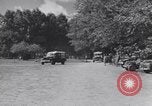
Functions of Administrative Sections of a U.S. Army evacuation hospital in the European Theater during World War II.
A film describes functions of Administrative Sections of a U.S. Army evacuation hospital in the European Theater during World War II. Ambulances bring casualties at a receiving tent in an evacuation hospital. Medics remove wounded soldiers on litters from ambulances and carry them to receiving tents. Brief examination of the casualty is made in a tent by doctors to determine whether the case is of extreme emergency. Personal belongings and equipment of the patient are registered. A copy of medical record is forwarded to the registrar. EM (Enlisted Man) assigned to the registrar's office assists in storage and safe keeping of the belongings of the patient. The patient is taken to the sorting tent where an officer expert in wound diagnosis examines the patient to determine the priority of treatment. Morphine is administered to the patient. Transfusions are given to patients suffering from shock in shock tents (post traumatic stress disorder, or PTSD, in modern terms).
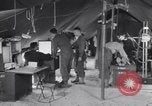
Surgeons perform surgery on patients at a U.S. Army evacuation hospital in the European Theater during World War II.
A film describes functions of Professional Sections of a U.S. Army evacuation hospital in the European Theater during World War II. Enlisted Men take X-ray pictures of a wounded soldier in the X-ray tent of the evacuation tent. Doctors examine the X-rays in a tent. Patients are taken to pre-operative tents where they are examined. Instruments are readied and arrangements are made before the surgery is performed. The patients are placed on operating tables in a tent. Surgeons operate on the patients.
CRITICALPAST.COM: About Us | Contact Us | FAQs - How to Order | License Agreement | My Account | My Lightboxes | Shopping Cart | Advanced Search | Featured Collections | Website Terms & Conditions | Privacy Policy ©2026 CriticalPast LLC.
License Agreement |
Terms & Conditions |
Privacy Policy
©2026 CriticalPast LLC.