


 Francais
 Deutsch
 Italiano
Refine Your Search
-Cebu,-Philippines stock footage and images
- Showing 53887 to 53892 of 58885 results more
more Hide
Hide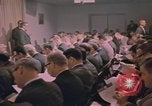
U.S. Secretary of Defense Robert S. McNamara address newsmen at a press conference in the United States.
A press conference in the United States. U.S. Secretary of Defense Robert S. McNamara speaks at a press conference. Newsmen seated in chairs. They take down notes. Cameramen record the speech. Newsmen leave after the conference.
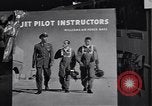
Pentagon exhibit featuring photographs of African American military personnel is opened by Secretary of Defense Louis Johnson
Exhibit about African American military service personnel at Pentagon in Virginia, United States. American lawyer John P. Davis, publisher of the magazine 'Our World'. Poster of jet fighter aircraft pilots. White and African American servicemen, servicewomen, and officers gather in the building. They look at an exhibition of photographs which pictures the activities and contributions of African Americans in the armed forces of the United States military. Mr John P. Davis shakes hands with Secretary of Defense Louis Johnson. Mr Davis, Mr Johnson and an African American official at the ceremony as they cut the ribbon which opens the exhibition.
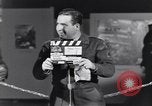
Secretary of Defense Louis Johnson opens an exhibit about African Americans in the military at the Pentagon in Virginia
An exhibit at the Pentagon in Virginia, focusing on the contributions of African Americans in the United States military. American lawyer John P. Davis, publisher of the magazine 'Our World' stands with the United States Secretary of Defense Louis Johnson. Davis is introduced to Johnson. Mr Davis speaks at the microphone and explains the idea behind the exhibition of the photographs. Mr Johnson addresses people and talks about the exhibition, referencing President Truman's Executive Order 9981 regarding racial integration in the military, ending the practice of racial segregation among troops. Johnson and Davis cut the tape to inaugurate the exhibition.
Secretary of Defense Johnson addresses a class of graduates at the Industrial College of the Armed Forces in Washington D.C.
U.S. Secretary of Defense Louis Johnson at the Industrial College of the Armed Forces in Washington D.C., United States. Officials at the platform. The graduates seated in chairs. Johnson stands at the podium. Other officials seated in chairs at the platform. Johnson addresses the class of graduates. British Air Marshall Arthur William Tedder seated next to an American officer. Secretary Johnson shakes hands with an officer. U.S. Army Chief of Staff, General J. Lawton Collins, hands out diploma.
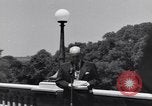
Secretary of Defense Louis Johnson gives a speech on the potential war in Korea in Washington D.C., United States.
Secretary of Defense Louis Johnson gives a speech in Washington D.C., United States. Johnson stands at microphone. Trees in the background. Johnson speaks on the Korean War situation very early in the war. He talks about the development of a force in South Korea to ensure the security of the country in the face of attack from North Korea and from possible other countries assisting North Korea.

Mission and operations of the U.S. Army Service Forces during World War II
Film opens with an explosion at Pearl Harbor, Hawaii, December 7, 1941, during the Japanese attack in World War 2. The USS Arizona sinking. Newspaper headline reading "U.S. Declares War." Relief map globe of the world. Narrator speaks about accomplishments of the U.S. Army Service Forces since the Pearl Harbor attack. Glimpse of two M4 DV early Sherman tanks moving on a road. The famous Uncle Sam recruiting poster. Huge number of massed U.S. Army troops marching toward the camera lined 16 abreast. Army supply service personnel inspecting providers of all manner of supplies needed to feed, clothe, and equip the U.S. Army. Brief views of supply operations underway involving food and fuels. An Army truck and a P-38 lightning airplane (under wraps) being loaded aboard a ship. A warehouse stacked from floor to ceiling with military supplies. Forklifts moving in the aisles. Group of officers sitting around a table. Some wear shoulder patch of Army Service Forces on their uniforms. The processing of millions of volunteers and draftees for military service. Men in recruitment office being guided by staff. Lines of new recruits undergoing physical exams and then arriving in civilian clothes, with their baggage, at a training center. Barracks being constructed at a training camp or base in the United States. Camera pans across a large completed military camp. Soldiers forming up in front of barracks. Sign reads "Dispensary, Recruit Reception Center." Recruits lined up and receiving vaccinations against tropical and other diseases according to the regions to which they are being sent. An Army Sergeant assessing recruit qualifications for various military assignments. New recruits eating in a camp dining hall and also in a chow line at an outdoor field mess. Views of industrial workers picking up tools and assembling military equipment in war plants. A coal burning electric generating plant with 8 smoke stacks. A furnace with hot steel visible. An Army agent and an industrialist or business man signing contract documents. Glimpses of women war production workers placing items on a conveyer; guns being assembled by men in an armory; railroad train carrying freight across rugged U.S. territory; ocean-going ships ready for loading; cargo stacked up at ports; numerous 55 gallon drums ready for loading; rope slings of cargo being loaded for shipment; numerous army trucks ready for shipment to Allies, under "Lend Lease;" a nurse checking medical supplies for shipment; Many U.S. Army M3 tanks ready for shipment. Views of British forces engaged in the North African campaign, before the U.S. entry in World War 2. U.S. soldiers marching along a Camp road past a sign reading: "Headquarters, 725th Railway Operating Battalion" (Located in New Orleans). Rapid glimpses of various supplies, equipment, etc. being loaded for shipment abroad. Women war production workers in plants. Men in outdoor yards filling long lines of jerry cans. Views of clock hands moving. soldiers shooting automatic weapons (including tracer rounds) at a firing range.
CRITICALPAST.COM: About Us | Contact Us | FAQs - How to Order | License Agreement | My Account | My Lightboxes | Shopping Cart | Advanced Search | Featured Collections | Website Terms & Conditions | Privacy Policy ©2026 CriticalPast LLC.
License Agreement |
Terms & Conditions |
Privacy Policy
©2026 CriticalPast LLC.