


 Francais
 Deutsch
 Italiano
Refine Your Search
-Cebu,-Philippines stock footage and images
- Showing 55207 to 55212 of 58885 results more
more Hide
Hide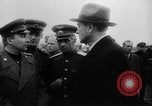
8th Air Force and 15th Air Force personnel are briefed in the European Theater for their first shuttle bombing run.
A film on U.S. shuttle bombing operations 'Operation Titanic' over Germany from bases in Great Britain, Italy and Russia during World War II. Personnel of the U.S. 8th Air Force in Great Britain. The U.S. 15th Air Force personnel in Italy. The are briefed about the first shuttle bombing run to new Russian airfields. United States Army Air Force General Nathan Farragut Twining addresses the personnel and bids them farewell. United States Army Air Force B-17 Flying Fortresses led by General Ira Clarence Eaker take off. USAAF B-24 Liberators take off from Great Britain. P-51 Mustangs and P-38 Lightning fighter airplanes escort the bombers on their way. The bombing forces bomb the targets in Germany. They return after their mission. Crew and officers look at the aircraft as they fly overhead. The officers look through binoculars. The crew waves towards the aircraft.
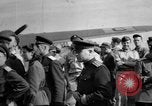
Russian and American pilots and crew talk and shake hands at an airfield in Russia during Operation Titanic.
A film on U.S. shuttle bombing operations 'Operation Titanic' over Germany from bases in Great Britain, Italy and Russia during World War II. U.S. bombers land on an airfield in Russia. Crew disembarks from the airplanes. They shake hands and talk to Russian pilots. Officers interrogate the fliers about the mission. Russian and U.S. crewmen service the airplanes. The crew eat in an outdoor kitchen. They sleep in tents.
American bomber crewmen play games and visit town near Soviet base in Poltava during Operation Frantic.
A film on U.S. shuttle-bombing operations in "Operation Frantic" over Germany, operating from bases in Great Britain, Italy and the Soviet Union during World War II. Aircraft parked at an air base in Poltava, Ukraine, Soviet Union. Nose art and painted insignias on the U.S. Army Air Force aircraft. American crewmen standing near the bomber aircraft. They sleep in tents. They wake up and get ready. A group of Soviet civilian workers walks by with farming tools. A man shaves. Others wash their faces. American Colonel Albert Kepler and Russian officers confer for their next bombing mission. They select target areas for the bombardment. Gasoline, bombs, ammunition and other supplies are provided to the crew. American and Russian crewmen of a bomber aircraft play baseball and cards and interact. Some American soldiers write letters home. Others milk a cow with a Soviet soldier. Crewmen drive in a jeep to visit the nearby town where German bombing campaigns have destroyed many buildings in Poltava. They view a destroyed leather industry factory, and the grave of Ukrainian writer Vladimir Korelenko. They see only rubble remaining of the birth home of Korolenko. Damaged buildings and rubble in the area. People walking on a street. The American soldiers interact with the Ukrainian civilians of the town. Women and children of the town are seen. Closeup view of the hand of a a U.S. Army soldier as he hands out chewing gum candy to eager Ukrainian children. On the way back to the base the soldiers view the Column of Glory in Poltava, honoring the 1709 Battle of Poltava.
USAF Lieutenant General Ira Eaker speaks about his experiences in the U.S. Air Force in the United States.
An interview of United States Air Force Lieutenant General Ira Eaker conducted by Dr. Maurer in the United States. Dr Maurer and General Eaker seated at a desk. Dr Maurer talks about the work and the contribution of General Eaker in the U.S. Air Force. He says that General Eaker was the Commander of the 8th Air Force. In 1944, he became the Commander in Chief of the Mediterranean Allied Air Force. Then from 1945 until his retirement in 1947, he was the deputy commander of the Army Air Forces and chief of the Air Staff. General Eaker talks about his experiences. He talks about the first airplane flight he saw. He further speaks that he was sent to a training camp in 1917. A man came in the camp looking for some fliers. He was already selected for an examination of regular army. He says that in November 1917, he was on a parade grounds. An airplane was in flight overhead. The aircraft landed and he looked at the engine of the aircraft.
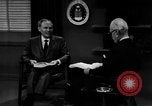
USAF Lieutenant General Ira Eaker talks about his education and military career in the United States.
An interview with United States Air Force Lieutenant General Ira Eaker conducted by Dr. Maurer in the United States. General Eaker talks about his education. He talks about his school and college education. He was not having any military education. He also speaks about his military career and the people who helped him during his career.
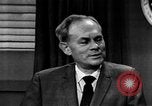
Lieutenant General Ira Eaker talks about his contributions and experiences in the USAF during an interview in the U.S.
An interview of United States Air Force Lieutenant General Ira Eaker conducted by Dr. Maurer in the United States. General Eaker is asked about his contribution to the Air Force. He speaks about the earlier period of World War I when he was a pilot. He speaks about his working as the Commander of the 20th Pursuit Group. He also talks about the working and the activities of the Air Force units during World War II.
CRITICALPAST.COM: About Us | Contact Us | FAQs - How to Order | License Agreement | My Account | My Lightboxes | Shopping Cart | Advanced Search | Featured Collections | Website Terms & Conditions | Privacy Policy ©2026 CriticalPast LLC.
License Agreement |
Terms & Conditions |
Privacy Policy
©2026 CriticalPast LLC.