


 Francais
 Deutsch
 Italiano
Refine Your Search
-Cebu,-Philippines stock footage and images
- Showing 56275 to 56280 of 58885 results more
more Hide
Hide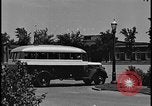
Young men and women punch time clock as they enter a Ford training facility
A bus rides up and parks in front of a building in a suburban campus. Men begin to exit the bus and walk toward the camera. The scene is repeated again and this time a group of young men and women step from the bus and walk along a pathway toward the building entrance (unseen). View shifts to inside the entrance hallway of the building, where doors are open to what seem like classrooms. Along the wall is a time clock and cards for persons. A succession of young men take their cards and "punch in" at the time clock, followed by several young women who do likewise.

People leaving the Martha-Mary Chapel at Greenfield Village, Dearborn, Michigan
Film opens showing a woman sitting at a kitchen table along with several children, eating dinner. Abrupt change of scene shows many men, women, and children exiting the Martha-Mary Chapel in Greenfield Village, Dearborn, Michigan. Small boys seen are in short pants, and somewhat older boys wear Knickers (Kickerbockers). It is a summer-like day and seems to be the end of a church service. After momentary interruption, the camera pans over the chapel structure. Next, little girls and boys are shown leaving the chapel. Many of them run, happily. They are followed by grownups who could be Sunday School teachers, or the like. They linger and converse at the front of the chapel. Soon older children begin leaving the chapel.

1928 film advertising Ford Motor cars
Opening scene shows women gathering for a bridge club party. They each drive to the party in their own cars and park in front of the house. While waiting for the last club member to arrive, they relax on the front porch of the hostess's home. They wear the fashions of the period, including Cloche hats, and some like flappers. The last woman to arrive drives a new Ford sedan, which attracts immediate attention from all the other women, who leave the porch and admire her car. Scene shifts to the next gathering of the bridge club, when all the womens' cars parked in front of the house, are new Fords.
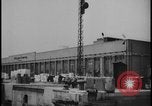
Film showing Ford Motor Company factories and Ford cars operating in various countries of the world
Film begins showing a waterfront Ford Motor Company factory viewed from a boat (unseen) moving past it A large freighter ship is seen nearby, with the name "Runstroom" on her bow. Closeup of waterfront crane and nearby flag labeled "Ford." Scene shifts to factory with sign on top in Dutch reading: "Nederlandsche Ford Automobiel fabriek" (Netherlands Ford automobile factory). Location shifts to cars driving on the Champs-Élysées in Paris, near the Arc de Triomphe de l'Étoile. One appears to be a 1932 Ford Roadster. heading toward the camera. Scene shifts to a large barge on a river, viewed from an overlooking domed structure. The next scene shows a European farmyard and horses with sheep circling around a Ford roadster. The remainder of the film shows Ford plants in the U.S. and abroad.
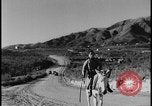
Ford cars being tested on rugged unpaved mountain road
Momentary opening scene shows a modern building on a rugged dirt road in low mountainous terrain. Two new Ford cars are passing in front of the building and , in the background, three more are traveling rapidly downhill on the dirt road towards the building. Several persons are standing in front of the building, watching the cars speed past. (Note: Because it is only about one frame, this scene is visible only in the first still photo accompanying this video.) Next, a man is seen riding a burro along the roadside, as the three cars coming downhill approach him. The scene shifts to a 1932 Ford Roadster climbing the dirt road now running uphill along the side of a mountain. It is followed closely by a sedan.
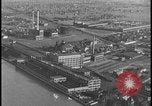
The Ford Motor Company River Rouge Plant
Aerial views of the Ford Motor Company River Rouge Plant. View inside the plant, where automobiles are crated for shipment to New Zealand
CRITICALPAST.COM: About Us | Contact Us | FAQs - How to Order | License Agreement | My Account | My Lightboxes | Shopping Cart | Advanced Search | Featured Collections | Website Terms & Conditions | Privacy Policy ©2026 CriticalPast LLC.
License Agreement |
Terms & Conditions |
Privacy Policy
©2026 CriticalPast LLC.