


 Francais
 Deutsch
 Italiano
Refine Your Search
-Cebu,-Philippines stock footage and images
- Showing 56527 to 56532 of 58885 results more
more Hide
Hide
Jim Crow Laws affecting African Americans from finding justice and equality despite of the 13th and 14th Amendments during the 20th century
Artist impression of the House of Representatives as the United States Congress passes the 13th Amendment to the United States Constitution. Images of Thaddeus Stevens and Charles Sumner, the leaders of the Radical Republican faction of the Republican Party during the 1860s. African-American student, victim of the Lamar High School School Bus Attack, listens to Frank Jackson, the attorney defending him, as he lectures him about the history of African-American rights and freedom. Off camera, Jackson quotes the 14th Amendment, saying, "no state shall make or enforce any law which shall abridge the privileges or immunities of citizens." Image of Senator Benjamin Tillman of South Carolina. Off camera, Jackson quotes Tillman's comment about "virus of equality..." Artist impression of Black Americans in court during Reconstruction. Students inside the school bus on their way to Lamar High School School before bus attack. Image of Black-Americans inside a moving bus during the 1960s-1970s. Jim Crow signs seen, including a sign reading “White only Ladies Rest Room”. Image of a doctor standing in a door labeled “COLORED” while talking to patient with baby. Image of door with sign that says “White-Trade”. Image of door with sign that says “Colored-Trade”. Image of President Rutherford Hayes. Fire burning. Artist impression of Ku Klux Klan members in costume hanging (lynching) a Black American. Man menacingly holds a bat and says “They’ll gonna wish they was never born”. A view of the United States Supreme Court. Artist Impression of Homer Plessy refusing to move from the White people coach to the Jim Crow train coach in 1896. “Equal justice under law” engraved on the front of the United States Supreme Court Building in Washington DC. Artist impression of John Marshall Harlan, former Attorney General of Kentucky and great dissenter of cases that restricted civil rights such as “Plessy v. Fegurson”. “But until a majority of judges on the Supreme Court would agree, Black Americans would find little justice” says Frank Jackson.
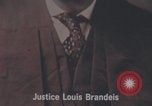
Dramatization depicts: African American lawyers as instrumental to secure civil rights for African Americans after WW2
Image of Justice Louis Brandeis, Supreme Court Justice who advised the President of Howard University to make a fine law school for Black Americans. Artists impression of a Black American lawyer defending a case in court after World War II. Dramatization shows female African American in school bus exclaiming “South Carolina’s run out of time, run out of courts!” Frank Jackson explains to his client how Howard University-trained lawyers completely changed the roles of the Black Americans. Image of Thurgood Marshall, the first African American Associate Justice of the Supreme Court of the United States. View of Howard University (2400 6th St NW, Washington, DC 20059, United States). An image of Thurgood Marshall with fellow lawyers, some of them Black Americans. Artist impression of Thurgood Marshall defending client in a Jim Crow Court hearing. Dramatization...African-American Lamar High School Student says “And when the courts say “go!”, you go! That’s the law!”
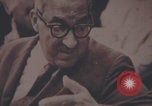
African Americans registering to vote and on a bus. African American man rakes leaves while children play in vacant lot.
Image of Thurgood Marshall, the first African American Associate Justice of the Supreme Court of the United States. African Americans lined up to register to vote. Sign reads, “Board of Registrars”. African Americans taking an oath for voter registration. Interior of bus with African American passengers. City street view. Children play in an abandoned lot. African American man raking leaves in suburban yard. Image of Thurgood Marshal. Artist impression of interrogation of an African American prisoner behind bars.
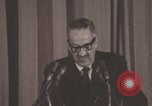
Excerpt from Address of Solicitor General Thurgood Marshall during the Banquet Session of "To Fulfill these Rights" Conference in Washington DC
Thurgood Marshall, the first African American Associate Justice of the Supreme Court of the United States, speaks. Brief shot of dramatization of Dred Scott in court room. African American students inside a school bus. Closeup shots of white hands holding chains, a brick, and a bat. Thurgood Marshall notes, "What is striking to me is the importance of law in determining the condition of the African American...I submit the history of the African American in this country demonstrates the importance of getting rid of hostile laws and seeking the security of new friendly laws, federal, state, and local."
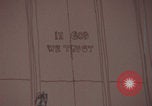
African Americans pursue equality in education through landmark case "Brown v. Board of Education of Topeka" in 1953
Artist Impression of the Brown v. Board of Education of Topeka in 1953. Image of Thurgood Marshall, the first African American Associate Justice of the Supreme Court of the United States. Artist Impression of African-American boy reading a book inside a classroom. Image of young African American students studying in class. Image of an African American boy. Image of Chief Justice Earl Warren. Image of William L. Patterson, an African American lawyer who fought for black justice in American courts for years. Image of Martin Luther King Jr behind bars. Very brief images of Jim Crow era lunch counter sit in, and bus burning incident. Footage of whites protesting in favor of racial segregation. Image of Black Americans holding signs saying “Birmingham Merchants Unfair” and “Equal Opportunity and Human Dignity”. Image of white Americans holding placards saying “Close Mixed Schools”. Image of a black American couple running away from fire. Footage of black Americans walking to support civil rights while guarded by officers with shot guns in air. Brief footage of Ku Klux Klan (KKK) members parading and holding the United States and the Confederate flags. Image of Martin Luther King Jr. with young Black Americans. Footage of black and white students clapping together to support civil rights. Image of Thurgood Marshall with wife, Cecilia Suyat, and a friend in Washington DC. Image of Thurgood Marshall. Image of President John F. Kennedy. Footage of Senator James Eastland, Senator of Mississippi, raising a gavel in front of photographers. US senate in session. Image of Thurgood Marshall speaking to Robert Kennedy. Image of Thurgood Marshall as a Solicitor General, walking on the steps of the United States Supreme Court in Washington DC. Image of Thurgood Marshall as the United States Solicitor General.
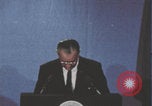
United States President Lyndon B. Johnson announcing his appointment of Thurgood Marshall to the Supreme Court of the United States.
United States President Lyndon B. Johnson announcing his appointment of Thurgood Marshall as the first African American to become a justice in the United States Supreme Court. Johnson notes that, "the senate willing, he will become associate justice to succeed justice Clark." Various still images of Thurgood Marshall's career in court. An African American man notes, "now, a new generation of Thurgood Marshalls must struggle to make the constitution live."
CRITICALPAST.COM: About Us | Contact Us | FAQs - How to Order | License Agreement | My Account | My Lightboxes | Shopping Cart | Advanced Search | Featured Collections | Website Terms & Conditions | Privacy Policy ©2026 CriticalPast LLC.
License Agreement |
Terms & Conditions |
Privacy Policy
©2026 CriticalPast LLC.