


 Francais
 Deutsch
 Italiano
Refine Your Search
2nd-Rangers-D-Day stock footage and images
- Showing 6847 to 6852 of 13612 results more
more Hide
Hide
President Harry S. Truman reads prepared speech after dropping of atomic bomb on Hiroshima Japan during World War 2.
U.S. President Harry S. Truman delivers a speech following the dropping of the atomic bomb on Hiroshima, Japan, during World War II. U.S. President Harry S. Truman seated at desk in cabin of a ship. He reads prepared speech stating that a single American aircraft dropped one atomic bomb on Hiroshima and destroyed its usefulness to the enemy. He reminds listeners that the Japanese began the war from the air at Pearl Harbor. He speaks about the U.S. Armed Forces and the production of atomic bombs in the United States. The President states that the U.S. is now prepared to completely destroy every productive enterprise of Japan, by bombing Japanese docks, factories, and communications. Truman states that the U.S. shall completely destroy Japan's power to make war. President Truman notes that acceptance of the Ultimatum of July 26th issued at Potsdam, could have saved the Japanese people much suffering. But it was rejected by Japan's leaders. He states that the U.S. have spent more than two billion dollars on the greatest scientific gamble in history and have won. This is due to the greatest achievement of organized science in history.
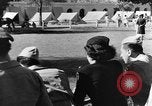
United States soldiers purchase tickets and watch a horse race in India during World War 2
United States Troops in India during World War II. Soldiers and nurses watch as jockeys take horses past them. Tents in the foreground. Civilians and soldiers purchase tickets at the ticket counter. Soldiers watch jockeys ride horses during a race on a track
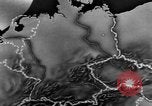
The Soviet Union walls off East Germany from the rest of the world post WW2.
Animated map shows the four different zones of Germany after World War II.: British, Soviet, French and American Zone. Animated map focuses on the Soviet zone and shows the Iron Curtain rising along the Soviet Border. Russian troops march through streets in Berlin. Civilians board trains on streets. Russian woman directs traffic. Damaged buildings in the background. Russian officers enter and leave Headquarter in Berlin. East German men and women workers on farms. Russian soldiers and East German civilians pull heavy machinery for shipment to Russia. Interior of the Dresden China Works. Civilians mold and paint china articles.
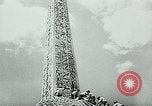
French workers remove sandbags from Luxor Obelisk and remove defenses following German capture of Paris (WW2)
German newsreel shows activities of French workers in Paris, France following capture and occupation of the city by Nazi German forces in World War II. French workers and soldiers lined up on a ladder and removing sandbag defensive protections from the Luxor Obelisk (Pl. de la Concorde, 75008 Paris, France) at the Place de la Concorde. Buildings in the background. Workers pull nails from boards as they disassemble defensive positions and gun emplacements. Long line of saddened workers and French soldiers pass buckets slowly in a bucket brigade. Eiffel Tower in the background.
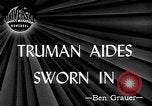
Vinson sworn in as Secretary of the Treasury and Snyder as Director of War Mobilization and Reconversion in the United States (WW2)
Swearing in of Secretary of the Treasury and Director of War Mobilization and Reconversion in the United States during World War II. Frederick Moore Vinson sworn in as Secretary of the Treasury by Justice Groner. Former Secretary of Treasury Henry Morgenthau Jr. stands nearby. Officials greet Secretary Frederick Vinson. At White House in Washington DC: Ex-Federal Loan Administrator John Wesley Snyder sworn in as Director of War Mobilization and Reconversion. Officials greet Director John Snyder.

War plants closed and traffic completely disrupted due to floods in New Jersey, United States (WW2)
Floods in New Jersey, United States. Water level of the Passaic River rises. Floods causing damage to infrastructure. Crowds gathered to watch the flooding of Passaic River in Paterson, New Jersey. People wading in floodwater in downtown Paterson. Street sign “River St.”. Parked car partially submerged in flood. War plants are closed, and traffic is completely disrupted. Streets and vehicles submerged in water. (World War II period)
CRITICALPAST.COM: About Us | Contact Us | FAQs - How to Order | License Agreement | My Account | My Lightboxes | Shopping Cart | Advanced Search | Featured Collections | Website Terms & Conditions | Privacy Policy ©2026 CriticalPast LLC.
License Agreement |
Terms & Conditions |
Privacy Policy
©2026 CriticalPast LLC.