


 Francais
 Deutsch
 Italiano
Refine Your Search
2nd-Rangers-D-Day stock footage and images
- Showing 8161 to 8166 of 13612 results more
more Hide
Hide
Scenes of Rangoon, Burma, under Japanese occupation during World War II.
Rangoon, Burma, under Japanese occupation during World War 2. Japanese propaganda film states, in Japanese, that Volunteer Corps is building a 'New 'Burma,' and that Volunteer corps training illustrates how people can enjoy and manage their freedom from the British. Burmese gather at open market in front of a hotel in Rangoon. Words "On Look Hotel" appear along with Japanese lettering on the hotel front. Several Japanese soldiers mingle amongst the crowd at an open market. All manner of foods and goods being sold. Women display fabrics. Crowd gathered in grandstand of stadium to watch Volunteer Corps training and parade. Shwedagon Paya (Pagoda), Buddhist temple seen in background. Japanese officer stands on steps and salutes as Volunteer Corps pass in review. Their most notable weapon is a machine gun mounted in a wagon.
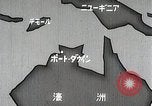
Japanese bombers take off to attack Port Darwin, Australia, during World War II
"Bombing Raid on Port Darwin". An animated map with Japanese writing shows course of Japanese Air Force bombing mission (probably from Poeloeti-Penfui Airfield, West Timor) against Port Darwin, Australia, during World War 2. Japanese Mitsubishi G4M "Betty" bombers taking off on the mission. Airmen on the field wave their hats at the departing planes. View from nose greenhouse of a bomber breaking ground on takeoff. Formation of G4Ms in flight. View inside, of pilots in cockpit. Pilot holding control yoke. Japanese writing on cloth fastened near right cockpit window.Crew members eating lunch en route in flight.
Indonesia is promised independence from Japan, at ceremony in Istana Gambir (Gambir Palace). Indonesian crowds celebrate news.
The promise of independence for Indonesia is broadcast throughout the city of Jakarta, following a ceremony at Istana Gambir, or the Gambir Palace (Merdeka Palace, Jawa Timur Jawa, Jawa Timur 65455, Indonesia). Exterior of Gambir Palace in Jakarta Indonesia. Indonesian leader Sukarno, head of the Japanese-created Poesat Tenaga Rakjat (POETERA - Concentration of People's Power) emerges from a car, climbs steps, and enters the Gambir Palace, presently known as Merdeka Palace. He stands together with other Indonesian officials. Imperial Japanese Army Lieutenant General Kumakichi Harada addresses the gathering and delivers news of Japanese Prime Minister Koiso's September 7, 1944 promise of future independence for Indonesia (the so-called Koiso Declaration). Large Japanese flag seen on the wall behind speakers. Sukarno approaches General Harada, bows and then speaks into a microphone. Scenes of jubilation in the streets of Jakarta as citizens hear the news that Japan has promised future independence for Indonesia (date undeclared). A man standing atop a truck announces the news over a megaphone. People stand near the truck, listen and cheer. A caravan of loaded trucks rolls slowly through a Jakarta neighborhood spreading the news about the promised independence. Citizens cheering and smiling. People standing at a railway station and at stopped trains hear the news and cheer. Citizens including men, women, and many children wave to the passing caravan. Sign on side of truck includes words "Bangsa Indonesia diperkenankan merdeka" meaning "Indonesia allowed Independence". Clip is from a Japanese newsreel during World War 2, with Japanese narration.
German soldiers operate a remote-controlled Goliath tracked mine and blow up a tank on a snow covered field in Europe.
German soldiers ready a Goliath tracked mine demolition vehicle and hide behind the bushes during World War 2. Remote-controlled tracked demolition vehicle (also known by the Allies as Beetle Tank or robot tank) seen on a snow covered field. German soldiers operate the remote-controlled Goliath Tracked Mine and blow up a tank on a snow covered field.
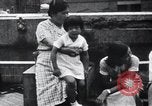
Tourists visit the Sensō-ji Temple in Asakusa, Tokyo, Japan
Tourists visit the Asakusa Sensō-ji Temple (2 Chome-3-1 Asakusa, Taito City, Tokyo 111-0032, Japan) in Tokyo, Japan. Various Japanese souvenirs are displayed on shops along the Nakamise Shopping Street leading to the Sensō-ji Temple. Tourists walking along the Nakamise Shopping Street. People with umbrellas pass by a pagoda on the grounds of Sensō-ji Temple. Pilgrims walk up and down the stone stairs of the Sensō-ji Temple. A child buys bird feed from a woman near the Buddhist temple. Two women watch the girl feed pigeons. Bananas for sale on display.
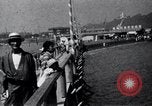
Western tourists visit Enoshima in Japan.
Tourists visit Enoshima Island, Kamakura County, Kanagawa Prefecture, Japan. Western tourists at bridge over Enoshima Seashore between Enoshima Beach and Enoshima Island and look at boats. Boats are moored at the jetty of Enoshima Island. Tourists walk down the bridge. View of Enoshima East Beach and hills in the background. Traditional wooden inns (called ryokan) at both sides of the narrow entrance path to Enoshima Shinto Shrine (2 Chome-3-8 Enoshima, Fujisawa, Kanagawa 251-0036, Japan) at the hilltop of Enoshima Island. A man fanning his daughter inside a ryokan inn.
CRITICALPAST.COM: About Us | Contact Us | FAQs - How to Order | License Agreement | My Account | My Lightboxes | Shopping Cart | Advanced Search | Featured Collections | Website Terms & Conditions | Privacy Policy ©2026 CriticalPast LLC.
License Agreement |
Terms & Conditions |
Privacy Policy
©2026 CriticalPast LLC.