


 Francais
 Deutsch
 Italiano
Refine Your Search
2nd-Rangers-D-Day stock footage and images
- Showing 8197 to 8202 of 13612 results more
more Hide
Hide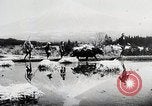
Agricultural scenes in Japan which is self-sufficient in food production prior to World War II.
Views of Japanese farmers at work in rice paddies and other agricultural fields in Japan before onset of World War 2. A line of women, in straw hats, labor in a rice field as a man pumps water into the paddy using a foot operated wheel. Rice being harvested and processed in the field. Farmers working in other fields containing grains such as wheat, barley, and oats and in vegetable patches. Japanese soldiers using grain straw to patch roofs. Other Japanese workers using such material for screens, parasols, and hats. Women harvesting fruit, in which Japan is 95% self-sufficient. Workers harvesting tea leaves. Workers at a seashore gathering salt evaporated from seawater. They carry some in wheelbarrows and some in containers using shoulder yoke.
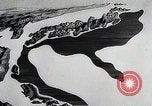
Commercial fishing industry of Japan before World War II
Animated map of fishing grounds around Japan that provide one fourth of the world's catch. Movement of the seasonal catch is tracked as it moves Northward during the year. Men and women engaged in commercial fishing, gathering in nets teeming with fish. Fishing boats plying waters of an inland sea. Fishing boats moored along the shores. Larger seagoing fishing boats leaving to operate along the coast of Honshu. Fishermen letting out nets from these boats and using cable winches to retrieve them. Views of refrigerated Japanese fishing ships that also freeze their catches, operatiing in the Siberian maritime provinces and in Alaskan and Arctic waters. Fishing boats, operating before World War 2, are seen pulling crabs aboard. View inside a floating cannery ship where salmon and crabmeat are being canned for export to places like the U.S.A. Closeup of a can displaying "ICEBOUNDBRAND" and text reading: " World Renowned Floating Cannery Pack Fresh from the Deep Sea Waters of Northern Japan. Net contents 13ounces. SELECTED CRABMEAT." Japanese wading in a river, and using trained cormorants, to catch fish. View of fisherman taking fish from his cormorant and placing them into a large jug. view of edible seaweed being harvested and laid out in the sun, in racks. Animated illustration of Japanese man and items included in his dinner of rice, soybean, fish, sea slugs, sea urchins, octopus, lily bulbs, bamboo shoots, bean curd and pickled fruits and vegetables, accompanied by a little saki (rice wine).
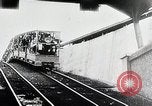
Electric Power Generation in Japan prior to World War II
A look at various sources of energy in Japan prior to World War 2. Japanese coal miners ride railcars down into a mine. View of miner using pneumatic drill to cut away coal at the face. Steam shovel bucket loading bituminous coal into open rail car. Animated map showing locations of Japan's coal mining areas in Kyushu and Hokkaido and small deposits in Honshu. Scene shifts to a river and water power generation site. View of turbines in water-powered electric generating plant. Generator buildings at side of river. Electric power transmission facilities. View from below a dam of a hydroelectric plant in central Honshu. Pipes carrying water down a mountainside. Reservoirs for storing water. Animated map depicting meager oil deposits in Japan and showing some of its oil processing and storage facilities.
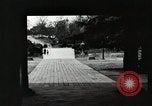
Zojoji Temple in Tokyo
Two people head to the gate of Zōjōji Temple (Zōjōji 4 Chome-7-35 Shibakoen, Minato City, Tokyo 105-0011, Japan), in Tokyo, Japan. Japanese pedestrians pass by the busy street where Zōjōji Temple is located. Stone birdbaths can be found on the left side of the Zōjōji Temple. A pigeon in bird bath. A monument stands where remains of beggars are buried. Camera shifts from temple bird bath to the monument for beggars. Entrance to cemetery of Tokugawa Hidetada (1579- 1632), the second Shogun of Japan. Temporary Zōjōji temple after the original building was destroyed by air raids during World War 2. Door to the temporary temple. A statue of Buddha in temple.
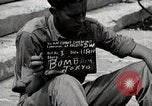
Views of Zōjōji temple in Tokyo damaged during World War II
Statue of Kannon, the Buddhist bodhisattva associated with mercy. Zōjōji temple (4 Chome-7-35 Shibakoen, Minato City, Tokyo 105-0011, Japan) and its vegetable garden show extensive damage from air raid bombings during World War 2. Rubble is scattered all over the temple grounds. A bell in Zōjōji temple. Building housing the bell shows damage. The Shiba Tōshō-gū (4 Chome-8-10 Shibakoen, Minato City, Tokyo 105-0011, Japan), enshrining the first Japanese Shogun Tokugawa Ieyasu, located beside the Zōjōji temple shows similar damage.
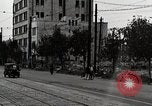
Gutted War Department building in Tokyo
Bombing damage in Tokyo soon after the end of World War 2. Samurai district showing remains of small shops and Geisha houses. Square block destroyed. Gutted war department building and retaining prison. Damage to navy building. Entrance to imperial palace and surrounding area. U.S. sailors stand at entrance to imperial palace.
CRITICALPAST.COM: About Us | Contact Us | FAQs - How to Order | License Agreement | My Account | My Lightboxes | Shopping Cart | Advanced Search | Featured Collections | Website Terms & Conditions | Privacy Policy ©2026 CriticalPast LLC.
License Agreement |
Terms & Conditions |
Privacy Policy
©2026 CriticalPast LLC.