


 Francais
 Deutsch
 Italiano
Refine Your Search
2nd-Rangers-D-Day stock footage and images
- Showing 8275 to 8280 of 13612 results more
more Hide
Hide
Japanese troops and military elements moves forward to attack Manila in Philippines.
Japan's Military moves up to attack Manila in Philippines in December 1941, during World War 2. Japanese troops cross a bridge. Trucks and artillery towed. Japanese occupation soldiers move forward. Smoke rises from houses. Troops march in field and smoke rises in the background. Tanks move forward from a village. People besides road wave Flag of Japan to greet Japanese troops in City. Damaged United States aircraft on airstrip. A plane takes off. Animated map shows movement of Japanese aircraft portraying aerial attack over Corregidor.

U.S. Army troops make amphibious landing at Nasugbu, Batangas, Philippines, in World War II
On January 31, 1945, during World War 2, elements of the 11th Airborne Division attached to the U.S. Eighth Army, are seen in landing craft approaching the shore of Nasugbu, Batangas. They hit the beach in an unopposed landing, but one of their vehicles stalls near the shoreline. A DUKW Military Amphibious Vehicle moves along the shore as soldiers board the stalled vehicle and head toward the beach pulled by a bulldozer using a towline. Another vehicle is also seen, being pulled by a bulldozer.
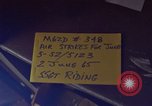
USAF A-1E skyraider flying.
Air activities during June 1965 at Bien Hoa AB,Vietnam. USAF A-1E skyraider flying. 2 June 1965.

Black market crowd in Berlin post war.
People and children walking on a snow-clad road. Area around the Berlin Tiergarten with jeeps and car parked on the road. Brandenburg Gate (Brandenburger Tor) seen in background. Black market crowd seen in front of the Reichstag- the seat of the German Government in Berlin. Policeman directing the traffic. Soldier trying to click the picture of Russian War Memorial. Russian soldier bartering with a German civilian in post World War 2 Berlin.

Spring tonic-halibut oil given to animals in a zoo in England to prevent spring fever
Man pours drops of halibut oil on dead fishes and gives the fish to a seal in the pond. It consumes the fish and gets back in the pond. The halibut oil is a spring tonic for the animals. People watch the seal. Some penguins walk nearby the pond. 2 chimpanzees sit on the table and a man gives them the tonic by pouring some drops of it on sugar cubes and they eat the cubes. One of the chimpanzees gives the man a spoonful of Castor oil.

U.S. Navy training film about escape from ditched modern jet fighters that sink faster than the old propeller airplanes
An F6F Hellcat ditches in the sea. It floats long enough to allow pilot to abandon it before sinking. Next an A-4 Skyhawk ditches. Narrator remarks about the short time for escape from such aircraft on the surface of the water. Views of tests conducted by the U.S. Navy to test the sink rates of jet aircraft from various heights and attitudes. A dummy is placed in the cockpit of a derelict F9F Panther, which is lifted by a crane and is dropped into water from a low height. It is seen floating. (Narrator states that even with no structural damage, it sinks in less than a minute.) Next an FJ-2 Fury is dropped from about 55 feet. Due to structural damage, narrator states such an aircraft may sink in a few seconds, and generally between zero to 55 seconds. View of crane operator and then of an airplane sinking rapidly. Scene shifts to James F. Roth of U.S. Navy Attack Squadron 42,(VA-42) the "Green Pawns," in the closed cockpit of a Navy jet airplane. Next, an F-4 phantom jet is seen being catapulted from an aircraft carrier. Animation shows that the airplane falling into the sea right after takeoff will sink ballistically and can descend as deep as 100 feet in 10 seconds.
CRITICALPAST.COM: About Us | Contact Us | FAQs - How to Order | License Agreement | My Account | My Lightboxes | Shopping Cart | Advanced Search | Featured Collections | Website Terms & Conditions | Privacy Policy ©2026 CriticalPast LLC.
License Agreement |
Terms & Conditions |
Privacy Policy
©2026 CriticalPast LLC.