


 Francais
 Deutsch
 Italiano
Refine Your Search
2nd-Rangers-D-Day stock footage and images
- Showing 8419 to 8424 of 13612 results more
more Hide
Hide
Wreckage in Bastogne and German prisoners under guard clear debris in Bastogne, Belgium.
Wrecked buildings and houses in Bastogne, Belgium from bombing during World War 2. German prisoners under guard clear debris and rubble, and dig out a building in wreckage. Trees in the background. Soldiers walk. Vehicles on street.
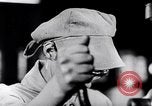
American women actively participate in the National Defense Program as war production workers in United States.
Wartime activities of women in the United States during World War 2. American women wearing uniforms work at machines in factories, assisting with the war production effort. They perform work in operating machines including drill presses, sewing, and fine detail work with precision instruments. They sew airplane wing fabric and parachutes. They assemble and inspect precision instruments employing tiny bearings. The women war workers operate drill presses and lathes in a machine shop.

African American troops of 923rd Aviation Engineers engaged in construction of a runway in France in World War II.
Report on African American troops of the 923rd Aviation Engineers in France in World War 2. It is part of the 1st tactical Air Force serving in France. Troop activities are shown with background soundtrack music of an Army chorus singing African American folk music (such as "I've been working on the railroad") and gospel spiritual music. African American engineers walk along the sides of tents. Military vehicles parked on ground. They sit on the vehicles and the vehicles move. An engineer repairs the wheel of a vehicle, other engineers repair other parts. Engineer welds a part of vehicle. They work on the construction of runway for the aircraft. Trees in the background. Large group of African American soldiers walk in a line and enter a mess tent for food. Engineers dig and lift concrete using cranes and construct the runway. Airplanes parked on the runway in construction. A P-51 Mustang aircraft with name "Cissy Three" on nose lands on the new airfield.
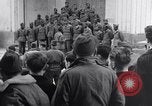
Army Chorus performs in front of Army hospital patients, soldiers, and other people in France during World War II.
Report on African American soldiers of 923rd Aviation engineers in France during World War 2. It is the 1st tactical Air Force serving in France. An African American contingent of the Army Chorus performs, singing the gospel spiritual "Joshua Fought the Battle of Jericho." Soldiers and hospital patients watch and listen, from what appears to be an area on or near the grounds of the Hotel Continental in Vittel, France, where the 23rd General Hospital had established as of October 1944. Hospital patient soldiers seen among the crowd, and a sign that says "23rd General Hospital Special Service." Other soldiers and civilians also watch, including some from the balconies and windows of the adjacent buildings near the Continental Hotel.

United States Army destroys the IG Farben plant in Ebenhausen, Germany.
The huge IG Farben plant is blown up in Ebenhausen, Germany, 7 months after the end of World War 2 in Europe. The German war production plant produced tons of nitrocellulose daily for the German war. United States Army soldiers seated in a group. The Commanding Officer, Lt. General Lucian Truscott, discusses with another U.S. Army officer. A sign board reads: 'Schwaben Control Office'. Lt General Truscott activates the handle to trigger the explosive charge, and the plant is blasted by 200 tons of TNT. Army personnel examine the rubble and wrecked parts of the plant and its machinery.

American aircraft production workers examine a German Messerschmidt 110 aircraft in Downey, California.
A Nazi German Messerschmitt Bf 110, (Me 110) in a hangar of the Vultee aircraft manufacturing company in Downey, California, early in World War 2, and before America's entrance into the war. The aircraft (possibly captured by the British?) is seen going through inspection by workers at the Vultee plant. There are some bullet holes and signs of damage in the captured plane. Men in the cockpit of the plane inspect it. Other men watch.
CRITICALPAST.COM: About Us | Contact Us | FAQs - How to Order | License Agreement | My Account | My Lightboxes | Shopping Cart | Advanced Search | Featured Collections | Website Terms & Conditions | Privacy Policy ©2026 CriticalPast LLC.
License Agreement |
Terms & Conditions |
Privacy Policy
©2026 CriticalPast LLC.