


 Francais
 Deutsch
 Italiano
Refine Your Search
2nd-Rangers-D-Day stock footage and images
- Showing 8941 to 8946 of 13613 results more
more Hide
Hide
World tensions after World War II. The Baruch Plan. The Berlin Airlift. The Korean War. The Cold War. The Atomic age. Ballistic Missiles
Speaking before United Nations Atomic Energy Commission (UNAEC) in its first meeting in June 1946, Bernard Baruch proposes international control of all atomic energy -- the so-called Baruch Plan. Low level aerial view of ruined post World War 2 European city. Goods including heavy equipment, locomotives, being loaded aboard ships to aid in the postwar recovery of Europe (The Marshall Plan). Workers in Western Europe making use of Marshall Plan materials to rebuild their national infrastructures. West European farmers restoring agriculture. View from overflying light airplane of parts of postwar Berlin in 1948. Blocked roads and empty railroad tracks leading from East Germany to West Germany, blocked by the Soviet Union. Barge traffic at standstill due to Soviet actions. U.S. C-54 transport aircraft flying supplies into West Berlin (The Berlin Airlift) during the Soviet blockade of that city. West Berlin citizens watching U.S. transport aircraft bringing fuel, food and other essentials into the isolated city. A C-54 flying low over empty railroad lines, as it prepares to land in West Berlin. Supplies offloaded from a DC-3 ( AKA C-47 or British Dakota) equipped with unusual set of rear cargo doors. Supplies being moved on Tegel Airport with many C-54 aircraft in the background. Numerous C-47 aircraft operating at Tempelhof airport. An East German official opening a barricade as Soviet blockade of West Berlin ends on May 12, 1949, and supply trucks begin to move over roads again. Flags of Western nations flying on high flagpoles. Glimpse of Allied warships underway during the Cold War. Formation of P-38 Lightning aircraft in flight overhead. NATO troops marching and NATO armor on parade. Flashes of heavy artillery firing at night. Korean refugees moving South in 1950 with the outbreak of the Korean War. View of UN Security Council meeting in the absence of Soviet representative. U.S. tanks firing guns and American infantrymen in conflict with North Korea in Korean War. American wounded on stretchers.Delegates of both North and South Korea signing the Korean Armistice Agreement in P'anmunjŏm, on July 27, 1953. A rocket is launched. Images of earth from inside a space craft in orbit. Narrator mentions the first satellite to circle the earth, the soviet Sputnik 1 in 1957. View of Soviet pilots in low pressure altitude chamber. A test subject in an aircraft making a maneuver that allows him to experience "weightlessness." Objects in his cockpit float about. A military rocket launch monitored by arrays of radar. An object being retrieved from space by means of a parachute. A nuclear powered submarine. Rockets on display during a military parade in Red Square, Moscow, the Soviet Union. A U.S. Air Force B-52 bomber taxiing. More views of rockets seen during a Soviet military parade in Red Square, Moscow.
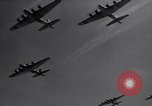
Bombing of rail roads in Bremen by United States B-17 bombers and atom bomb testing during WWII
United States Boeing B-17 Flying Fortress bomber drops bombs on railway tracks in Bremen, Germany during World War II. Bombs making an impact. Low-level strafing and bombing of targets in Europe by low flying U.S. Army Air Force aircraft during World War 2. Bridge is struck by bomb. Explosions on other targets. Separate unrelated shot of United States conducting an early Atomic bomb test (Trinity test is shown on July 16, 1945. The first detonation of a nuclear device). Nuclear explosion and mushroom cloud is seen.

Royal Air Force and Yanks in a boxing match during Second World War
Newsreel titled 'RAF (Royal Air Force) and YANKS in a boxing match'. View of indoor boxing ring at an American air base in England during World War 2. British and American boxers put gloves on. Royal Air Force pilots and Americans in boxing tie during the Second World War. Crowd cheers them In the end, winner is awarded a cup.
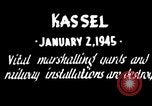
United States 8th Air Force B-17 bombers strike railroads and installations in Kassel Germany during World War II
Film starts showing view from inside a U.S 8th Air Force B-17 flying fortress bomber going through clouds of black flak from German anti-aircraft fire over Kassel, Germany during World War 2. View from another airplane of bombs falling from a B-17. View from a bomber of bombs bursting on the ground with heavy smoke rising. More views of flak clouds. A B-17 is truck by anti-aircraft fire has flames coming from its right wing. Crew members are seen bailing out of the plane, as it slowly descends. Closeup of the stricken airplane. Glimpse of a possible open parachute. View from inside a B-17 as cluster of bombs fall from its bomb bay. View of contrails below as seen from inside one of the bombers.

German propaganda film in World War II justifies German presence in Poland based on threat of Polish expansionism into Germany
German propaganda film during World War 2, before invasion of Poland, entitled 'Feuertaufe' meaning baptism by fire. A polish soldier on horseback sounds a bugle. What appears to be a newspaper, shows image of Polish Marshal Edward Smigly-Rydz; artillery; and warplanes; and comments about Polish military resistance. Narrator refers to Poland, and Britain at war with Germany. A parade of Polish cavalry units, airplanes, armored units and tanks before Polish military leader Edward Smigly-Rydz. A map illustrates Poland's presumed expansionist policies, including the conquest of Slovak Republic; the German protectorate of Bohemia and Moravia; and threatening Germany, itself. Referring to Danzig Narrator says: "But Danzig is German." Large crowd in Danzig listen to Nazi Gaulieter Albert Forster. German- Danzig troops patrol and construct razor wire obstacles. German flag and symbols on buildings in Danzig. German troops seen in Poland. Views of the German battleship Schleswig-Holstein, underway and entering the harbor at Danzig as crowd on docks cheers. A row of German JU-87 Stuka dive bombers parked on a field. Other German warplanes, including float planes, and twin engine bombers.
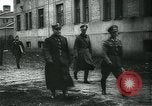
The fall of Warsaw to German forces in 1939, during World War II
Polish General Tadeusz Kutrzeba, deputy commander of Warsaw, is seen accompanied by German officers, as he proceeds toward a military bus where he will sign a ceasefire agreement incident to the capitulation of Warsaw defenders in World War 2. Views of the city in ruins, after the ceasefire. Thousands of Polish citizens gathered in an open square, damaged buildings in background. Polish children being escorted by teachers away from the gathering. Aerial views of the bombed out city, with smoke still rising in places. Unknown locations might include the Warsaw Ghetto. View of Polish General Kutrzeba, inside, the bus, where he signed capitulation agreements. He is reviewing local maps with German officers. He exits the bus and is escorted away (taken as a prisoner of war).
CRITICALPAST.COM: About Us | Contact Us | FAQs - How to Order | License Agreement | My Account | My Lightboxes | Shopping Cart | Advanced Search | Featured Collections | Website Terms & Conditions | Privacy Policy ©2026 CriticalPast LLC.
License Agreement |
Terms & Conditions |
Privacy Policy
©2026 CriticalPast LLC.