


 Francais
 Deutsch
 Italiano
Refine Your Search
2nd-Rangers-D-Day stock footage and images
- Showing 9013 to 9018 of 13613 results more
more Hide
Hide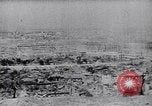
Sevastopol falls to German and Romanian forces under command of General Erich von Manstein, in World War II
Camera pans over destruction in aftermath of German siege of Sevastopol, Crimea, in World War 2. German General Erich von Manstein, Commander of German and Romanian forces, visits with officers in the ruins of Fort Maxim Gorky. He shakes hands with several of his troops, standing in front of one of the Soviet 305mm coastal guns atop the fort. Scenes of wrecked Soviet defensive batteries. Romanian troops testing the area for buried land mines. A flag identifies location of one. Romanian soldiers removing a buried mine. Romanian officers overseeing the operation. Romanian troops moving downward from the slopes toward the city, where smoke rises from bombardment. German troops moving toward bunkers. One throws a hand grenade. German soldiers moving through the city in house-to-house operations. Soviet warships sunk in the harbor. The Nazi flag flying above damaged building overlooking the harbor. What appear to be twin towers of a Russian Church and a minaret are seen in the rubble. A German soldier lays out a Nazi flag to smooth it for raising, as smoke billows from fires behind him. Camera pans the bombed and shelled hillsides in the area. Some horses stand on the hillside. A damaged artillery field piece stands amidst rubble. A deep bomb crater is shown. Soviet prisoners walk down from the fortifications. A long line of Soviet prisoners is seen marching under guard. Narrator states they number some 90 thousand.
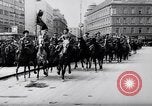
White Russian cavalry are honored by German forces in Zagreb, Croatia during World War II
White Russian Cossack Cavalry, who had fought with Germany, against Communist Soviet forces, parade on horseback on a street in central Zagreb, Croatia, during World War 2. They are being honored by Germany. German Cavalry officer, Lieutenant General Helmuth von Pannwitz, in fur hat, standing next to Field Marshal Paul Ludwig von Kleist, salutes the Cossacks as they pass. (He organized Cossack volunteers into the 1st Cossack Cavalry Division.) View of Cossack cavalry soldiers as they parade past the base of the equestrian statue of Josip Jelacic (Ban Josip Jelačić) in Jelacic Square, Zagreb, Croatia. (The statue is in its original north-facing placement in Ban Jelačić Square). Storefront sign in background for Cerjak I Drugovi, manufacturers of knitted goods, located at 6 Jelačić Square (Trg bana Josipa Jelačića 6, Zagreb). Individual White Russian soldiers and some German soldiers are decorated by Field Marshal Von Kleist. Afterwards, in a large field, Cossacks ride past and demonstrate a charge brandishing sabers.
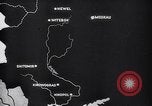
Field Marshal Ernst Busch is relieved of Command after German Army Group Centre suffers severe losses in World War II
Map shows Belorussian and Russian areas near the Dnieper river. Field Marshal Ernst Busch, ostensibly being honored for 40 years of service. (He has been notified that he is relieved from command of German Army Group Centre, following disastrous defeat by Soviets during their 1944 Belorussian Offensive of World War 2.) He steps from his headquarters in Belarus, receiving salutes from his staff. He accepts an elaborate candelabra, as a gift. Busch shares a document with a German General, and they both are amused by it. Members of the staff bid Marshal Busch farewell.
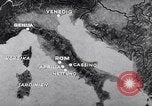
Ruins of Cassino town after the attack of Allied forces; Kesselring talks to German forces in World War II
An Italy campaign map shown. Street sign of Cassino appears. View of ruins of Cassino after Allied bombings in World War 2. General Albert Kesselring talks to German troops in Cassino area. Buildings in city are bombed into rubble which make cover for German troops. German soldiers see through wreckage. Artillery fire starts. General Mark Clark is seen in a tank. Allied troops fire artillery and small arms.

City of Budapest as seen before World War II.
Views of Budapest, Hungary before World War II. Bridge across the Danube River. People walking across the Széchenyi Chain Bridge (Budapest, Széchenyi Lánchíd, 1051 Hungary). Dome of St. Stephen’s Basilica (Budapest, Szent István tér 1, 1051 Hungary). Statue of Prince Eugene of Savoy at Buda Castle (Savoyai Jenő herceg lovasszobra, Buda Castle, Budapest, 1013 Hungary). Buda Castle grounds. View of Budapest as seen from Buda Castle. The Fisherman’s Bastion (Budapest, Szentháromság tér, 1014 Hungary). Hungarian Parliament Building as seen from the stone railings in the Fisherman’s Bastion. The late-Gothic Matthias Church (Mátyás Templom Budapest, Szentháromság tér 2, 1014 Hungary). The Holy Trinity Statue (Budapest, Szentháromság u., 1014 Hungary). A woman and her two daughters climb the stone stairs of a Budapest Street. Skyline of Budapest. Budapest bridges along the Danube River. Cars driving through the Széchenyi Chain Bridge. Numerous views of many famous buildings and monuments throughout Budapest. Narrator speaks about why the city of Budapest never lost its beauty and charm after five years of war and ten years of communism. This significant period has turned the Hungarians into a resilient race, proud of their national heroes who fought for Budapest.

Officials from Moravia and Bohemia are received by Adolf Hitler in Berlin during World War II
Civilian and military officials from Bohemia and Moravia meet Adolf Hitler in Berlin, Germany, during World War 2. The Civilian spokesperson renders a Nazi salute and shakes hands with Hitler, who then greets the accompanying officials. The delegate leader then proceeds to read from a document. He presents Hitler a small certificate, that he hands to an aide.
CRITICALPAST.COM: About Us | Contact Us | FAQs - How to Order | License Agreement | My Account | My Lightboxes | Shopping Cart | Advanced Search | Featured Collections | Website Terms & Conditions | Privacy Policy ©2026 CriticalPast LLC.
License Agreement |
Terms & Conditions |
Privacy Policy
©2026 CriticalPast LLC.