


 Francais
 Deutsch
 Italiano
Refine Your Search
2nd-Rangers-D-Day stock footage and images
- Showing 9511 to 9516 of 13612 results more
more Hide
Hide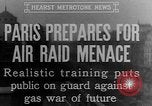
Training of a volunteer group, and practice drills for possible future air raid in Paris, France.
Between World War 1 and World War 2, training for French citizens for possible air raids in Paris, France. Members of a volunteer group supported by the government are trained for action against an air raid menace. The volunteers wear gas masks and gas-impregnated clothing and come out of air raid shelters. They get in a jeep and ride through the city streets. They escort civilians into gas-proof shelters. Dramatize film showswhat destruction might look like during an air raid. Dramatization: Aircraft shell the city. Bombs explode, fire in the city and buildings get damaged. Actual footage of practice drills in Paris where 'Victims' of the air raid are removed from the streets and are carried to the shelters.
German Stuka dive bombers are loaded and they drop bombs on woods and an industrial areas of Western Europe.
German Stuka dive bombers shell an industrial area and roads in Western Europe during World War 2. Ground crew unloads bombs from a truck and carries them to a plane. They fill and load 1000 pound bombs on the plane. German pilot boards the aircraft. He is given a motion picture camera. A squadron of Stukas takes off. Stuka aircraft drop bombs and dive, attacking targets along roadways and in towns. The bombs explode in an industrial area and along roadways and transit routes.
German Stuka dive bombers take off and bomb Western Europe.
German Stuka dive bombers attack targets in Western Europe during World War 2. Pilot entering cockpit of Junkers Ju 87 aircraft; Stuka aircraft taxi and then take off from an airfield. Aerial views of formation of Stuka aircraft in flight. View of Stuka dive bombers diving toward targets and dropping a series of bombs. Huge explosions. Brief view of German soldiers resting at a road side beside two tanks. More shots of Stuka dive bombers attacking targets, approaching toward camera position, and views of explosions from ground level.
German Heinkel bombers in flight in Western Europe.
German medium Heinkel He 111 bombers in flight during World War 2. A squadron of 9 Heinkel bombers. Views inside cockpit of pilot and crew. A bomber flying through the clouds. Views from gunner position and pilot position of surrounding terrain. Bombs seen falling away toward targets, as viewed from inside aircraft.
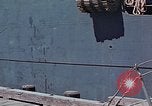
A U.S. Coast Guard photographer on Coast Guard operated APA and troops ready to board an LCT during World War II
Activities aboard U.S. Coast Guard operated Landing Ship Transport (LCT) and Attack Transport Ship (APA) in the Pacific Theater during World War 2. A Coast Guard Chief Petty Officer Photographer, carrying a tripod and case, comes up to a gangway, he stops and then walks up the gangplank of the ship. He salutes the colors and then Officer Of the Deck (OOD). The deck of Attack Transport Ship (APA). Sailors lean against the rail. Another view of the photograper arriving, this time from the deck of the APA. U.S. troops in full battle gear, prepare to board Landing Landing Craft Tank (LCT- 1031) on a beach in the background. A gun tub on the bow of the LCT. Several men in the gun tub. Marines without packs go up a gangway to board the transport. OOD and marines pass in the foreground. A man walks up the gangway carrying a mail sack. The gangway removed from the pier. Personnel aboard look over side of the APA from the rails. The photographer sits with sailors and photographs the departure. Several sailors on the pier mug for the camera.
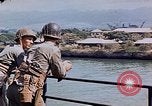
Scenes aboard a U.S. Navy Attack Transport Ship underway in a convoy of warships in the Pacific during World War Two.
Two U.S. marines in combat gear (without packs) stand at railing of a Navy Attack Transport ship (APA) as it transits a channel in World War 2. Tropical-style dwellings are seen on shore. Numerous U.S. warships seen in a bay. Sailors and marines stand at the railing of the APA underway. White caps on the water. U.S. warships in the convoy viewed from stern of the APA. A United States Coast Guard photographer, on deck, looks through the lens of an Eyemo Q movie camera.
CRITICALPAST.COM: About Us | Contact Us | FAQs - How to Order | License Agreement | My Account | My Lightboxes | Shopping Cart | Advanced Search | Featured Collections | Website Terms & Conditions | Privacy Policy ©2026 CriticalPast LLC.
License Agreement |
Terms & Conditions |
Privacy Policy
©2026 CriticalPast LLC.