


 Francais
 Deutsch
 Italiano
Refine Your Search
2nd-Rangers-D-Day stock footage and images
- Showing 11221 to 11226 of 13612 results more
more Hide
Hide
Japanese atrocities against Chinese people; burning Chinese cities; U.S. war bonds fund weaponry in fight against Japan.
U.S. propaganda film during World War 2 aimed at spurring investment in U.S. War Bonds. Narrator opens and closes film asking audience "Have you killed a Jap today?" Scenes of American workers at munitions and ware equipment factories. Images (some real footage and some staged) of Japanese soldiers murdering Chinese civilians, bombing and burning Chinese cities, burying Chinese civilians alive, and executing Chinese civilians and American soldiers. Bodies of Chinese dead being loaded into trucks. Narrator explains that investment in U.S. War Bonds, fueling manufacture of armament and war supplies can bring justice against Japanese atrocities and kill Japanese soldiers. American people working in factories. Iron being forged. Workers work at factory machines. They shovel coal into a combustion chamber. Skyline views of San Francisco, Chicago, Pittsburgh and New York. U.S. War Bond for $100 is shown. American tanks, trucks, shells, airplanes and guns used to fight Japanese soldiers. Views of dead Japanese soldiers lying on the ground and on screen messaging, "Every War Bond kills a Jap!" encouraging Americans to buy war bonds in bond drive number 6.
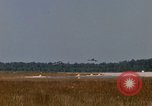
Firemen put out fire as a crashed F7U-3 Cutlass aircraft burns in Atlantic City, New Jersey.
An F7U-3 Cutlass aircraft in Atlantic City, New Jersey. A Unites Stats Navy F7U-3 Cutlass in flight. A Unites Stats Navy HUP-2 Retriever helicopter hover over trees. Smoke rising from behind the trees. Firemen put out fire. Debris of crashed F7U-3 burning.
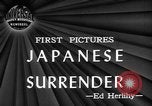
Japanese delegates reach Ie Shima, Ryukyu Islands and then advance towards Manila, Philippine Islands in the South East Asia.
Japanese surrender in Southeast Asia during World War II. Airplanes in formation flight. Two Japanese Mitsubishi G4M-1 'Betty' twin-engine bombers painted white with green crosses on their wings, fuselage and tail land at Ie Shima Ryukyu Islands near Okinawa carrying Japanese delegates. The planes land at Nichols Field at 1813 hours. The planes are dubbed 'Bataan number 1' and 'Bataan number 2.' Lt. Gen. Torasirou Kawabe, the vice chief of the Japanese Army's General Staff and his surrender party disembark from the airplanes. Members of the surrender party include Rear Admiral Ichiro Yokoyama Representative, Imperial Japanese Navy Staff., Colonel Yashima Terai General Staff, Colonel Orato Yamoto General Staff, Mr. Morio Yakawa Secretary, Japanese foreign office. Kawabe leads the surrender party. Army C-54 transport airplanes parked. Japanese surrender delegates board the airplanes which take off for Manila, Philippines. United States Army General Douglas MacArthur speaks to his troops from a balcony at the war damaged Manila City Hall (Padre Burgos Ave, Ermita, Manila, 1000 Metro Manila) on 20 August 1945. He notes that he is hopeful that they will all be able to return home soon.
A camera and control system is set up and the system is checked prior to a flight in the United States.
Functions of aerial camera with its units are demonstrated in the United States. Setting up the camera and control system shows a CAS-2A aerial camera on a bench. Diaphragm and parallax angles are set. Lens cover is removed. Electrical cable is connected to the camera. Photographic conditions are set on control panel. Exposure control, footage remaining, computer and scanner dials are set. Focal length and depression angle are adjusted on power unit. Correlating dial is set on photographic recorder. System check prior to the flight: control panel, power switch is turned on. Ground speed and altitude dials are set. The camera is turned on. Light intensity dial is set. Scanner lens cover is removed. A demonstrator waves a hand in front of the scanner lens. Film speed is observed by watching the pivot on the cassette. After confirming the correct operating of the camera all switches are turned off.
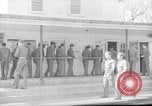
U.S. soldiers enter a theater and Ballet Russe de Monte Carlo presents ballet "Prince Igor" at Fort Hancock in New Jersey.
Fort Hancock in New Jersey, United States, during World War 2. U.S. soldiers and at least one Navy sailor enter the military post theater for an evening of entertainment. The soldiers pass a ticket window with a sign announcing "Ballet Russe" in the background. A poster reads, "The one and only, Ballet Russe de Monte Carlo, Friday Evening." Interior of the theater: Ballet Russe de Monte Carlo presenting ballet "Prince Igor" by Stravinsky with Franz Allers conducting the orchestra. View of faces of the audience of soldiers as they sit and listen. Views of the dancers in elaborate costumes as they perform. The soldiers listen to an announcement, and then break out in applause and are seen smiling and clapping enthusiastically.

Japanese submarine operates on surface of Indian Ocean during World War II
Film begins showing closeup of a Japanese submarine surfacing in the Indian Ocean during World War 2. As it reaches the surface, crew members rush to the boat's 14 cm/40 11th Year Type naval gun on deck. They uncover it, rotate it to starboard, and then load and fire it several times. Reflection of sunset on surface of the water. Crew members silhouetted against the sunset as they look through binoculars. View of bow wave on starboard as the submarine travels at high speed on the surface. Glimpse of crew members on the deck. View of bow wave on port as the boat is underway on surface.
CRITICALPAST.COM: About Us | Contact Us | FAQs - How to Order | License Agreement | My Account | My Lightboxes | Shopping Cart | Advanced Search | Featured Collections | Website Terms & Conditions | Privacy Policy ©2026 CriticalPast LLC.
License Agreement |
Terms & Conditions |
Privacy Policy
©2026 CriticalPast LLC.