


 Francais
 Deutsch
 Italiano
Refine Your Search
2nd-Rangers-D-Day stock footage and images
- Showing 11323 to 11328 of 13612 results more
more Hide
Hide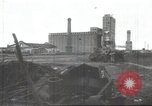
Scenes during and after the battle of Stalingrad, during World War II
Opening scene shows Russian soldiers in ruins of Stalingrad, with captured German combat films. A soldier hold up a film and looks at some of the images, upon which the scene changes to the captured German film, itself, showing German troops in the midst of destroyed and damaged Soviet buildings, during the Battle of Stalingrad, in World War 2. . A German field artillery piece fires, and black smoke rises from the area. A formation of German Messerschmitt Bf 109s is seen. Then bombs are shown dropping from a bomber (unseen). German Tiger tanks advance across a plain. German artillerymen look through binoculars. A periscopic binocular is on a tripod nearby. A German soldier, standing at a height, next to a smoke stack, observes huge fires burning in the distance. A German officer leads several hatless German soldiers. Scene switches to post-siege, as Soviet troops are dealing with aftermath. A mortuary team in protective clothing is disposing of the body of a fallen German soldier. A group of wounded Russian soldiers is being moved in a wagon, by medics. Civilians in Stalingrad read notices posted on a bulletin board. Soviet workmen probe rubble (perhaps for survivors). A buried shell explodes sending white smoke aloft. A destroyed anti-aircraft gun sits in rubble, with destroyed and damaged buildings in background. Skeletons of buildings are all that is left in some places. A hand written sign is posted addressed to "Mama!" (Addendum) Interestingly the narrator is speaking in Korean about the Soviet victory at Stalingrad, implying the source might be a Soviet-made propaganda film for ethnic Koreans.
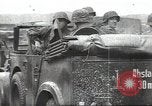
Soviet prisoners of war being marched by German troops during Battle of Stalingrad in World War II.
Battle of Stalingrad, Soviet Union during World War 2. View from inside a German Army vehicle rolling down a road, as Soviet soldiers with arms raised in surrender appeal to be taken as prisoners of war. Soviet prisoners march on a road. Bombed out buildings of Stalingrad, Russia. Aerial view of destroyed Russian building. German soldiers search a civilian at gunpoint. Views of two dead Russian civilians.
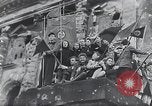
Partition of Germany after World War II. Soviets declare war on Japan
Young Germans hold banners and sit on portion of a building. A crowd assembled in front of bombed out building in Germany, several months after the end of World War 2, in Europe. The crowd listens to a speech delivered by a man. a large sign near the speaker reads "Freedom." Elsewhere, a road sign reads 'You Are Now Entering Russian Occupied Zone'. Newspaper headlines read 'Reds Declare War On Japs'. The Soviet Premier Joseph Stalin examining official papers with the Foreign Minister Vyacheslav Molotov.
African American units U.S. 769th Field Artillery, 761st Tank Battalions, and other units in action in European Theater during World War II
U.S. 769th Field Artillery and the 761st Tank Battalions, as well as other African American units battling enemy together with other Army units in the European Theater during World War 2. Tanks advance along a rough terrain. Soldiers run across a field. Column of African American soldiers of 370th Infantry march along a road toward an attack in the Po Valley, supported by the 695th Field Artillery, who are seen loading and firing an artillery piece. African American soldiers of 761st Tank Battalion running interference for the 409th Infantry as it is seen crossing the dragon's teeth of the Siegfried Line in March of 1945. U.S. Army tanks fire at enemy targets on a field. Soldiers advance. African American soldiers of 761st Tank Battalion loading shells into a tank near battlefield and then participating in battle, firing from tanks during battle. Close view of African American soldiers with their tanks, and firing rifles.
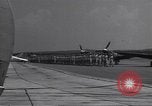
U.S. Major General William O. Butler gives address on third anniversary of Tuskegee Army Airfield, during World War II.
Final segment of "Army Air Forces special film project 151" known as "Wings for This Man". Third anniversary of United States Army Tuskegee Army Air Field being celebrated in August, 1944 during World War 2. Tuskegee Airmen U.S. African American cadets march. Commanding General U.S. Army Air Forces Eastern Flying Training Command addresses the cadet soldiers, families and spectators assembled. Cadets march at the ceremony. P-40 airplanes seen parked at the airfield. Several P-40s taxiing. (note: narrated by Ronald Reagan)
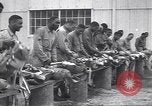
U.S. 555th African American Paratrooper Infantry Battalion being trained at Fort Benning, Georgia during World War II.
Film begins showing a group of African American paratroopers from the U.S. Army 555th Parachute Infantry Company (nicknamed the Triple Nickels) in Fort Benning, Georgia during World War 2. African American soldiers are inspecting their parachutes, laid out on a long table. One of them is a staff sergeant. Next, they don their helmets and then put on their backpack parachutes. Views of them adjusting their parachutes. Closeup of a Technical Sergeant assisting a Master Sergeant with his gear. The troopers double time in a line to an area for inspection. Their static lines are folded on their backpacks, and they hold their reserve chute against their stomachs. A sergeant gives them a final inspection, and they double time to a parked C-47 transport airplane that they board. Glimpse from inside the aircraft as they mount the stairs to the cabin. Next are several glimpses of troopers exiting the aircraft with their static lines hooked to the inside of the C-47. Change of scene shows view from window of a C-47, as a group of troopers begin boarding the aircraft. View along the side of a C-47 transport plane troopers' white parachutes open as they jump from the aircraft. They float away down and behind the aircraft. Aerial view of troopers jumping from left rear door of a C-47 transport plane in flight.
CRITICALPAST.COM: About Us | Contact Us | FAQs - How to Order | License Agreement | My Account | My Lightboxes | Shopping Cart | Advanced Search | Featured Collections | Website Terms & Conditions | Privacy Policy ©2026 CriticalPast LLC.
License Agreement |
Terms & Conditions |
Privacy Policy
©2026 CriticalPast LLC.