


 Francais
 Deutsch
 Italiano
Refine Your Search
2nd-Rangers-D-Day stock footage and images
- Showing 1597 to 1602 of 13612 results more
more Hide
Hide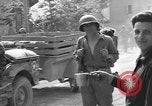
U.S. 88th Infantry and 10th Mountain Divisions in Apennine Mountains of Italy near the end of World War II in Europe
U.S. Army 88th Division troops advance along a road, in the Apennine Mountains of Italy, in final days of World War 2. Members of an Italian Alpinieri Brigade greet them. They serve wine to the soldiers as they pass through the area. Italian soldiers are gathered around a wagon where they drink wine from a large barrel. American infantrymen, in succession, without breaking step, sip wine from a metal cup offered by an Italian Alpinieri trooper. Another view of the Italian soldiers around the wagon containing their wine barrel. In change of scene, American infantry of the 10th Mountain Division are seen moving down a slope, single file, to a mountain road and then proceeding across a small stream in a barren region of the mountains. Later, as they proceed on either side of a mountain road, a jeep passes in the road center, raising dust. The Americans pass Italian troops relaxing near destroyed buildings. Several sit on remains of an Italian Centauro armored personnel carrier overgrown with weeds. Next, a mountain road is seen, clogged with jeeps and trucks. Along the side of the crowded road, Italian soldiers of the Salmerie da Combattimento, 5° group " Montecassino" (Baggage Combat, 5th group "Montecassino") are seen walking with their mules, fully loaded with rations and medical supplies. One of them has been identified as Mario Pace, (Rome 1923-1995) along with his mule, Adeodato. The Italian Baggage Combat Group and mules, continue along the road .(Note: Under the name "5th Pack Mule Group", this Italian unit was assigned the task of bringing supplies to front line combat troops in the mountains.) They are followed by U.S. soldiers on horseback with more horses and mules.
American forces pushing deep into Germany about a month before the end of World War II in Europe
U.S. armor and infantry advancing in Germany during final days of World War 2, in Europe. American soldiers riding atop an M5A1 Stuart light tank move slowly along a dirt path in war-torn area of Germany. They follow another Stuart tank, loaded down with equipment and supplies. The tanks raise dust as they proceed. Scene shifts to U.S. infantrymen walking along a dirt road surrounded by damaged and destroyed buildings. A German civilian man passes them headed in the opposite direction. A U.S. soldier guards two German prisoners of war, as they walk with hands on their heads, past am M5A1 Stuart tank parked near a building. Change of scene shows several Stuart tanks parked at the side of a road in a town. A white surrender flag is displayed on a building in the foreground. A Stuart tank pulls out of position and passes the line of parked tanks. It is followed by a jeep and another tank. Another scene shows infantrymen climbing aboard a Stuart tank for a ride forward.
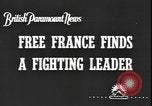
French General Charles de Gaulle broadcasts from London calling on the French to continue fighting the Germans
View of the French Legion Headquarters in London, with flag at half-mast following the capitulation of France to Germany in World War II. Several French officers, including French Admiral Emile Henry Muselier, who support General Charles de Gaulle and his free French forces, walking on the sidewalk. General de Gaulle enters his Headquarters at St. Stephens House (Present day Norman Shaw Building South, 1 Victoria Embankment, London WC2N 5AQ, United Kingdom) in London, and broadcasts, via the BBC, to the French nation, exhorting them to continue fighting, with their Allies, against the Germans.
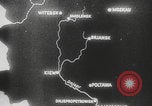
German Luftwaffe reconnaissance mission and aerial attack in Soviet Union during World War II.
A map of the Eastern Front (Present-day Ukraine) is being displayed during World War 2. German Field Marshal and Flying Ace Robert Ritter von Greim, wearing glasses, is in a meeting with Luftwaffe officials. A sign in front of bushes saying “Gruppen- Befehlsstelle” ("Group command post" in German). Nazi soldiers smiling and laughing as they play card games in a field. The soldier wearing an Iron Cross medal turns his head on his left. Airplanes in the sky. A soldier, wearing an Iron Cross medal, climbs on a jet-fighter written “13”. The pilot of the jet-fighter (Messerschmitt Me 262 with the Nazi swastika on the empennage) facing the camera as he prepares for take-off. Plane takes off. A group of fighters with explosion in the sky. German soldiers survey the field with binoculars. Fighters firing at one another in the sky. Anti-aircraft guns fire towards the sky, towards the fighters. A Messerschmitt Bf 109 zooms in the sky. Soldiers, sitting in the field, are looking up in the sky. A Soviet plane is on fire up in the sky, heading downwards. The soldiers, with binoculars, are observing the falling plane. The Soviet plane falls and crashes into the other side of the field. The plane explodes. A plane zooms in the sky. A Luftwaffe pilot smiles as he climbs down the plane. The pilot shakes hands with a comrade. The Luftwaffe reconnaissance flew back. German soldiers in the field looks up to the sky. A pilot jumps down from the aircraft parked in the field. Soldiers put out aircraft fire with flame retardant foam. Operator views large format film emulsion images obtained through aerial reconnaissance. Luftwaffe officials in a meeting. Grille of a Wehrmacht truck.
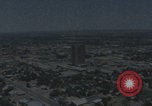
Aerial views of Abilene, Texas and interviews with residents as they prepare for the transfer of the B-1B Bomber to Dyess Airforce Base near Abilene, Texas
Aerial view of Abilene, Texas and a prominent building, The Enterprise, 500 Chestnut St, Abilene, TX 79602, United States. Fred Lee Hughes speaks about living in Abilene and Abilene’s relationship with the United States Air Force. Aerial view of Dyess Airforce Base, Texas. Front view of a vehicle slowing down to a checkpoint with a United States guard. A sign reads “Dyess AFB and Abilene Community welcome the B-1B in 2 Days”. Aerial view of Texas farmlands. Wheat bows gently from the wind in the foreground as combine harvests wheat. Close up of a Green John Deere Combine harvesting wheat. Trucks line up at concrete grain silos. Railroad hopper car pulling up to grain silos. Man crosses gap between two railroad grain hopper cars. Men walking on hopper cars open roof doors to receive grain and position grain shoot over hopper door. A man crouches as he harvests potatoes from a field. Fred Lee Hughes speaks about the people of Abilene. Aerial view of Abilene’s outskirts and the Hardy Grissom Ranch east of Abilene. View of large corral with many head of cattle. Phil Guitar, owner operator of the Grissom Ranch, speaks about the community having a good relationship with Dyess Airforce Base. Fred Lee Hughes speaks about the feelings of Abilene residents of the impending arrival of the B-1B, and notes that the community is anxious to get the B-1 bomber and associated combat crew training squadron.
The Philippines under Japanese occupation, liberation by allied forces, Philippine Independence ceremony.
The Philippines under Japanese occupation, liberation, and subsequent granting of independence by the United States in World War 2. Bodies of Filipino and United States soldiers killed during the Japanese invasion of the Philippines. Captured American, Filipino, and Australian soldiers raise their hands after the Fall of Corregidor. United States General Jonathan M. Wainwright negotiating the surrender of The Phillipines with Japanese General Masaharu Homma in 1942. Brigadier General Lewis C. Beebe and Major Thomas Dooley are seen to Wainwright's left. An American warship firing during the United States Pacific campaign to defeat Japanese occupying forces in the Pacific. United States soldiers get off an amphibious landing craft during the U.S. retaking of the Philippines. United States General Douglas MacArthur arrival in Leyte Gulf with a retinue consisting of Philippine President-in-exile Sergio Osmeña, Lieutenant General Richard Sutherland, Philippine Brigadier General Carlos P. Romulo, Major General Courtney Whitney, Philippine Sergeant Francisco Salveron and CBS Radio correspondent William J. Dunn in Palo, Leyte, the Philippines- a fulfillment of his promise to return to the Philippines. General Douglas MacArthur speaking at the Independence Day ceremony in Manila on July 4, 1946. “America never wavered in that purpose. America today redeems that pledge.” Says General MacArthur. United States Senator Millard Tydings, the co-sponsor of the Tydings–McDuffie Act (a law that provides independence to the Philippines after a 10-year transition as a Commonwealth) attends the ceremony. Paul V. McNutt, the United States High Commissioner of the Philippine Commonwealth (later the first United States Ambassador to the Philippines), reads the United States President Harry Truman's official proclamation of Philippine Independence. Filipino elites and United States dignitaries watch the ceremony in the Independence Grandstand (a temporary structure built in front of the Rizal Monument). Manuel Roxas being sworn in as the first President of the Philippines after gaining independence from the United States. The Philippine national anthem, Lupang Hinirang, plays in the background. High Commissioner McNutt lowers the United States flag from the flagpole as President Manuel Roxas raises the flag of the new Republic of the Philippines. A celebratory parade following the Independence ceremony takes place, which includes floats from various provinces in the country. A float with signs reading: "Let's Produce and Rebuild,". "Mountain Province" float with women wearing formal Filipino Baro’t Saya gowns. "The City of Manila" float with soldiers. "The University of the Philippines" (UP) float featuring two women dressed as allegorical figures and sign saying, “The University of the Philippines At the Service of the State”. "The Division of City Schools" float features two Filipinos in traditional attire in front of a Statue of Liberty model. A float, likely belonging to the National Library of the Philippines, with children and a huge book model. The Chamber of Commerce Philippines float contains a machine gear model and small models of an aircraft and a ship. American soldiers marching, carrying the United States flag. A military marching band play. Filipino soldiers marching with the Philippine flag. Military aircraft in flight above the Independence Grandstand in Manila.
CRITICALPAST.COM: About Us | Contact Us | FAQs - How to Order | License Agreement | My Account | My Lightboxes | Shopping Cart | Advanced Search | Featured Collections | Website Terms & Conditions | Privacy Policy ©2026 CriticalPast LLC.
License Agreement |
Terms & Conditions |
Privacy Policy
©2026 CriticalPast LLC.