


 Francais
 Deutsch
 Italiano
Refine Your Search
2nd-Rangers-D-Day stock footage and images
- Showing 3217 to 3222 of 13612 results more
more Hide
Hide
Roman and German sculptures and maps support the Italo-German alliance of WW2
World War II propaganda on the necessity for an Italo-German alliance. Map of Italy and Europe depicting the growth of the Roman Empire. Classical statues of famous emperors and figures from the Roman Empire. Roman era stone carving depicts sailors on a boat. Map depicts the line between the Roman Empire and barbarians. Bas relief depicts Roman soldiers engaging in battle with barbarians and barbarians looting items during a siege. Ruins of Roman architecture in present day Cologne, Germany. Stone carving of the Capitoline wolf nursing Romulus and Remus. Animated map shows Europe after the fall of the Roman Empire. The Christian cross shines over the Roman Colosseum. Stone carving of barbarians taking over the former Roman empire. The Mausoleum of Theodoric (Mausoleo di Teodorico, Via delle Industrie, 14, 48122 Ravenna RA, Italy) in Ravenna, Italy. Mosaic art found at the Basilica of San Vitale (Via San Vitale, 17, 48121 Ravenna RA, Italy). A scroll from the Early Middle Ages.
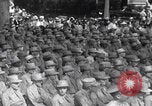
Director Oveta Culp Hobby speaks to first batch of graduating WAAC officers in Fort Des Moines (WW2)
United States Women’s Army Auxiliary Corps Director Oveta Culp Hobby speaking to first WAAC officers to graduate from Officers Candidate School in Fort Des Moines, Iowa during World War II. The Women’s Army Auxiliary Corps salute before taking their seats. Audience clapping before Director Hobby congratulates the graduates of the six-week WAAC program. “In the days and years to come, this saga will become of increasing strength to the nation. Shortly you will go on active duty, your graduation today is, in a real sense, a commencement of service” Hobby continued. “I can assure you, that you will be serving the purpose you had in mind when you volunteered as officer candidates for the Women’s Army Auxiliary Corps. I can assure you that it is a path of duty and devotion. You will serve as incorruptible witnesses for freedom. You have formed the soul of this corp. We will flourish and inspire and guide those who will follow you” Hobby concludes her speech before introducing Representative Congresswoman Edith Nourse Rogers to the graduates.
U.S. military cemeteries on recaptured islands in the Pacific; aerial bombing of Japan in WW2
Brief views of Allied bombing raids in Japan during World War II. A group of United States Army Air Force aircraft flying over Japan. An army cemetery in front of a building in the Pacific. United States Army Air Force aerial machine gun strafe Japanese positions on the Aleutian Islands. A chaplain praying over a coffin with the American flag draped over it. Aerial view of bombs falling and exploding into Japanese positions in China. Consolidated B-24 Liberator dropping bombs over Wake Island. View of Wake Island. Graves of U.S. troops on Wake Island, Burma, and other recaptured Pacific islands. Allied Airborne Infantry on the jungles of Burma (Myanmar). Gunshots are heard on the background. Two United States Consolidated B-24 Liberator aircraft flying to the Philippines. Allied bombardment of Hollandia (present day Jayapura, Papua, Indonesia). Grave of an unidentified soldier. United States troops land on a beach. A Howitzer is towed across a river. Soldiers rolling a barrel of oil. Snowplow truck clearing snow in front of a bomber. United States troops unload supplies at a snow-covered airbase.
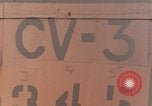
Sailors cleaning debris from the flight deck of the USS Saratoga (WW2)
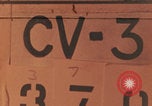
The flight deck of the USS Saratoga (CV-3) a day after a Japanese Kamikaze attack. Dr. Edgar Maurice Cortright, United States Navy Lieutenant, narrates his experience on board the USS Saratoga at the time of its bombing by Kamikaze planes during the Battle of Iwo Jima in World War II. U.S. Navy sailors clear debris from the deck. The wreckage of destroyed fighters are cleared away. Guns at the damaged flight deck. The sailors inspect debris and remove them. A sailor uses a pickaxe to remove a large debris from a burned pile.
Men cleaning naval guns and shrapnel damage on the USS Saratoga (WW2)
View of the USS Saratoga (CV-3)’s bridge with shrapnel damage after a Kamikaze attack during the Battle of Iwo Jima in World War II. Guns in between the bridge. Soldiers climbing stairs. Sailors cleaning a Mark 12 5"/38 caliber dual purpose naval guns on USS Saratoga. A slightly damaged United States flag is seen over it. Men clearing debris from the damaged deck a day after Kamikaze attack. Dr. Edgar Maurice Cortright, United States Navy Lieutenant, narrates his experience on board the USS Saratoga at the time of its bombing by Japanese aircraft.
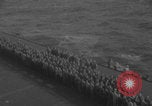
Burial at sea ceremony on board the USS Saratoga after a Kamikaze attack (WW2)
Burial at sea ceremony on board the U.S. Navy ship USS Saratoga (CV-3) a day after an attack by Japanese Kamikazes during the Battle of Iwo Jima in World War II. Full crew of the USS Saratoga attend the ceremony on deck. The crew pay their respects. Bodies of the casualties, sewn into sailcloth, seen on deck. Some of the USS Saratoga crew are seen wearing life jackets. The bodies are thrown overboard. United States Marines firing their salute after all the bodies are buried at sea. Thousands of crewmen saluting as they conclude the ceremony. The crew disperse before forming a line on deck. Dr. Edgar Maurice Cortright, United States Navy Lieutenant, narrates his experience on board the USS Saratoga at the time of its bombing by Japanese planes.
CRITICALPAST.COM: About Us | Contact Us | FAQs - How to Order | License Agreement | My Account | My Lightboxes | Shopping Cart | Advanced Search | Featured Collections | Website Terms & Conditions | Privacy Policy ©2026 CriticalPast LLC.
License Agreement |
Terms & Conditions |
Privacy Policy
©2026 CriticalPast LLC.