


 Francais
 Deutsch
 Italiano
Refine Your Search
2nd-Rangers-D-Day stock footage and images
- Showing 4219 to 4224 of 13612 results more
more Hide
Hide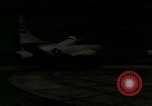
Normal operating procedures including start, take off, stall and landing of the U.S. Navy T2V-1 SeaStar.
Normal operating procedures including start, take off, stall and landing of the U.S. Navy T2V-1 SeaStar. Start: The plane on the runway. A crewman arrives with the air impingement car. He inserts the pipe into the air impingement inlet. The crewman gives a signal when the air impingement hole is secure. The pilot adjusts the battery operator switch and turns on the ignition. He moves the throttle to ignite and then to idle position. The exhaust gas temperature gauge. The pilot signals the crewman to disconnect the air impingement starter and adjusts the instrument power switch. Post-start Cockpit Check: The pilot checks the RMI for alignment, adjusts S2 compass controller, annunciator panel touch button, fire detector test switch, fuel quantity indicator button. He checks the communication, navigational, annunciator and left panel. He goes through the take off check list, moves the plane into position, advances throttle, inspects the tachometer, exhaust temperature, releases brake and taxis to the end of the runway. The plane taxis, pilot applies brake and rudder control and takes off. He raises the nose wheel, retracts the landing gear and flaps after take off. The plane in flight over clouds. Stall occurs. The attack angle gauge. Landing procedure: View of the runway. The pilot begins the let down, reduces power, extends the brake, lowers landing gear and flaps, and continues to reduce speed. Diagram of the runway depicting approach. The plane approaches the runway, touches down and lands.
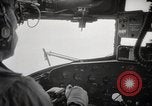
P-2 Neptune aircraft encounters rain and foul weather during a reconnaissance flight in the United States.
The role of Airborne Early Warning Squadron Four in the United States. U.S. Navy P-2 Neptune aircraft in flight. The aircraft flies amidst bad weather and rainfall. Outline of the hurricane on a radarscope. The pilot at controls as the aircraft flies through the eye of the storm. Crew members relax. An aerologist studies the wind and sea conditions. Aerial view of the choppy sea below. Men study a weather chart in Jacksonville. P-2 Neptune aircraft flies back towards the home base.
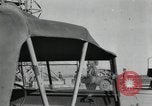
Jurt Linder and Mr. Heuter stand in front of German V-2 rocket at White Sands in New Mexico.
German V-2 Rocket in rocket testing derrick at White Sands in New Mexico. Group of German scientists work around the upper portion of V-2 rocket. Jurt Linder and Mr Heuter converse with each other. Group of men along with Jurt Linder and Mr Heuter pose for a photograph.
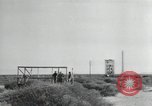
German V-2 Rocket takes off from a launch pad at White sands in New Mexico.
German V-2 Rocket launched at White sands in New Mexico. Rocket testing derrick removed from the rocket. V-2 rocket takes off from a launch pad. German scientists and officials watch through binoculars.
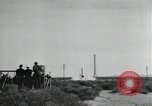
German V-2 Rocket takes off and advances upward.
German V-2 Rocket launched at White sands in New Mexico. V-2 rocket takes off from launch pad. The rocket advances upward leaving a trail of smoke behind.
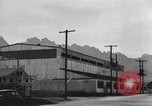
Colonel Turner and Dr Wernher Von Braun inspect German V 2 Rocket at White sands in New Mexico
View of Hangar where rockets are assembled at White sands in New Mexico. Colonel Turner with Scientists. Dr Wernher Von Braun, inventor of V-2 rocket, leads members of the press past one of the rockets. Von Braun and his assistant examine one of the parts of V-2 Rocket. Colonel Turner converses with Von Braun.
CRITICALPAST.COM: About Us | Contact Us | FAQs - How to Order | License Agreement | My Account | My Lightboxes | Shopping Cart | Advanced Search | Featured Collections | Website Terms & Conditions | Privacy Policy ©2026 CriticalPast LLC.
License Agreement |
Terms & Conditions |
Privacy Policy
©2026 CriticalPast LLC.