


 Francais
 Deutsch
 Italiano
Refine Your Search
2nd-Rangers-D-Day stock footage and images
- Showing 4669 to 4674 of 13612 results more
more Hide
Hide
"By Request Department" shows scenes of soldiers' home towns for soldiers deployed overseas in World War 2; views of several American towns circa 1945.
Busy streets of the cities in the United States. A woman officer at a desk of Army-Navy Screen Magazine's "By Request Department" addresses U.S. soldiers overseas during World War 2, and says they will show views of various American home towns by request. Busy intersection along Capitol Street in Charleston, West Virginia. 1930s automobiles on roads and American citizens walking on city streets. Next scene shows the main street of Wytheville, Virginia with cars, pedestrians, and shops. Next scene is of main street area in Fall River, Massachusetts. Buildings seen on either sides of the streets and buses at bus station depot. Next view is of Springfield Street, looking toward Market Street in the center of Newark, New Jersey. Main streets of Winslow Arizona, with citizens dressed in Western wear, and then a main intersection in Tucson, Arizona, where a paper boy sells newspapers on a street corner.
Czechoslovakia and Soviet relations after World War 2; Dubcek liberalization during Prague Spring; Soviet occupation in 1968
History of Czechoslovakia from 1919 to 1968 depicts lives of its people and various crisis. Clip shows combination of still images and moving images, with background of Czech musical soundtrack. A burning Nazi plane shot by Soviet military during World War II. Soviet Red Army marches in Prague, Poland in May 1945 to rescue from German occupation and atrocities. People destroy Nazi emblems and symbols from buildings. People assemble in large numbers on roads and cheer for the incoming Soviet troops and tanks. Civilians of Czechoslovakia during normal life after World War 2. Workers in mines, farmers in field and women work in houses. Spread of communism and communists make a star formation during a rally in Prague (sometimes called the Prague Spring). President Edvard Benes in 1948 signs pact with Soviet government. Photos of Soviet General Joseph Stalin and other Soviet leaders in his office. Various Presidents and leaders of Czechoslovakia during the 1950s. Military and civilian communist groups march on streets in 1956. Czech Skoda automobile production factory scenes in mid 1960s. Workers work in factories and shops till night hours. A Czech textile factory scene. Czech men and women in 1960s fashions enjoying mugs of beer. Several scenes with Alexander Dubček, (Alexander Dubcek), then Soviet leaders Nikita Khrushchev and Nikolai Brezhnev arrive for meeting with Dubček. Smiling Czech people walk in cities and at a cafe during liberalization measures. Soviet and Warsaw Pact tanks, armored vehicles, infantry and aircraft start their occupation ending the Prague Spring in Prague, Bratislave and other cities in August 1968. Civilians protest, demonstrate, and argue with Soviet troops and demonstrate in streets. Some approach tanks and attempt to damage the tanks. Large crowd of civilians watch the retreating Soviet forces from Czechoslovakia in 1968. Red Army met with agitation and resistance on streets by civilians. Soviet troops fire at some demonstrating civilians.
World War II war crimes trials; flashback views during World War 2; Nazi prison cells in Nuremberg; Japanese war criminals
Prison at Nuremberg, north of the Palace of Justice, where Nazi prisoners are held during Nuremberg trials in 1946. Cell of Nazi Admiral Doenitz is seen, with his name over the prison cell door. Nazi Admirals, Karl Doenitz and Erich Raeder, during the war. Views of war crimes at sea, with burning ships in flames at night. American soldier looks into prison cell of Joachim von Ribbentrop. Von Ribbentrop boarding an airplane, during the war. A German American Bund rally in the United States at Madison Square Garden in 1939, with Patriotic image of George Washington and massed American flags. Americans giving Nazi salute as Fritz Kuhn speaks. Fight or scuffle on the stage of the meeting. American military guard places food into cell of Nazi Julius Streicher. View of Julius Streicher giving a speech. Street scenes of Jewish shops being vandalized and boycotted in Germany. Boycott of Jewish-owned stores in Germany including posters and paint labeling Jewish businesses, and a poster that says, "Die juden sind unser unglück" (which means "The Jews are our misfortune"). Emaciated and thin liberated Concentration camp inmates being deloused. American soldier looks into prison cell of Hermann Goering. View of Goering in civilian clothes, sitting with companions, before the war. The Graf Zeppelin airship in flight over New York City. Officer on board Zeppelin shown plotting a course from the bridge. Shadow of the zeppelin air ship cast over an ocean liner at sea. Prison guard opens a door and goes in. Prisoners file out of the building, ostensibly to face firing squad. Airplane landing at Japanese airfield and scenes of military staff and military gathering of Imperial Japanese forces in Tokyo Japan during World War 2. Japanese General staff in a meeting. A Japanese military leader during a surrender meeting in World War II.
Soldiers fire artillery, advance on a battlefield and take in USO entertainment in World War 2
The United Service Organizations (USO) of the United States during World War 2. Soldiers advance on a battle filed in Europe. Two soldiers fire guns. The soldiers walk on a pier and load supplies in boats. A soldier talks over a field telephone. The soldiers fire field artillery. They walk in a single file. A vehicle moves through a mud pit. The soldiers unload shells from a truck. They carry shells on a snow covered road. Truck moving in deep muddy conditions. The soldiers crawl near a wall. They run on a field. Change of scene to soldiers enjoying USO shows and stage productions. A chrous line group of dancing girls perform. A juggler performs. Three comedians. Soldiers and sailors laugh, applaud, and enjoy the shows.
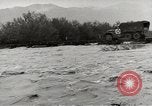
Examples of U.S. Army engineer equipment during World War 2
Various kinds of Engineer equipment of the U.S. Army in the European Theater during World War 2. Views of engineering equipment, including: Truck crossing pontoon bridge; camouflage nets for artillery; well drilling equipment being positioned and then view as drilling begins; searchlights; generators for search lights; mine detectors; Carry-alls, Turnables, pneumatic pontoons; steel treadways; steel mats; excavators; road rollers; sheep foot rollers; tractors; steam shovels; jackhammer and bulldozers are seen. A fleet of ships underway at sea. Several cargo ships in a harbor in flames after bombing, with smoke rising. Groups of Engineers and Seabees marching in formation with rifles. Troops marching near overseas cemetery flying an American flag. Montage scenes including some in the Pacific theater. U.S. Army soldiers standing in a line firing rifles during a ceremonial salute. (World War II period).
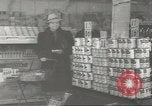
A housewife buys rationed canned goods and non-rationed vegetables at King Kullen Grocery store in New York during World War 2
Food rationing in New York, United States, during World War 2. Interior of King Kullen Grocery store: A housewife buys rationed canned goods. A sign: 'Official Table of Point Values for Processed Foods'. A hand takes counts out ration stamps from a sheet of stamps. The housewife buys vegetables. A food market clerk places a bag of apples in a cart. The housewife talks to the clerk. Signs : 'Please Do Not Ask for Butter Today' and 'Sorry No More Pineapple'. A Federal Offense sign reads, "Let's share the food and help win the war! It is a federal offense to violate any provision of the Food Rationing Act." Additional signs read : 'All Rationed Foods Are Marked', and "We Are Temporarily Out Of Beef'. Exterior of King Kullen Grocery store shows people walking away with packages.
CRITICALPAST.COM: About Us | Contact Us | FAQs - How to Order | License Agreement | My Account | My Lightboxes | Shopping Cart | Advanced Search | Featured Collections | Website Terms & Conditions | Privacy Policy ©2026 CriticalPast LLC.
License Agreement |
Terms & Conditions |
Privacy Policy
©2026 CriticalPast LLC.