


 Francais
 Deutsch
 Italiano
Refine Your Search
2nd-Rangers-D-Day stock footage and images
- Showing 5371 to 5376 of 13612 results more
more Hide
Hide
German troops building railway embankment and capturing Soviet prisoners in the Eastern Front (WW2)
German troops in the Eastern Front during the winter of 1941-1942 (World War II). A German soldier keeps watch in the Eastern Front (“Ostfront” in German). Two German soldiers walk in the snow. Troops walk with horses under extremely cold conditions, with temperature as low as -45°C. Soldiers cover their mouths with cloths to protect their faces from extreme temperatures. Soldiers build houses of made of ice blocks and a bridge. Railway embankment construction and ice blocks. German soldiers lift blocks of ice from a lake. Men building a railway embankment. Soldiers on tanks. Soldiers repair a tank track. Soldiers escort wagons. Snow covered tanks and field. German soldiers assume prone position in the snow. German tank fires. Germans attack Russian positions. Soldiers firing with rifles. Germans move forward on the front. German soldiers in white winter camouflage suits rush towards a barbed wire fence. A soldier cuts a barbed wire entanglement on the field. Firing and bombardment in the field. German soldiers clear a village. Soldiers with machine guns facing the window inside a house. Soldiers stand on top of moving tanks. German soldiers use a machine gun in the snow. Soldiers take the prisoners from the snow. Panzer tanks penetrate Soviet positions. An injured Soviet prisoner with head bandage. German troops lead away captured Soviet prisoners.
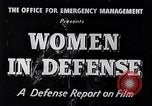
American women work as part of the National Defense Program, United States (WW2)
Wartime activities of women in United States during World War II, narrated by Hollywood actress Katharine Hepburn. A statue of a historic “Pioneer” American woman. American women work to save and help the nation. Women work at a laboratory as scientists. A woman looks under a microscope. Test tubes and other equipment on tables. Women handling chemicals in various flasks without protective gear. They work for the National Defense Program. A woman works near a machine that tests rubber or cloth for parachutes. Woman conducts abrasion test on clothing using a Wyzenbeek machine. She feeds guinea pigs and records their weights. Another woman works in the field of science. A woman gives a lecture on nutrition. A nutrition chart on wall. Other women attend the lecture. Women design working clothes for women. A woman wears a factory jumpsuit uniform.
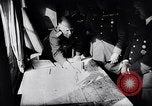
American women work at factories to help the army in United States (WW2)
Opening scene shows German leader Adolf Hitler in a planning session looking at a map during World War II. Brief dramatization depicts a Nazi German official learning the role of women in war materiel production in the United States. Scenes of the United States Capitol building, factories, and shipyards in America. A tractor clearing a road. War production workers streaming through the gates of the Alabama Dry dock and Shipbuilding Company. American war factories being quickly built and staffed. Wide views of many war workers arriving for work. War ships being launched. A Nazi German official reading a report. A drinks menu from “Blue Moon Café”. Women at work in factories. Women reading sign “GIRLS WANTED”. The women war workers using various machines and tools for war production. African American women working in an armament factory. Women in a munitions factory. They use tiny equipment with skill that is needed for war purposes and sew the plane wings fabric and parachute fabric.
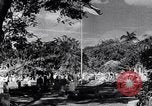
American women work in factories and the United States Army WAAC (WW2)
The United States flag on flagpole in the middle of a jungle during World War II. United States soldiers marching. U.S. Navy sailors on battleships at sea. German leader Adolf Hitler with other officers in a hall. Lines of United States Army soldiers marching; United States Army Air Force crew members gathered at an airfield with many soldiers in front of and on top of a Boeing B-17 Flying Fortress bomber aircraft. U.S. Navy sailors doing jumping jacks for calisthenic exercises on the deck of a ship at sea. View of factories and manufacturing facilities with smoke pollution pouring out of smokestacks. American women war workers entering or leaving a factory, and then wearing uniforms and working in various war materiel factories. A man explains the work to female workers. Nazi German officers in their office discuss that the American women can only be playgirls, they cannot work for the nation with the army. German flags in the office. American women work as technicians in factories and welders welding military equipment. They weld airplane parts and naval landing barges. They install wiring in planes and inspect armament shells and radio tubes. Views of uniformed women in the armed forces of the United States, including groups of women army soldiers (WAAC or WACS), a group of women in the Navy, and female Marines marching. A group of nurses at a field hospital poses and smiles.

Women at work welding and performing tasks in U.S. factories (WW2)
American women produce war materiel in factories across the United States during World War II. Women march in uniforms. They participate in the military operations. They work in ammunition factories as war production workers. They operate machines in factories making aircraft. Women weld equipment, work on the wings of fighter and bomber planes and repair the airplane parts. They work on various machines and motors of aircraft. They sew parachutes for the soldiers and inspect parts of machines.
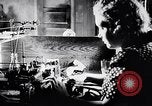
American women working at shipyards and factories in support of the war effort (WW2)
United States Employment Service helps find jobs to women during World War II. The government agency also arranges training programs for the women war production workers. Women workers in the shipyards repairing the parts of the battleships and making equipment for battleships. Women tighten nuts on ship body with large wrenches. Women tossing rivet materials to other women workers. Women building ships. They are asked why they are doing that work. They respond that their family members are in army, and they want to work with them. The United States Employment Service recruits female workers for the war work. View of offices and clerical workers helping to place workers for the war effort.
CRITICALPAST.COM: About Us | Contact Us | FAQs - How to Order | License Agreement | My Account | My Lightboxes | Shopping Cart | Advanced Search | Featured Collections | Website Terms & Conditions | Privacy Policy ©2026 CriticalPast LLC.
License Agreement |
Terms & Conditions |
Privacy Policy
©2026 CriticalPast LLC.