


 Francais
 Deutsch
 Italiano
Refine Your Search
Adak Alaska USA 1943 stock footage and images
- Showing 8359 to 8364 of 27426 results more
more Hide
Hide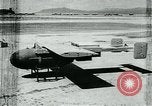
A GB-4 radio controlled glide bomb assembled with all components at a United States Air Force base.
A GB-4 radio controlled glide bomb at a United States Air Force base. Airmen assemble various components to the missile. Tail section and wings are placed on the warhead and then fixed with the missile. The radio station and smoke flares are fixed with it. The control station of the bomb. Airmen checking the movement of the tail. (World War II period).
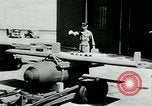
GB-4 missile launched from a United States Air Force bomber B-17 hits the target.
Two GB-4 missiles mounted on a trailer at a U.S. Air Force base in United States. Trailer tows them to a USAF B-17 Bomber, while airmen sit on the missiles. Two GB-4 missiles attached to the underside of a B-17 fuselage. The aircraft takes off. Bomber launches a missile while in the sky. GB-4 flies and leaves smoke trails. Its crash near the target.
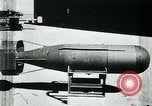
Assembling an Azon Bomb, attaching it to a B-17 Bomber of United States Air Force and its firing at the target.
An unassembled Azon Bomb at a United States base. Airmen removing protective plugs from nose section of warhead. Attaching various components control surface, instruments to the bomb, and then the bomb to the underside of a B-17 bomber. It takes off. Dropping bomb to the target. (World War II period).

Guided Bomb GB-1 missile launch and explosion
U.S. military technical report titled "Review of Guided Missiles-Guided Bomb GB-1". A GB-1 suspended for display. A B-17 Bomber of the U.S. Army Air Corps takes off with a GB-1 attached. Launching of GB-1. It follows a long aerial path and then hits the target. (World War II period).
Glide Bomb GB-8 launched from B-17 bombers of the United States Army Air Corps strike the target in sea.
A controllable Glide Bomb GB-8 takes a flight in sky towards its target. The bomb leaves behind a smoke trail. Bomb strikes its target a boat in the sea. Two Glide Bombs kept at a U.S. Army Air Corps base. Glide Bomb fastened to wings of a B-17 bomber of the United States Army Air Corps. It takes long aerial route leaving behind smoke trails. It explodes on land. (World War II period).
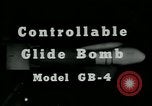
Components of a Glide Bomb GB-4 assembled before striking a target from a B-17 bomber of United States Army Air Corps
A Controllable Glide Bomb GB-4 kept in a laboratory at a United States Army Air Corps base. Components of the Glide Bomb GB-4 seen when its striking head is opened. A B-17 bomber of the U.S. Air Force takes off. Experts locate target from inside the bomber. Television recorder and other instruments inside the bomber. The bomb glides along an aerial route leaving smoke trails behind and explodes at the target. (World War II period).
CRITICALPAST.COM: About Us | Contact Us | FAQs - How to Order | License Agreement | My Account | My Lightboxes | Shopping Cart | Advanced Search | Featured Collections | Website Terms & Conditions | Privacy Policy ©2026 CriticalPast LLC.
License Agreement |
Terms & Conditions |
Privacy Policy
©2026 CriticalPast LLC.