


 Francais
 Deutsch
 Italiano
Refine Your Search
Adak Alaska USA 1943 stock footage and images
- Showing 8713 to 8718 of 27426 results more
more Hide
Hide
Aviator Douglas Corrigan honored after his aircraft flight from New York to Ireland at a ceremony in Boston, Massachusetts
A large crowd gathers to honor aviator Douglas Corrigan after his historic flight from Floyd Bennett Air Field in Brooklyn, New York to Ireland, in Boston Massachusetts. A decorated public procession of cars drives towards a public ceremony venue. Large crowd cheers for him and raises banners. An old woman plays piano. Several streamers and banners hang from buildings. Corrigan addresses the crowd at the public ceremony.wards a public ceremony venue. Immense crowd cheers for him and raises banners. An old woman plays piano. Several streamers and banners hang from buildings. Corrigan addresses the crowd at the public ceremony.

Spectators cheer as General and Admiral watch U.S. Army beat U.S. Navy in a traditional football match in Baltimore, Maryland.
U.S. Army beats U.S. Navy in a traditional football match in Baltimore, Maryland. General George C. Marshall, General Arnold and Admiral King arrive and take their seats. Army and navy troops march marking the start of the traditional ceremony. Large number of spectators from army, navy and other civilians take their seats in the stands. Navy cadets in the ground cheer for the army. Army soldiers sing songs for the navy. The football match starts. Players give a tough competition to each other as referee watches. Crowd watches and cheers. Army wins the match beating navy by 30-7. (World War II period).
Associate Justice Jackson swears in Edward R Stettinius as Secretory of States, at an official ceremony in Washington DC.
Supreme Court Associate Justice Jackson swears in Edward R. Stettinius as United States Secretory of States, at an official ceremony in Washington DC. After swearing in, General George C. Marshall and others shake hands and congratulate him. Stettinius addresses the assembly on a microphone. He then moves into his office, sits at his desk and reads files.
Documentary titled 'Challenge to Democracy' depicts homes for Japanese people relocated during World War II, in United States.
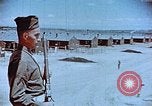
Documentary titled 'Challenge to Democracy' depicts relocation of Japanese Americans and people of Japanese ancestry due to perceived security reasons, in United States during World War II. People of Japanese origin moved by railroad train to a relocation house in Arkansas and at Heart Mountains, Wyoming (internment camps). Japanese civilians walk out of the railroad train at a station, carrying their luggage. Houses, barracks and Quonset huts at the relocation center. A military police guard with rifle on duty. A Japanese family enters its compartment and finds fully furnished comfortable house inside. A Japanese worker works on lumber. A small family inside a house. People dine together at a large mess hall. A car moves in the desert to plan a site for relocation center. Workers clear bush, level soil and do plantation using tractors. Farmers produce vegetables and fruits. Tractors plow farmlands. Farmers hoe crops and collect harvest. Harvest loaded in trucks and sent to mess of relocation house. Japanese mechanic repairs truck, lumbers at work. Workers paid for their work done at relocation house at an office. People inside a Community Enterprise Business Store.
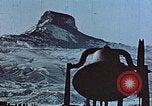
Japanese people do various activities as normal routine despite at relocation home during World War II, in United States.
Relocation to internment camps of people of Japanese ancestrty, in the United States, due to security reasons, during World War II. School bell of relocation center at Heart Mountain, in Wyoming. Students of Japanese origin change classes. Children in a class study mathematics. A teacher teaches drawing. Students study scientific farming at a high school. Business, workers, mechanics studies by students. Evacuee doctors and nurse operate at an operation theater. Doctors and dentists check people's health. A candidate for community council chief during an election for councilmen. Voters vote during election. Trial of a criminal of relocation houses at a court. Softball Match on the beaches at weekend. An artist draws pictures of relocation homes. Sunday church and men carry benches inside for prayers. Boy scouts raise American Flag. Girl scouts, Red Cross volunteers perform various duties. Boy scouts march with U.S. national flag during a parade. Beauty queen and floats follow the parade. Smokestacks of factories at relocations centers, and evacuees walk by them. Military Police guard with a rifle watches them.
Nisei, the second Japanese generation in U.S. involve in various works after released from relocation home during World War II.
Relocation of Japanese ancestry people, in United States due to security reasons, during World War II. Military Police guard with rifle at the entrance of Japanese-American internment camp in Missouri. Nisei, the Japanese of second generation in United States, at various works and profession after released from the relocation centers. Nisei farmers work in sugar beet field. A couple leaving the center gets its details checked by Military Police official and gets in a bus. A family released from an evacuation home. Details of evacuees read by an officer. Nisei work at corn field in Illinois, mechanical machines. Nisei nurse at a hospital aids a woman. Nisei man drives tractor, work on machines, feeds chicken, work in potato farms, with printing machines, at candy factory. Nisei women work making dolls, in garment factory, break eggs for military supply and stitch flags. A Nisei at a book binding factory shows his salary check.
CRITICALPAST.COM: About Us | Contact Us | FAQs - How to Order | License Agreement | My Account | My Lightboxes | Shopping Cart | Advanced Search | Featured Collections | Website Terms & Conditions | Privacy Policy ©2026 CriticalPast LLC.
License Agreement |
Terms & Conditions |
Privacy Policy
©2026 CriticalPast LLC.