


 Francais
 Deutsch
 Italiano
Refine Your Search
Adak Alaska USA 1943 stock footage and images
- Showing 8935 to 8940 of 27426 results more
more Hide
Hide
Production and packaging of music phonograph records by RCA Corporation in the United States
Phonograph music records, in long play and 45rpm form, being produced, manufactured, inspected, verified, packaged, and shipped at a RCA Corporation production facility in the United States. Engineer works to create first pressing a long play record album. Shows granular vinyl used, creation of liquid vinyl ready for molding, and pressing of vinyl to create phonograph record pressing on pressing machine. Engineer delivers the first pressing to other employees in charge of quality inspections, including visual inspections and audio playback. After approval, mass production pressing begins for the record. View of factory and processes for pressing records. Packaging process underway. Shows large punch card machines being used for managing shipment information and shipment quantities. Staff in shipping area involved in final packaging, boxing, and shipment of vinyl phonograph records. Also scenes of reel-to-reel tape duplication machines operating in mass production of tape recordings. Montage of scenes showing many vinyl records of the 1950s under the RCA label. View of Maestro Charles Munch, conductor, directing orchestra. View of a phonograph record player turntable turning, and playing a RCA vinyl record.
Alexander Graham Bell at 1916 ceremony; Telephone manufacturing at Western Electric Company plant in Chicago
A film titled "The world's telephone workshop". Opening scene shows ceremony on March 10, 1916, with Alexander Graham Bell, inventor of the telephone, unveiling a plaque at the invention site of the telephone in Boston, Massachusetts, United States. The plaque, at 109 Court Street, states "Here the Telephone was Born, June 2, 1875" and it notes that it was placed by The Bostonian Society and the New England Telephone and Telegraph Company. Alexander Graham Bell tips his hat to the crowd as they celebrate the unveiling. View of Western Electric Company plant in Chicago as smoke emerges from chimneys. Turbines in coal power plant. Massive group of thousands of American workers gathered together, from all walks of life, who are employed in the telephone industry.
Telephone manufacturing at Western Electric Company plant in Chicago,Illinois
Workers work on various machines at Western Electric Company to manufacture telephone in Chicago,Illinois. Presses,planes,drills and mining machines in operation at the plant. Wires being stranded.
Assembling of telephone parts at Western Electric Company plant in Chicago,Illinois
Workers assemble telephone parts at Western Electric Company in Chicago,Illinois. Manufactured telephones being inspected by workers at the plant.
Training film shows importance of cryptographic security in sending military messages (WW2)
A United States WWII era training film about cryptographic messaging. Many tanks seen driving on a field as a fighter plane drops a smoke screen in front of them. Radio towers. Teletype operator typing. The words "Message Center" overlaid on view of War Department building. Speeding motorcycle on road at night. Major Doyle hands paper to soldier at his desk and says, "rush these priority messages by radio." Doyle instructs officers as he leads them into a secure gated officer and points to safes on wall next to men working together as a cryptographic team. He notes that, "we must assume that every message we send out...may be intercepted by a potential enemy." View of a spy listening on a radio at night. Doyle continues, saying, "the enemy is quick to take advantage of our mistakes...." Doyle describes the difference between secret, confidential, and restricted government information.
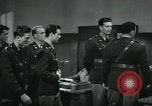
Army officer explains the drafting process of cryptographic security in terms of sending military messages
United States army officer explains the method of drafting a cryptographic message to officers at a message center in United States. He provides guidelines for preparing a concise message as a man paraphrases a cryptographic message.
CRITICALPAST.COM: About Us | Contact Us | FAQs - How to Order | License Agreement | My Account | My Lightboxes | Shopping Cart | Advanced Search | Featured Collections | Website Terms & Conditions | Privacy Policy ©2026 CriticalPast LLC.
License Agreement |
Terms & Conditions |
Privacy Policy
©2026 CriticalPast LLC.