


 Francais
 Deutsch
 Italiano
Refine Your Search
Adak Alaska USA 1943 stock footage and images
- Showing 10327 to 10332 of 27381 results more
more Hide
Hide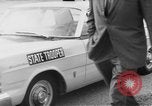
The second Selma-to-Montgomery civil rights march. Many white clergy join with African American marchers
The second march from Selma to Montgomery, Alabama, led by the Reverend Martin Luther King, Jr. Many white clergymen are seen in the ranks of marchers. The marchers are confronted by armed and helmeted Alabama State Troopers, and a quiet standoff ensues. The marchers kneel to pray, en masse.
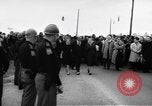
Scenes from the second Selma-to-Montgomery, Alabama, civil rights march led by Dr. Martin Luther King, Jr.
Led by civil rights leader Dr. Martin King, Jr., African Americans, joined by some white supporters, especially white clergymen, proceed on a second attempt to march from Selma to Montgomery Alabama, to call attention to racial discrimination. Signs identify the Alabama River and the Edmund Pettus Bridge. The march is halted temporarily on the bridge. An older white man and woman, who seem to be known to local people, come forward and lead the march, without interference, allowing marchers to proceed to the end of the bridge.
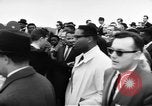
Marchers cross the Edmund Pettus Bridge, in the second march for civil rights, from Selma to Montgomery, but go no further.
African American civil rights leaders and marchers cross the Edmund Pettus Bridge. However, they are under a judicial restraining order, so they go no further in this second attempted march from Selma to Montgomery, Alabama. African American Men and women and some white people (especially clergymen) participate in the Civil Rights march. Alabama State Police officers watch the marchers, as they turn away from the main highway after crossing the Edmund Pettus Bridge, over the Alabama River.
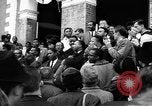
Martin Luther King Jr. speaks at Brown Chapel, in Selma, Alabama, after second attempted Selma-to-Montgomery civil rights march
After discontinuing the second attempted civil rights march from Selma to Montgomery, African American civil rights leader Dr. Martin Luther King speaks to the marchers and reporters on steps of Brown Chapel, African Methodist Episcopal Church (410 Martin Luther King St, Selma, AL 36703, United States) in Selma, Alabama. Ralph Abernathy is directly behind King. The marchers were still under a judicial restraining order that they hoped would soon be lifted. King wanted marchers to stay in Selma until the march was approved by the Court.
Varying sentiments about war and labor in lead up to World War 2. Roosevelt delivers his war message in the United States.
Disturbances and conflicting views about war versus isolationist approach in the United States prior to World War II. Officials speak about lend lease and officials with anti-war involvement stance advocate protectionism. Speakers include Senator Gerald P. Nye. and Senator Burton K. Wheeler. Wendell Willkie speak advocating a unified approach. Senator Joshua B. Lee of Oklahoma speaks. United States President Franklin D. Roosevelt addresses the Congress and delivers his war message. Pacifist student protestors on street in front of the White House with anti-war banners that read 'Peace Mobilization'. Counter demonstrators also picket, including a man with a sign, "We Americans Protest Communists Picketing the White House." Vehicles drive past in front of the White House. A group of women anti-war protestors are seen seated at an event, and together they pull down black veils in front of their faces. German Bund officials (German-American Bund) are seen meeting at an outdoor rally, and then again at Madison Square Garden in New York City in 1939. A band plays and the leader Fritz Julius Kuhn gives a brief speech during which a protestor leaps the stage and is beaten down by Bund members. Workers on streets protesting for various labor rights. They march and picket on a street. Demonstrators for other causes in American society in the early 1940s, including a woman demonstrator who carries a sign advocating civil rights or equal rights that says "Did Lincoln Free the Slaves?" Clip ends with scenes of violence at various labor strikes, including scabs (strike-breakers) being attacked, beaten, and hit by strikers, and authorities directing water hoses on strikers to repel them away from a building gate.
U.S. President Roosevelt emphasizes on increasing expenditure on Army during his annual message to the Congress,Washington D.C.
Congress hears U.S. President Franklin D Roosevelt's annual State of the Union message in Washington D.C. President Roosevelt talks about how no one expects the United States to send American youth again to fight on the soil of Europe (to be involved in World War 2) and he asserts that is still the United States position "for nobody expects such an undertaking." He recalls that President George Washington warned against entangling foreign alliances. He calls on congress to levy sufficient additional taxes to meet emergency spending needs for national defense (due to threat of war). Members of the Congress clap during President's State of the Union speech.
CRITICALPAST.COM: About Us | Contact Us | FAQs - How to Order | License Agreement | My Account | My Lightboxes | Shopping Cart | Advanced Search | Featured Collections | Website Terms & Conditions | Privacy Policy ©2026 CriticalPast LLC.
License Agreement |
Terms & Conditions |
Privacy Policy
©2026 CriticalPast LLC.