


 Francais
 Deutsch
 Italiano
Refine Your Search
Adak Alaska USA 1943 stock footage and images
- Showing 12013 to 12018 of 27381 results more
more Hide
Hide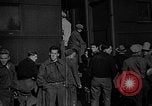
Members of Civilian Conservation Corps work at Camps and Parks in mountainous areas.
Civilian Conservation Corps men leave basic training camp by railroad train. At their destination, they step from the train, unload their supplies and equipment from baggage car into a truck, and board Army trucks that carry them through a town and out to a rustic camp in a pine forest, where tents are set up and buildings are under construction.They commence work on the unfinished structures. Views of completed barracks buildings and smooth dirt roads. View of white tents pitched in neat rows on hillside. Trucks loaded with CCC workers leaves a camp. View of a CCC camp out west, with large cactus ,and rugged mountain landscape. CCC men setting up picnic tables and benches at a park, by a lake surrounded by mountains. an encampment with row of tents and several utility buildings, in a canyon surrounded by beautiful mountains. (Great Depression period)
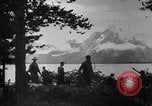
Civilian Conservation Corps at work in Yellowstone National Park
Members of the Civilian Conservation Corps (CCC) make improvements in Yellowstone National Park, Wyoming, United States. Men working with picks, and setting log fencing along paths in Yellowstone Park. The Yellowstone Canyon and falls is seen in distance behind and below them. Crews work on stones at base of falls. "Old Faithful" geyser seen erupting in snowy landscape. (Great Depression period)
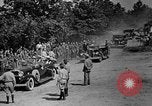
President Franklin D Roosevelt visits a Civilian Conservation Corps Camp
Cars carrying President Franklin D Roosevelt and his party arrive at a Civilian Conservation Corps (CCC) Camp in the Great Depression. Members of the CCC line the dirt road and watch as the local Army supervisor speaks with the President. Roosevelt sits at a table and speaks to the assembled CCC members.

President Roosevelt addresses congress after attack on Pearl Harbor in 1941; civilians enlist in U.S. military for World War 2
World-wide wartime activities during 1941 and 1942. President Roosevelt addresses Congress after the attack on Pearl Harbor in 1941. Crowd applauds. Citizens and cars stopped in busy New York listening to the news on the radio being broadcast regarding the declaration of war against Japan. Long queues and lines of civilian men get registered in the U.S. army as recruits are called up. Men taking oath of U.S. military service in New York and Washington DC (on U.S. Capitol steps) and other cities in mass recruitment events. New recruits stand in line in a city to register for U.S. Navy or U.S. Army service. New recruits shown include baseball star Joe Dimaggio, boxer Joe Louis, John Aspinwall Roosevelt (who was President Roosevelt's youngest son), Tyrone Power, Clark Gable, Douglas Fairbanks Junior, and Warren Pershing (son of famed General John Pershing) all seen registering to enter military service. Justice Frank Murphy of the U.S. Supreme Court is seen operating a machine gun during training. Another scene with a mass group of recruits standing and taking an oath of military service.
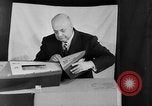
Assembly of liberty ships at Kaiser Shipyards, assembly of airplanes at aircraft factories in America during World War II
Opening scene shows U.S. Industrialist Henry J. Kaiser, demonstrating, on a scale model, how prefabricated parts are assembled into a Liberty Ship, in World war 2. Closeup shows each section of ship labeled by number and name, such as, “Transverse Bulkhead, number 44.” Scene shifts to Permanente Metals Corporation No. 2 shipyard in Richmond, California, where Liberty ships are seen in various stages of construction. Views of keels being laid, superstructures being raised into position, View from interior as skeleton of a ship is being completed. Sign atop the Liberty Ship, Robert E. Peary, as it is being launched, announces that it was completed from keel laying, to launch, in 4 days, 15 hours and 29 minutes. (This was a record for shortest time.) Camera view of the Robert E. Peary, from across the yard area where she was built. A brief view of shipyard activity at night, followed by camera panning over shipyard in daytime. Change of scene to an aircraft factory where B-17 bomber aircraft are being built. Women are seen riveting inside a plane’s fuselage. Other women work on a vertical stabilizer and still others work inside airplane structural members Men assemble an aircraft engine. Women fasten parts of engines together. Engines move through the plant on overhead cranes. An engine and propeller being placed into position on a wing with use of a crane. A right wing with two engines installed is moved into position for installation on a B-17 aircraft. Scene shifts to other aircraft factories building Martin Marauder B-26 aircraft; P-47 fighter aircraft;Navy Catalina aircraft; Douglas A-20 fighter bomber aircraft; and more B-17 bomber aircraft.

New U.S. Warships commence operations during World War 2
A new U.S. Essex class Aircraft Carrier is docked during World War 2. Her crew of more than two thousand Navy personnel are seen boarding with all their gear. Next the entire ship’s company is seen on deck for her commissioning ceremony. A large American flag flies over the assembly. The carrier moves away from the dock, and is then seen out in the water, as some sailors on the dock wave their hats. Scene shifts to the USS Alabama (BB-60) at sea in her final sea trials. View from her bridge overlooking her triple 16-inch guns. Another look at the guns from portside forward deck. Sailors on deck in cold weather gear, perform lookout duties with binoculars. Another glimpse of the 16-inch guns. View of bow wave and wake at the stern
CRITICALPAST.COM: About Us | Contact Us | FAQs - How to Order | License Agreement | My Account | My Lightboxes | Shopping Cart | Advanced Search | Featured Collections | Website Terms & Conditions | Privacy Policy ©2026 CriticalPast LLC.
License Agreement |
Terms & Conditions |
Privacy Policy
©2026 CriticalPast LLC.