


 Francais
 Deutsch
 Italiano
Refine Your Search
Adak Alaska USA 1943 stock footage and images
- Showing 13795 to 13800 of 27381 results more
more Hide
Hide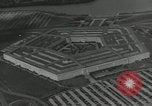
The United States Army, the Air Force and the Navy operate for the maintenance of the security of the country.
The role of the military in the security of the United States. A high altitude view of an area. The U.S. Army, the Navy and the Air Force work for the security of the United States. U.S. officials seated at a desk discuss amongst themselves. A U.S. battleship underway at a sea. Smoke rises due to the firing of guns from the battleship. The United States Air Force operates for aerial security of the country. An airplane in flight. The airplane drops bomb on a battlefield. Smoke from the bombardment.
People of the United States are secure and live in peace due to the operations of the United States Military units.
The role of the United States Military in the security of the country. An aerial view of a land. Men work on a farmland and harvest the crop. The products of the land are processed in factories. Buildings and factories in an area. Smoke from the chimneys of a factory. Vehicular traffic and people on a street. Buildings along the sides of the street. People enjoy at a beach. Soldiers fight on a battlefield. Smoke from firing and bombarding.
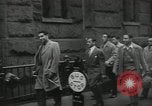
Recruitment and training of personnel to form effective army units in the United States.
Military training of United States armed forces. A recruitment process underway. Men who are new recruits for the U.S. Army enter a building during draft or enlistment procedures. The recruited personnel taken to training grounds. Men get off a bus. They learn to march on the parade grounds. Men exercise for their physical fitness. They practice rifle shooing and marksmanship with various targets.
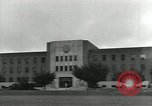
United States officers brief men about atomic structure in the United States.
Atomic weapons development in the United States Army. Exterior of a building. An officer briefs men about the new technology. Men work behind computers. A technician fixes a machine. Trainees watch an atom through a microscope and work on it. Soldiers train to become atomic technicians in the military. Soldier trainees attend a lecture. The professor discusses the atom structure and the mechanics of the atom. A man inspects a rocking rocket.
Member of the U.S. Army Parachute Team demonstrates free-fall (sky diving)
A U.S. Army AT-19 aircraft seen in flight, as viewed from another airplane. Scene shifts to cabin of the AT-19, where a soldier in helmet and parachute leans out of the doorway. He steps from the aircraft and begins a long free-fall, photographed from several different viewpoints. Narrator states such free-fall activity is routine for members of the U.S. Army Parachute team. The parachutist opens his chute and maneuvers skillfully. View, from camera on the parachutist, shows rapid approach of the ground.
United States Army Parachute Team demonstrates sky diving techniques
Portion of film titled: 'The Big Picture' about the U.S. Army Parachute Team. Captain James M. Perry, Commander of the team, explains that, as an Agency of the Continental Army Command, the Team represents the Army in Sports Parachute Competition (AKA Skydiving). He talks about the achievements of U.S. Army parachute team. He states that the team has represented the country in International Sports Parachute competitions. He discusses history of the parachute, showing a model of earliest parachute design attributed to Leonardo Da Vinci, noting it was never tested. At a blackboard, he points out illustration of a parachute used successfully by French balloonist, Andre Jacques Garnerin in 1797. He notes that Benjamin Franklin witnessed that event and was influenced to conceive the idea of its military use. Change of scene shows Captain Perry reviewing the members of the Army Parachute Team on the tarmac in front of a C-123 aircraft, which they then board by way of the rear cargo ramp. View of the team inside the aircraft cabin. At altitude, team members exit via the rear cargo door and sky dive toward earth. They execute maneuvers, including some in formation while in free-fall. Smoke seen from smoke grenades as they descend. The team members open their chutes at just above the 2200 foot altitude, and maneuver their checkered chutes to precise landings.
CRITICALPAST.COM: About Us | Contact Us | FAQs - How to Order | License Agreement | My Account | My Lightboxes | Shopping Cart | Advanced Search | Featured Collections | Website Terms & Conditions | Privacy Policy ©2026 CriticalPast LLC.
License Agreement |
Terms & Conditions |
Privacy Policy
©2026 CriticalPast LLC.