


 Francais
 Deutsch
 Italiano
Refine Your Search
Adak Alaska USA 1943 stock footage and images
- Showing 1441 to 1446 of 27381 results more
more Hide
Hide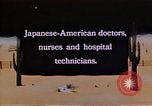
Japanese American doctors, nurses and dentists work at relocation centers in the United States during World War 2
Japanese- American surgeons at an operating theater at a relocation center (internment camp) in the United States during WW2. A dentist and his assistant take care of a patient. A Japanese American woman lab technician examines a specimen using a microscope. New born babies taken care by Japanese-American nurses. Student nurses learn lessons at the hospitals.
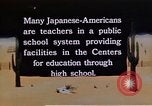
Children of Japanese Americans go to school inside a relocation center during WW2.
Japanese American children at school in a relocation center (internment camp) during World War 2. The U.S. flag on a relocation center. Young children in Kindergarten class. Teachers teach small students in a primary class. Girl student in the class solves problems. Students learn to play basketball at a court. Slate notes, "How do they react to the rising tide of racial prejudice? Well, here's one answer -- a growing feeling among the older Japanese that they will be permanently segregated and become wards of the United States, like the American Indian. Thus willing hands erect more permanent school buidlings." View of Japanese-American worker-residents in the camp building school buildings. Nisei students and American teacher at a high school. A girl solves trigonometry problems, standing at the black board in a class room. A student arranges drawers in a rack. Older Japanese-born men and women (Issei) learning in a school classroom. A student writes answers on the blackboard.
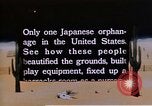
Japanese American children and infants at an orphanage play, dine and sleep together at relocation center during World War II.
Nisei, the Japanese Americans of second generation, at relocation centers (internment camps) during World War II. Infants and children at a Japanese orphanage play in a garden. Girls play on a see saw, swings and slides. Orphans dine at a mess and talk. A nurse assists infants sleep on their beds at a dormitory.
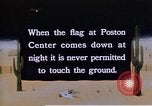
Japanese Americans lower the U.S. flag, soldiers drive in armored vehicles, and Nisei soldiers train for combat operations (WW2)
Japanese Americans lower the United States flag at Poston War Relocation Center (internment camp) in Arizona, during World War II. They fold the flag carefully. Elevated view looking down on armored vehicles and tanks during a military parade in the United States. Nisei (second generation Japanese-American) U.S. Army soldiers of the 442nd Regimental Combat Team seen in training for combat operations, at a military base in the United States. Slate notes that their slogan is "Go For Broke" and quotes a soldier as saying, "We have more to fight for than you do. Of course, we fight for our country, America, but we are also out to redeem the name of our race." Japanese- American soldiers navigate an obstacle course in Army training.
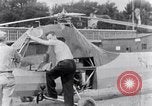
Successful test flight of PV-2 helicopter at factory of P-V Engineering Forum, Inc. in Pennsylvania
Successful test flight of the PV-2 helicopter at facility of P-V Engineering Forum Inc. (later the Piasecki Co.) in Roxborough, Pennsylvania. Pilot assisted by a mechanic enters the cockpit. Pilot starts the engine and P-V2 lifts off. Helicopter is seen maneuvering making 360 degrees turns and hovering, all under good control of the pilot at all times.
United States Coast Guard SPARS being trained in United States
A film titled 'Coast Guard SPARS' urges women to join women's component of United States Coast Guard to relieve men for active duty in the sea. SPARS trained, work in laboratories and store rooms. They manage aviation operations and also work as radio technicians.
CRITICALPAST.COM: About Us | Contact Us | FAQs - How to Order | License Agreement | My Account | My Lightboxes | Shopping Cart | Advanced Search | Featured Collections | Website Terms & Conditions | Privacy Policy ©2026 CriticalPast LLC.
License Agreement |
Terms & Conditions |
Privacy Policy
©2026 CriticalPast LLC.