


 Francais
 Deutsch
 Italiano
Refine Your Search
Adak Alaska USA 1943 stock footage and images
- Showing 1651 to 1656 of 27381 results more
more Hide
Hide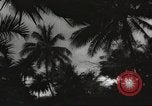
Views of Pearl Harbor in Honolulu, Hawaii prior to Japanese attack during World War II.
A film reviewing the conditions at Pearl Harbor in Honolulu, Hawaii prior to Japanese attack during World War II. The island of Oahu. An actor portraying Uncle Sam sleeps in a chair. Aerial view of Oahu island. U.S. soldiers on guard walking a military base perimeter with high fencing behind them. Another soldier walking on guard along a beach. U.S. Army soldiers standing atop a moving cargo railroad train to guard its contents during transport. View of Hickam Field entrance gate on Oahu, Hawaii, with a guard checking entry. Two airmen walking toward parked aircraft. Military aircraft lined up outside a hangar at Hickam Field. Pearl Harbor which lies near Hickam Field. Wide, elevated view of many large U.S. Navy ships at anchor in Pearl Harbor. U.S. minesweepers, light cruisers, destroyers and other ships in Pearl Harbor. Bus on a quiet street in early morning. A man tending a small boat at dock. Ground crews at work in the hangar of Hickam Field, performing maintenance on a bomber aircraft. U.S. Navy sailors throw a baseball back and forth on a dock in Pearl Harbor. Large group of Navy sailors attend church services. A chaplain speaks to the sailors and other military officers during the religious service.
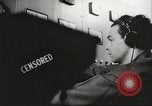
Formations of Japanese bombers over the island of Oahu and Pearl Harbor in Honolulu, Hawaii during World War II.
A film dramatizes the Japanese attack on Pearl Harbor in Honolulu, Hawaii during World War II. A Pvt. (Private) soldier operates the controls on a panel at an aircraft warning station at Pearl Harbor. He calls up an information center and informs a U.S. Army Lieutenant that he has detected a line of unidentified aircraft approaching the island of Oahu. The Aloha Tower in Honolulu. Airmen around U.S. aircraft parked at a U.S. air base look at formations of Japanese aircraft in the sky. Exterior of a building in Washington DC. A door sign reads 'Secretary of State'. Formation of Japanese aircraft over clouds and island of Oahu. The aircraft over Waikiki Beach. They drop first load of bombs at Hickam Field which borders Pearl Harbor. Air base installations at Hickam Field burn.
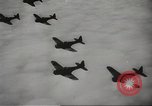
Japanese air attack over U.S. naval air station in Kaneohe Bay, Honolulu during Pearl Harbor Raid of World War II.
A film dramatizes the Japanese air attack on Pearl Harbor in Honolulu, Hawaii during World War II. A formation of Japanese bombers drop bombs on Wheeler Army Airfield in Honolulu during Pearl Harbor attack. The bombs explode on parked U.S. aircraft and army installations on the airfield. Smoke billows up from the explosions. U.S. soldiers fire machine guns towards the Japanese bombers. U.S. pilots start to board aircraft. Japanese air attack on U.S. naval air station at Kaneohe Bay, Honolulu. Bombs explode. The bombs start to explode around U.S. sailors attending a church services. U.S. troops fire guns toward Japanese aircraft. They run around on the air field while Japanese aircraft continue attacks. U.S. pilots board the aircraft. Hangers in flames. U.S. soldiers remove bombs mounted under the wing of an aircraft.
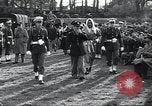
U.S. World Heavyweight Boxing Champion (US Army Staff Sgt. Joe Louis Barrow) in Army exhibition match
World Heavyweight Boxing Champion, U.S. Army Staff Sergeant Joe Louis(Barrow), escorted by Military Police, arrives for an exhibition bout and enters a ring at an Army base,in the United States during World War II. His opponent wearing a robe with "California Jackie" written on it, enters the ring, U.S. soldiers and WACs (Women's Army Corps) cheer for Louis as he arrives. Joe Louis holds a microphone and speaks to the crowd. The bout in progress. Louis' exhibition partner wears a protective helmet, as he boxes with the champion.
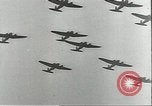
U.S. antiaircraft artillerymen training with M7 director system for controlling antiaircraft batteries, during World War II.
Sequence begins with views of German He-111 bombers in formation,during World War 2. Scene shifts to Squad of U.S. Army antiaircraft artillerymen surrounding a Sperry Gyroscope M7 director system control unit, in a sand-bagged position, as the soldiers train in the United States. View of a single He-111 is inserted. Battery of U.S. 90mm antiaircraft guns is seen firing under guidance of M7 director system. Scene shifts to a German Me-110 aircraft maneuvering evasively through flak bursts from antiaircraft guns, somewhere in Europe, during World War 2. Scene shifts again, back to Narrator describing operator actions in using M7 artillery control unit, as it is shown in images.
People listen to the song 'God Bless America' sung by singer Kate Smith in the United States.
An American feature film 'This is The Army' depicts a performance by singer Kate Smith at the 21st anniversary of the armistice of World War I. Animated map shows Europe with fire in Poland. A man in the radio studio announces the name of Kate Smith on the stage, and noting the 21 anniversary of Armistice Day. A studio audience is present and applauds. Kate Smith introduces "God Bless America" as a new song, and then sings the song "God Bless America" with in-studio orchestra accompaniment. People watch the performance. An old man listens to the song, standing in front of his shop 'The Bugle Call.' He dusts a console radio with a feather duster and then goes inside and removes a bugle from a case labeled, ' Yip! Yip! Yaphank! 1918 ' At the Twardofsky business across the street, a man puts a small American flag into a basket as his father listens to the song on a small radio on the counter. People listen to the song in their houses and buildings. In a family living room: A couple seated in their living room listen to their console radio. A man, likely their son, seated at his desk listens to the song while studying. A woman looks at the photograph of a soldier, named Blake. Blake is then depicted listening to the same Kate Smith performance over a radio while stationed at Hickam Field in Hawaii. Characters Jerry Jones and Johnny Jones, played by actors George Murphy and Ronald Reagan are seen at the Jones and Jones production office. They listen to the radio. The character played by Ronald Reagan reads Variety Magazine.
CRITICALPAST.COM: About Us | Contact Us | FAQs - How to Order | License Agreement | My Account | My Lightboxes | Shopping Cart | Advanced Search | Featured Collections | Website Terms & Conditions | Privacy Policy ©2026 CriticalPast LLC.
License Agreement |
Terms & Conditions |
Privacy Policy
©2026 CriticalPast LLC.