


 Francais
 Deutsch
 Italiano
Refine Your Search
Adak Alaska USA 1943 stock footage and images
- Showing 2071 to 2076 of 27380 results more
more Hide
Hide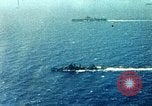
Navy men on 'The Fighting Lady' in the Pacific Ocean play games and write letters on the day before attacking Marcus Island.
Crew activities aboard 'The Fighting Lady', the USS Yorktown, CV-10, in the Pacific Theater during World War II. Sailors on board the day before attacking Japanese forces on Marcus Island. USS Yorktown underway in the Pacific Ocean. U.S. navy sailors drink coffee and play cards. They lie on bunk beds while listening to a crewman play an accordian. Men with tattoos on their legs and hands. Men play cards. A tanker comes to refuel the ship. Fuel lines between ships with rough seas. A weather balloon is released by a crewman. The skipper talks to the air group commander and view maps of Marcus Island. An animated map with large Japanese logo on it shows the path the USS Yorktown will take through the Marshall Islands to Marcus Island. The air group commander explains about the attack and shows with his hands some fine points in air dog fighting. The crewmen play games and write letters home before the strike. The radio plotting room. A lieutenant named E.T. Stocker plays cards with other officers. Sunset wide shot of USS Yorktown underway.
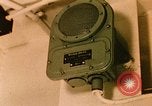
General quarters sounded as USS Yorktown pilots gather in flight ready room and take off to attack Marcus Island.
View of general quarters alarm as the USS Yorktown (CV-10) in the Pacific Theater during World War II prepares for attack of Japanese forces on Marcus Island. Men run up and down stairs and close hatches and watertight doors while pilots gather in the flight ready room. The U.S. Navy fliers wear their flying suits and get ready for the attack. A sailor responds to an intercom call to flight ready room three and orders pilots to man their planes. The pilots board the planes. The fighter planes. A radio plotting room to keep track of all the planes. The planes fly low and suddenly climb up. View of Marcus Island. The planes bomb Marcus island. Smoke due to bombardment. The bombing of the enemy boats and supply ships. A ship is destroyed. Smoke on the island. The planes in flight return back after the victory. A sailor nicknamed Smoky tracks the flyers to check that none of them is missing.
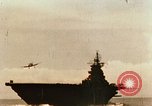
U.S. Navy pilots return after bombing Marcus Island and report to the combat intelligence officer aboard USS Yorktown.
USS Yorktown (CV-10) in the Pacific Theater during World War 2. U.S. Navy fighters, bombers and escorts return after bombing Marcus Island. including the SBD Dauntless, TBF Avenger, F6F Hellcat, A-25 Shrike, SB2C and SBF Helldiver land on the carrier. An officer supervises the deck activities. Crewmen signal and guide the planes. An aircraft lands with a ruptured tire. Landing officer warns the crew to keep away on the stern. The pilots go below to report to the combat intelligence officer. The officer and a crewman seated at a table with documents and photographs. The pilots provide statistics regarding bombs dropped, ammunition fired, and targets. They report on shore installations, radio stations, gas dumps, hangars and ammunition dumps set on fire due to their bombardment. Smokey, the radio plotting room in charge, tracks the remaining aircraft over the radio. Crewmen signal on the flight deck as a plane crash lands. Officers and pilots in a meeting.

Montage of scenes involving military equipment and operations emphasizing signal corps communications
'The Signal Corps Fights' depicts the role and contribution of the U.S. Army Signal Corps in combat and war. Montage of military equipment and combat scenes (some staged). Opens with glimpses of: massed formation of U.S. Army soldiers; similar formation of bombs in a munitions factory; row of P-47 fighter planes parked on an airfield; a huge radar antenna; battery of U.S. 120 mm M1 anti-aircraft guns; troops marching toward the camera; Martin B-26 Marauder aircraft dropping bombs, that explode on the ground; formation of German He 111 bombers in flight; U.S. battery of 120mm anti-aircraft guns firing; gun camera views of U.S. fighter strafing German aircraft on the ground, and attacking a German Messerschmitt bf 109 head-on (The tail is blown off and the pilot bails out at the last instant); fire engulfing some soldiers. Next, a soldier is seen at a large signal corps field telephone switchboard, and other communications switchboards are shown with operators. Momentary glimpse of troops, ostensibly engaged in combat. A soldier communicating from under a camouflage netting, and one holding a rifle and talking in a phone as he strings wire from a spool in his backback. A german soldier ostensibly cutting a U.S. communications cable that he discovers in the field. A U.S. soldier crawling along the line to find and repair the damage, followed by a staged "attack" by the German soldier. They engage in a knife fight. Soviet infantry advancing on the Eastern Front. Soviet T-34 tanks advancing. Soviet soldiers engaged in combat. An unusual U.S. tank with two guns, and side protection over track wheels. M3 Stuart light tanks going down hill with infantry in france during World war 2. Hand of signal corps soldier using a key to send morse code message. Soldier in bunker using field telephone. Signal corps soldiers communicating with field switchboards during combat. Momentary glimpse of German Messerschmitt bf 109 and another aircraft speeding past. Bomb exploding. Huge clouds of black smoke billowing, behind camouflaged German military vehicles parked. Twisted frames of German wrecked vehicles and rail cars. Huge number of German soldiers marshaling to retreat from advancing Allies. German officers conferring.
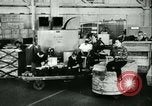
U.S. Army Signal Corps communication material and equipment is produced and distributed in World War II.
The role and contribution of the U.S. Army Signal Corps in combat and war, especially during World War 2. Workers organize and prepare signal communication material and equipment for transportation. Men transfer the items including wooden cartons, cables, signaling units in trolleys. Workers load the material into trucks. Shuttle ships in docks. Signal communication supplies for U.S. and Allied troops in the European Theater loaded onto the ships. The shuttle ships make their way under security in heavy seas. A Nazi U-boat wolf pack in the water during the early stages of World War II. torpedoes launched and U.S. ships are attacked bu the German submarines, smoke due to the explosions. U.S. sailors on board and jumping from burning ships into water.German wolfpack submarine fleet in a harbor. German Kriegsmarine sailors lower German Neger torpedo-carrying craft (sometimes called Human Torpedo) into the water. A U.S. B-25 bomber aircraft in flight locates a German submarine. The radio operator gives the exact location and the submarine is attacked. View from within cockpit as bomb sight is fixed on German submarine target. View of bomb doors open and bombs away from B-25 aircraft. Explosion in water is seen and the submarine is hit. Dramatized scene from inside of submarine as it is rocked by explosion and fills with water.
U.S. Signal Corps officers and soldiers use mine detectors, modern radars, and meteorological equipment during World War II.
The role and contribution of the U.S. Army Signal Corps in combat and war. U.S. shuttle ships loaded with signal communication supplies for U.S. and Allied troops in the European Theater make their way in the Atlantic ocean. The Squier Laboratory at Camp Alfred Vail in Fort Monmouth, New Jersey. A technician works on signal communication equipment in the laboratory. U.S. soldiers use mine detectors in the European Theater during World War II. The mine detectors detect metallic, non-metallic mines, wooden box mines, and mines in glass containers. Artillery soldiers bury large microphones into the ground in advance zones. The microphones relay back information on enemy artillery. Soldiers receive the information on radio sets. U.S. aircraft on a training flight simulating real combat situation: The aircraft lost in heavy rain and rough weather, looking for the location of Boston. The pilot switches on a modern advanced radar. The radar waves pierce thick clouds, are reflected by Earth's surface and display an image on the scope. The image shows the clear location of Boston harbor directly under the aircraft. U.S. bombers attack over the Channel coast on D-Day (6 June, 1944). U.S. soldiers employ meteorological equipment for long range weather forecast in the European Theater during World War II. Soldiers release a hydrogen balloon into the sky. Another soldier uses an apparatus to take readings of atmospheric conditions behind enemy lines. An aircraft drops an automatic weather station called SCM-18-TI by parachute into enemy territory. The timed mechanism sends out weather data in codes. The interior of the automatic weather station lying open in a field.
CRITICALPAST.COM: About Us | Contact Us | FAQs - How to Order | License Agreement | My Account | My Lightboxes | Shopping Cart | Advanced Search | Featured Collections | Website Terms & Conditions | Privacy Policy ©2026 CriticalPast LLC.
License Agreement |
Terms & Conditions |
Privacy Policy
©2026 CriticalPast LLC.