


 Francais
 Deutsch
 Italiano
Refine Your Search
Adak Alaska USA 1943 stock footage and images
- Showing 4597 to 4602 of 27382 results more
more Hide
Hide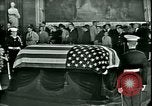
Civilians view the flag draped casket of assassinated President John F Kennedy as it lies in state in the Capitol Rotunda.
The state funeral of assassinated United States President John F Kennedy in Washington DC. Kennedy's flag draped casket on the Lincoln catafalque in the U.S. Capitol Rotunda. Visitors view the casket and pay their last respects to Kennedy. Armed guards around the casket. Newly appointed President Lyndon B Johnson returns from the Capitol to the Executive Office building. Cars outside the building. Reporters outside the White House (1600 Pennsylvania Avenue NW, Washington, DC 20500, United States). Members of Senate outside the Capitol Rotunda. Cars, civilians and officials at the U.S. Capitol (First St SE, Washington, DC 20004, United States).
Japanese Prime Minister Hayato Ikeda arrives for the state funeral of assassinated U.S. President John Kennedy.
Foreign dignitaries arrive for the state funeral of assassinated U.S. President John F Kennedy. U.S. Secretary of State Dean Rusk awaits the arrival of Japanese Prime Minister Hayato Ikeda at the Dulles Airport. Dean Rusk greets the Japanee PM as he arrives at the airport terminal. The dignitaries walk past the waiting photographers and journalists. Rusk and Assistant Secretary of State for Far Eastern Affairs Roger Hilsman lead the PM down a ramp towards a waiting car. The PM and Dean Rusk get into the State Department limousine and leave for Washington DC.
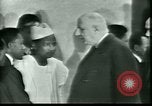
French President Charles De Gaulle arrives for the state funeral of assassinated President John Kennedy.
Foreign dignitaries arrive for the state funeral of assassinated U.S. President John F Kennedy. French President Charles De Gaulle arrives at a terminal building of Dulles Airport. He greets officials and ministers from former French Colonies in Africa, French officials and officers including a General, Admiral and an Air Force General. The President is followed by U.S. Secretary of State Dean Rusk and Foreign Minister of France Maurice Couve De Murville. President De Gaulle shakes hands with officials. He receives an applause from by standers at the airport. Photographers click pictures of the dignitaries. Dean Rusk leads the President through the terminal gate to the waiting State Department limousine. The President, his military aide and security guard get into the car and leave for Washington DC. The U.S. Capitol building. Secretary of State Rusk walks towards his car behind the terminal building.
President Lubke, Chancellor Erhard and Foreign Minister Schroder arrive for the funeral of assassinated President John Kennedy.
Foreign dignitaries arrive for the state funeral of assassinated U.S. President John F Kennedy. West Germany President Heinrich Lubke arrives at the Dulles Airport. He shakes hands with a member of the German delegation in Washington. West Germany Chancellor Ludwig Erhard, West German Foreign Minister Gerhard Schroder and U.S. Secretary of State Dean Rusk walk into the airport terminal. The dignitaries pose for the journalists and photographers. Secretary Rusk talks to Chancellor Ludwig. He leads the party towards the airport entrance and into the waiting cars. A television presenter gives details of the stay arrangements of the visiting foreign dignitaries.
Israeli President Shazar and Foreign Minister Meir arrive for the funeral of assassinated President John Kennedy.
Foreign dignitaries arrive for the state funeral of assassinated U.S. President John F Kennedy. U.S. officials await the arrival of Israeli President Zalman Shazar. President Shazar enters the terminal with U.S. Secretary of State Dean Rusk and Israeli Foreign Minister Golda Meir. The President greets the Israeli Embassy staff. President Shazar, Secretary Rusk, Foreign Minister Golda Meir, Ambassador of Israel Avraham Harman and the military attache of the Embassy pose for the photographers. Secretary Rusk escorts the dignitaries towards the waiting cars. Photographers take pictures. A television presenter winds up the report on the arriving dignitaries.
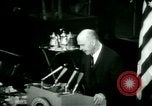
The shooting of President John Kennedy in Dallas, Texas is announced to a gathering at the Dallas Trade Mart.
A man stands at a lectern bearing the Presidential seal and announces the news of the John F. Kennedy shooting at the Dallas Trade Mart gathering, saying "The motorcade has been shot." He says "we will tell you as much as we know, as soon as we know anything." Another man comes to the microphone to lead a prayer. All present stand up and pray. People depart after the prayer. (President Kennedy had been scheduled to speak at a luncheon at the Trade Mart at 12:15pm that day. He was en route to the Trade Mart when he was assassinated.)
CRITICALPAST.COM: About Us | Contact Us | FAQs - How to Order | License Agreement | My Account | My Lightboxes | Shopping Cart | Advanced Search | Featured Collections | Website Terms & Conditions | Privacy Policy ©2026 CriticalPast LLC.
License Agreement |
Terms & Conditions |
Privacy Policy
©2026 CriticalPast LLC.