


 Francais
 Deutsch
 Italiano
Refine Your Search
Adak Alaska USA 1943 stock footage and images
- Showing 5143 to 5148 of 27426 results more
more Hide
Hide
Unemployed men engaged in various work lead by Arthur Woods, former New York Police Commissioner, in Washington DC.
Arthur Woods, former New York Police Commissioner raises his hat and smiles in Washington DC, during his role as chairman of President Herbert Hoover's Committee on Employment. Scenes of construction projects underway providing work during the Great Depression: A huge construction site with work in progress building many high rise buildings. A large dam being built. A large crane moving material to a bridge from ground. Workers engaged in welding work. Sparks at the welding site. A large crane moving iron. Workers building giant ships in shipyards. Workers walk on docks beside a ship under construction in a shipyard.
11-month old baby win in a Healthy baby competition in Toledo, Ohio.
A nurse weighs a baby on a mono-pan balance. The baby cries. A doctor examines the baby. Two babies with nurses. A baby with curled hairs appears. The winner, 11-month old baby is in its mother's lap. They stand with the trophy.
General Mark L Hersey presents a plaque to Captain Hemphill for his valor during World War I.
Captain Hemphill with others gathered at a place. General Mark L Hersey, retired 4th Division Commander, presents Captain Hemphill a plaque for his valor. All gathered members cheer him. Captain Hemphill with others move to visit his old company at United States hospital in Aspinwall
During prohibition a liquor producing site (moonshine still) is raided and demolished in a forest by Federal Agents
Federal and local agents, together with laborers raiding a moonshine still site in a forest during Prohibition in the United States. Tall shack explodes, blown up by agents. Smoke arises from the raided site. The shack collapses at the site. Officials in uniform with others gather near the place to check the fallen house. Laborers with sledge hammers demolish a liquor distillation still. Liquor barrels are emptied onto ground by enforcement authorities.
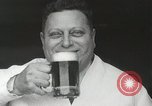
During Prohibition in the United States, men and women sit at a speakeasy bar and drink.
Footage from the Prohibition period in the United States. A man holds a beer mug. He smiles and drinks from the mug. Men and women sit together at a speakeasy bar. Liquor bottles and filled glasses on the bar. They drink and smile. They are dressed well, in suits and bowler hats (derby hats). One man is in a tuxedo with tophat. Women in late 1920's fashions.
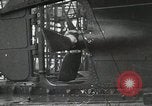
Launching of a U.S. Coast Guard cutter in the United States.
Propeller of a U.S. Coast Guard cutter to be launched. Another ship in water at the port. Two uniformed U.S. Coast Guard officers talk. (The one on the left is possibly U.S. Coast Guard Commandant Frederick C. Billard). Two dock workers use a two-man saw to cut away holding timbers. The Coast Guard cutter slides over track and enters water. Men at port watch the cutter move in water. The ship turns to the starboard.
CRITICALPAST.COM: About Us | Contact Us | FAQs - How to Order | License Agreement | My Account | My Lightboxes | Shopping Cart | Advanced Search | Featured Collections | Website Terms & Conditions | Privacy Policy ©2026 CriticalPast LLC.
License Agreement |
Terms & Conditions |
Privacy Policy
©2026 CriticalPast LLC.