


 Francais
 Deutsch
 Italiano
Refine Your Search
Alencon France 1944 stock footage and images
- Showing 193 to 198 of 9964 results more
more Hide
Hide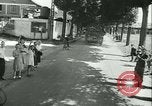
Civilians cheer and welcome French and U.S. troops during the Liberation of Paris from Germans.
August 1944, Paris: Parisians along the streets of the city. A convoy of Allied troops and vehicles passes by. Civilians cheer and greet the troops. Men remove road blocks and barricades erected by the Germans. Tanks and military vehicles on the streets. 25 August 1944: A large crowd gathered to greet the French 2nd Armored Division led by General Philippe Leclerc. Soldiers on tanks wave to the crowd as they cheer and welcome the troops. U.S. soldiers and tanks amidst the crowd. The convoy approaches the Eiffel Tower. Girls, women and children kiss the soldiers. Street fighting between the FFI, Allied troops and German soldiers. Soldiers run across the street. Civilians take cover. A man clicks photographs. Germans fire. People take cover. The Allied convoy on the road. Soldiers in the streets fight back. German snipers shoot from a building. Nazi officers and soldiers taken prisoners. They are marched out of the Institute of German, used as their headquarters. Prisoners sweep the street outside Hotel Majestic. Allied soldiers and civilians watch. French and U.S. troops ride past Parisian monuments including the Notre Dame Cathedral, Palace De La Concorde, Champs Elysees, and approach the Arc De Triomphe. Collaborationists are rounded up, hissed at, and man handled. French crowd deals roughly with a female collaborationist: Men paint a woman's face and pull her by the hair. Male collaborationists are also led away. German General Dietrich Von Choltitz, Commander of the Paris region, and his German Garrison surrender. The German soldiers are marched through the streets past. The people of Paris celebrate. Civilians hold banners and read the newspaper headlines as they celebrate and cheer. (World War II period).
The Liberation of Paris in World War II; also pre-war and early war Paris scenes.
An Allied tank drives past the Eiffel Tower in Paris, on August 25, 1944, during World War 2. Cheering Parisians hold up a newspaper reading: "Paris is delivered"and mentions French Forces entering Paris. A jeep filled with American soldiers passes through the celebrating crowd. View of American soldiers, including an Army chaplain, mingling with the citizens. More views of the people, including some carrying a large banner reading: "Liberated." They are followed by others carrying French tricolor national flags. Some carry placards thanking the Allies Some cite the Free French and display the Cross of Lorraine. Other placards contain the name "DeGaulle." American M4 Sherman tanks and jeeps drive along a tree-lined street. Closeups of children clapping their hands. A soldier drinks wine from a bottle. American soldiers kissing French girls. More scenes of celebration. A huge crowd gathered at Place de la Concorde with the Egyptian obelisk clearly visible. At this point, the film shifts to images of Paris before the war showing the gay night life of the city. Sidewalks in the artist section. Cafes with outdoor seating. Night clubs with risque shows. Fire works and displays that illustrate why Paris was called the City of Lights. Street open air markets with flowers, foods, and various other commodities for sale. A street vendor on a 3-wheel bicycle cart. The Egyptian obelisk at Place de la Concorde with the Arch of Triumph in the far background. Cars driving on the Avenue des Champs-Élysées near the Arch of Triumph. Notre Dame Cathedral. Sign for Metropolitan (subway). Imposing building along the River Seine with sightseeing boats plying the waters. Monumental bridges. A bus carries passengers along a city street. Men and boys carrying fresh newspapers for delivery. Parisians gather around the eternal flame at the Unknown Soldier Memorial under the Arc de Triomphe monument. A soldier memorial sculpture on the monument. Here the film reverts back to World War II. A German flag flying on a ship. Adolf Hitler showing delight at bringing the French to surrender on 22 June 1940, at the same railroad car of Compiegne, in which the armistice ending World War I was signed on Nov. 11, 1918. The Nazi German flag placed over the French monument in the “Glade of the Armistice”at Compiegne. German officers driving in staff cars past the Arc de Triomphe as German forces occupy Paris on June 14, 1940 in World War II. Views of French citizens listening to the voice of General Dwight D. Eisenhower over their radios, as he broadcasted from London, on June 6, 1944. Naval guns firing. Americans hitting the beach in Normandy (famous image, showing some soldiers falling to enemy fire). Members of the French forces of the Interior (FFI) preparing to engage occupying German forces. The Cross of Lorraine being placed on the sleeve of a woman member. The FFI setting up baricades and defenses in Paris. A tree being cut down for use in defense works. Young boys with shovels helping build fortifications. FFI members hunkered down behind sand-bagged defense positions. FFI firing their rifles and retrieving dead and wounded. German Panzer tanks in the streets. FFI engaged in Guerrilla warfare, sniper against sniper. FFI firing rifles in streets and one firing a machine gun from a building. A German tank burning on a street. Civilians hunkering down as snipers exchange fire. A German soldier captured and escorted by FFI. An Army M8 Greyhound armored car and jeeps and trucks, and M4 Sherman tanks, occupied by de Gaulle's Free French forces, head toward Paris. General de Gaulle standing in a jeep as it moves along a Paris street. FFI remove street barriers to allow an M4 Sherman tank to enter Paris. Free French soldiers and and Americans, accompanied by tanks, race under the Eiffel Tower. A line of Allied armored vehicles held up by last ditch defense actions by German forces. Explosions are heard. Gun fire seen emanating from many windows in a large building. Soldiers firing at the windows. German soldiers emerge from the building with arms raised. Surrendering German soldiers and officers are paraded with arms over their heads headed to prison camps. Some are put to work sweeping debris from a street. General de Gaulle leads a parade of Frenchman along the Champs-Élysées. He places a wreath near the eternal flame under the Arch of Triumph. French people sitting atop a line of Allied armored vehicles. More views of celebrating French people. General Dwight D. Eisenhower and General Omar Bradley speaking with a soldier. The French tricolor being raised on a flag pole.
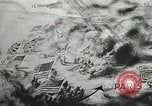
Allied Forces advance and French Army takes Paris in World War II.
Animated map shows American forces advancing toward Paris. Views of German troops disorganized and making their way individually among burning and destroyed military tanks and vehicles. A U.S. Army colonel confers with U.S. Armored unit officers, using hood of jeep as a table. U.S. Sherman tanks and tank destroyers moving along dirt roads toward Paris, at high speed and passing beyond the Orleans region. They move rapidly through groups of cheering French citizens in a French town. American armored units moving to bypass Paris. U.S. Army Air Force airplanes dropping maps to the armored units by parachute, because they were moving too fast to be supplied by ground. French forces, armed with American tanks, vehicles, and arms, are ordered to advance and take Paris. As they proceed, U.S. Army Air Forces support them from the air. Formations of P-51 fighter and B-26 bombers are seen. The French forces advance at rate of 25km per day. They are joyously welcomed as they pass through French towns on their way. Scenes of Paris. Local residents in line at a shop. German occupiers are seen beginning to leave Paris. A line of horse-drawn wagons is seen in the street. On August 14, 1944, Paris Police go on strike. They are seen drawn up in formation. August 15, 1944, the Gestapo left Paris. French citizens and police open fire on German Army vehicle. Parisians begin to hang the tricolor from their windows. French resistance fighters seen running in streets of Paris and firing weapons as they work to find remaining German forces. A doctor and several nurses run for cover. Parisians begin to fill the streets during liberation of Paris as elements of the French Army enter Paris. General Charles de Gaulle walking along a street in Paris.
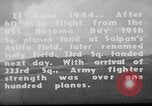
U.S. 19th and 73rd Fighter Squadron P-47s landing on Aslito Airfield, Saipan during World War II
After the battle of Saipan, during World War 2, P-47s of the 318th fighter Group 19th Fighter Squadron are seen flying in from the Carrier, USS Natoma Bay and those of the 73rd Fighter Squadron, flying in from the USS Manila Bay. View from a P-47 approaching Coastline of Saipan Island . Control tower operator on lookout for aircraft. Signal from the tower giving the planes directions for landing. Four P-47s peeling off for landing. P-47s approach and land on Aslito airfield, island of Saipan. Fliers standing around their aircraft watching other planes come in for landing. 19th Fighter Squadron P-47s taxiing into parking area. Pilot talking to the crew chief of his plane. View across airfield showing the demolished hangar building with P-47s in 19th Fighter Squadron's dispersal area. Fuel Trucks and ground crew personnel attend to the arriving aircraft. One of the P-47s carries the name: "Jackie Eilen" and another, the name "Angel." (Note: Although written introduction to this film refers to 11 June, the events depicted occurred after 20 June, 1944. The invasion of Saipan did not begin until 15 June, 1944. Aslito Field was captured on 19 June, 1944. The first P 47 aircraft (a few) arrived on 20 June, 1944 while the Seabees were working to make the field operational.)

British aircraft sink the German Kriegsmarine battleship Tirpitz off the coast of Tromso, Norway.
Activity in European Theater of Operations during World War 2. Animated map shows Tromso, Norway. Views of British Royal Air Force attempts to sink the German Kriegsmarine battleship Tirpitz in October 1944. Shows extensive smoke cover that hides the battleship Tirpitz, preventing attack. A second attempt failed on 29 October, 1944, as smokescreen and weather clouds prevented clear bombing. During that attempt, the Tirpitz is seen firing her 15 inch guns at incoming British aircraft, while she is moored off Hakoya Island outside Tromso. She was damaged by one bomb during that attack. Later, on November 12, 1944, aerial views show British aircraft of No. 617 Squadron ("Dambusters") and No. 9 Squadron RAF bombing the Tirpitz, having caught her by surprise and without smoke screen. German Battleship Tirpitz bombed by multiple 6-ton "earthquake" bombs (or seismic bombs) dropped by British Lancaster bombers. The Tirpitz is seen as it rolls over before sinking at Tromso, Norway.
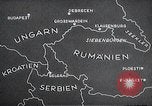
German 23rd Panzer Division engages Soviet and Romanian forces in Hungary (Northern Transylvania) on Eastern Front in World War II
Battle of Grosswardein, precursor to Battle of Debrecen, in World War 2. In late September, 1944, the German 23rd Panzer division was ordered to clear Grosswardein (aka Oradea or Nagyvárad) and environs occupied by Soviet and Romanian forces (who had switched sides a month earlier). In late September, 1944, the German 23rd Panzer division was ordered to clear Grosswardein (aka Oradea or Nagyvárad) and environs occupied by Soviet and Romanian forces (who had switched sides a month earlier). This was prelude to the World War 2 Battle of Debrecen, in October, 1944. Map shows areas of interest and reflects German treatment of Grosswardein and Debrecen as part of Hungary (Northern Transylvania), A German 88mm artillery piece is seen being towed uphill by a SdKfz 6 half-track. Battery of German 15 cm schwere Feldhaubitze 18 cannons being fired from high ground. Their shells striking at edge of wooded area. View of shells being loaded. Chalk writing on one "trotzdem siegen win" or in English "We will win despite all this". German Panther medium tanks move at the head of a column that includes Stug III and other armor. A Stug III camouflaged with tree branches. German armor advancing across and open field. Two tanks parked, and their crew members watching the battlefield. Explosions in the field. German machine gunners firing against Soviet infantry. Romanian soldiers surrendering in a grove of trees, are searched and processed as prisoners of war. German infantry moving through field of corn stalks, along with armored personnel carriers (Schutzenpanzerwagen SdKfz 250/10 Neu). A truck burning in the field, with a field piece attached on a towbar.
CRITICALPAST.COM: About Us | Contact Us | FAQs - How to Order | License Agreement | My Account | My Lightboxes | Shopping Cart | Advanced Search | Featured Collections | Website Terms & Conditions | Privacy Policy ©2026 CriticalPast LLC.
License Agreement |
Terms & Conditions |
Privacy Policy
©2026 CriticalPast LLC.