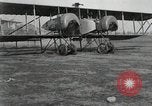
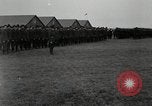
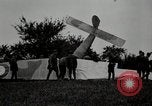
Tribute paid to an American soldier in Chalons-en-Champagne, France. People gathered in the city hall (Pl. du Maréchal Foch, 51000 Châlons-en-Champagne, France). The American flag on the building. Officers salute as soldiers carry the coffin of the American soldier who is the selected unknown American soldier, chosen to be represent all such soldiers in the tomb of the unknown soldier in the United States. Officers on horses in the background. The soldiers place the coffin of the unknown soldier on a horse driven caisson. The coffin is carried on the cart. The soldiers and the officers march in the background. An officer addresses people. The soldiers carry the coffin on a dock followed by the officers. People place wreaths on the coffin. The French and the American flag on the ship USS Olympia. The ship leaves the dock. People stand and watch from the dock, bound for the United States and final burial ceremonies at Arlington National Cemetery in Washington DC.
The German assault on France during the Battle of France in World War II. German war material hauled into France. Trucks are loaded at docks. Soldiers load material. German trucks haul the war material into France. A road sign gives directions for 'Mecheln, Brussel, Antwerp, Mons, Bayern'. The convoy advances. Soldiers and horses in trucks. German soldiers sort and load cans, ammunition and other war equipment into trucks. German engineers and technicians build and repair war material. Engineers repair a bridge. Huge equipment used for the repair. Smoke emitted from a locomotive engine as it crosses the bridge. Soldiers seated cleaning ammunition. German civilians manufacture war material. Workers manufacture ammunition, rifles, guns, shells and artillery pieces. German officers confer over a map on a table. Soldiers ready artillery. Trucks transport German war supplies. German soldiers eat, drink and rest. Some wash clothes, bathe, get hair cuts, get dresses, and read. A soldier bathes a dog in a tub, another washes clothes in a tub. A soldier uses a hand pump, another dries clothes on a line. The men clean ammunition, clean and shoe horses. Soldiers lined up before an officer in a field. German officers and soldiers sated at tables. Officers confer over a map. Soldiers sort mail while others write letters. A sign reads 'Deutsche Feldpost' (German Army Postal Service). A soldier with a mail bag at the entrance. He gets into a mail van and leaves. Soldiers sort mails and parcels.
With the help of an animated wall-size map, an American Army Lieutenant Colonel intelligence officer explains details of the German successful breakthough to France during May, 1940, in World War 2. The map depicts the opposing German and Allied lines after the German advances through Belgium and the low countries, and the officer shows their surprise assault through the Ardennes, across the Meuse River and into France, where they shattered the French 9th Army. The map is animated and illustrates as the Officer narrates the events, which end with the successful advance across France to the port of Abbeville, on the Somme River. The subsequent German operations forced British and French forces into an untenable position backed to the English Channel at Dunkirk, France.
Training of U.S. Army infantrymen in the United States. A newspaper headline reads ' infantrymen arrive in France'. The infantrymen are taught to advance on a battlefield. Recruits in New York's Rainbow Division are seen marching in the mud, at Camp Mills, Long Island, They undergo physical training at the camp. They learn to fire rifles and dig trenches. They inhabit a tent city at the camp. Scenes of Rainbow Division soldiers on a chow line at Camp Mills. After basic training, the soldiers board ships and trains for France. Loved ones give them a sendoff. Upon arrival in France, they are given a warm welcome.They resume training in France, until they are ordered to the Front. Scenes of U.S. infantry in trenches wearing gas masks and firing rifles. Tanks advancing across the trenches. View of the 7th Regiment World War I memorial statue in Central Park, New York City.
War correspondents gathered in England, awaiting D-Day and preparing to enter France after the upcoming D-Day invasion in World War 2. War correspondents and soldiers at a camp on the South Coast of England. Jeeps, tents and men near baggage. Various correspondents meet up with each other. A correspondent walks amidst rows of tents with an officer. An officer gives a correspondent a shovel to defend himself. Correspondent Larry LeSueur smokes a cigarette. Various correspondents including Jack Thompson of the Chicago Tribune, Scripps-Howard Newspapers' Ernie Pyle, Associated Press' Larry O'Riley and Wharton Becker. They bid farewell to each other. A correspondent wearing a leather jacket with "War Correpondent" labeled epaulets on the shoulders. Clark Lee of INS and Chicago Daily News' William Stoneman next to a trailer attached to a military jeep. The war correspondents climb into a military truck. The truck passes through small British towns. People shop for vegetables in a crowded market place or a British town. Destroyed buildings in the town of Plymouth seen as the correspondents exit the rear of the Army vehicles.
Allied fleet advances during the Invasion of France in World War II. A Destroyer Escort (DE) underway. A Landing Ship Transport (LST) Several transports. Enlisted man in foul weather gear, life jacket, and helmet. He speaks through a loud speaker. Starboard beam view of a Landing Craft Infantry (LCI) underway.
CRITICALPAST.COM: About Us | Contact Us | FAQs - How to Order | License Agreement | My Account | My Lightboxes | Shopping Cart | Advanced Search | Featured Collections | Website Terms & Conditions | Privacy Policy ©2026 CriticalPast LLC.
License Agreement |
Terms & Conditions |
Privacy Policy
©2026 CriticalPast LLC.