


 Francais
 Deutsch
 Italiano
Refine Your Search
Alencon France 1944 stock footage and images
- Showing 3583 to 3588 of 9964 results more
more Hide
Hide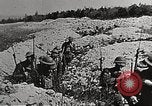
U.S. troops of the AEF engaged in trench warfare on the Western Front during World War I in France.
U.S. troops of the American Expeditionary Forces (AEF) wearing gas maskes as they occupy trenches on the Western Front, in France, during World War 1. One soldier using a large hand-held "Ayrton" fan to clear lingering gas from a trench. A shell bursting in air above a fort, as a French FT 17 tank moves across the area. American infantry in gas masks, firing rifles from a trench, as gas drifts over them. A camouflaged French rail gun firing from a railroad siding. Two other views of French rail guns firing. Smoke rising from a nearby shell burst. More views of AEF troops firing rifles from trenches during gas attack. Soldiers moving across no-man's land as shells burst. A mammoth explosion from a demolition charge or siege mortar shell. (World War I; World War 1; WWI; WW1)
German and Austro-Hungarian troops advancing in Belgium and France early in World War I
German invading forces during early engagements in France and Flanders during World War I. German troops advancing through a culvert under a bridge. German troops move to positions in front of a building. German soldiers scurry to safety as a nearby shed collapses from artillery strike. German soldiers walk across a battlefield as fires burn in distant background. Austrian or Austro-Hungarian troops struggle to move a heavy artillery piece. German troops set up a battery of field artillery. German soldiers near a Austro-Hungarian Škoda 30.5 cm Mörser M.11 seige howitzer, with one of its 305 mm shells on cart in foreground. German field artillery firing. German Marine Corps Flanders (Marinenkorps Flandern) in defensive position and several of them help a wounded comrade. Troops emerge from trench and advance, attacking across a battle field in World War 1.
Emergency Drill for American troops aboard the SS Leviathan transport ship en route to France in World War I
Bugler sounds alarm announcing start of emergency drill for crew and American troops (passengers) aboard the SS Leviathan on the way to France, during world War 1. Crew members begin lowering life boats from davits at side of the Leviathan. Soldiers and sailors in life vests are seen proceeding to assigned emergency stations on Deck C, under supervision of ship's officers and crew. They assemble beside life boats as crew members man them and lower them part way in the exercise.

Midshipmen stand in formation at a dock and embark on voyage to France from Annapolis, Maryland.
Midshipmen from United States Naval Academy at a dock in Annapolis, Maryland. A midshipman kisses a woman. Midshipmen stand in formation at a dock. Small tenders at the dock. The 1100 Navy midshipman board the boats. They are seated in the boats and wave as the boats set out approaching a nearby docked U.S. Navy battleship. U.S. flag in the foreground and cadets waving as they prepare to embark on a summer trip with Le Havre, France as their first stop.

Men massacred, lying on ground and wounded on litters during terrorist campaign for independence from France in Algeria.
Massacre in Algeria by Algerian Nationalists during Algerian War of Independence. Rugged terrain seen. Men move inside the building. Shoes and hammers scattered on ground. Natives seated on ground, cattle in the background. Men, inhabitants of small Muslim village, massacred lying on ground during terrorist campaign for independence from France. Several wounded men walk and several others lying on litters.
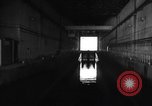
Post-World War II views of submarine pens in France. Views of New York City and harbor
Retrospective view inside a former German submarine pen in France, as narrator mentions its former use in World War 2. View from outside the structure. An American Airlines Douglas DC-4 passenger plane flying over Manhattan Island, New York City, with Empire State Building visible among other skyscrapers below. Aerial view of New York harbor, with ocean-going ships docked at terminals below. Traffic moving in the harbor, including barges, tugboats, and ships, displaying various national flags.
CRITICALPAST.COM: About Us | Contact Us | FAQs - How to Order | License Agreement | My Account | My Lightboxes | Shopping Cart | Advanced Search | Featured Collections | Website Terms & Conditions | Privacy Policy ©2026 CriticalPast LLC.
License Agreement |
Terms & Conditions |
Privacy Policy
©2026 CriticalPast LLC.