


 Francais
 Deutsch
 Italiano
Refine Your Search
Alencon France 1944 stock footage and images
- Showing 4435 to 4440 of 9932 results more
more Hide
Hide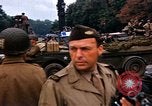
American troops and war correspondents in Paris during World War II.
American troops and war correspondents in Paris around time of liberation of Paris during World War 2. Correspondents take pictures and record the event. U.S. troops march to the front lines. Arc De Triomphe. Soldiers hold the U.S. flag as they march on the Champs Elysees Avenue. Civilians on the streets. Intact bridges, Opera House, Eiffel Tower, and other monuments. A war correspondent and A Frenchman on the Eiffel Tower. View of Paris including River Seine and bridges. People cross banners that read 'France Libre' and 'Monde Libre.' Crowd in a park. Brussels, Belgium: Spectators gathered at a Race Track. Jockeys race their horses. French women in elaborate hats watch the race.
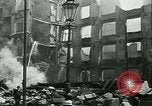
British response to Nazi air raids in Battle of Britain, and use of American radar in the European Theater during World War II.
The role and contribution of the U.S. Army Signal Corps in combat and war. Opening scenes show bomb damage due to German Luftwaffe blitzkrieg air raids (The Blitz) in Southern Counties of London earlier during Battle of Britain in World War 2. Firemen and rescue workers try to extinguish the fires with water hoses. The rescue workers conduct operations amidst bomb damaged buildings and rubble. Severely damaged buildings. Rubble strewn all over the streets in England. A Food Flying Squad van makes its way on the streets. Food distributed from the van. A British man walks amidst the rubble. Relief work in progress. Buckets of food and water lying at camps. Displaced civilian people eat and drink. London civilian residents evacuate numerous areas. Evacuees walk across a bridge. Big Ben seen in the background. Allied bombers in flight. Royal Air Force de Havilland Mosquito aircraft track and shoot down enemy aircraft. The dogfights result in mid air explosions. Two soldiers operate a U.S. radar designed to direct antiaircraft fire in combat area. The radar tracks a target moving up to 600 miles an hour. The soldiers track down aerial targets, the gun directors make adjustments and the antiaircraft guns are fired at buzz bombs. Enemy V-1 Flying bombs are hit and downed before they can reach the coastline. German V-1 rockets are tracked over England by radar and shot down. An V-1 is hit. It descends to the ground and explodes. France: A downed V-1 flying bomb is examined. The wreckage of a V-1 in a field. Soldiers and civilians near the wrecked V-1 Flying Bomb
Signal Corps weekly film reports sent to Photographic Center and used in training films for U.S. troops during World War II.
The role and contribution of the U.S. Army Signal Corps in combat and war. Amphibious landings of the first wave of Allied troops including Signal Corps Units in Normandy, France on D Day during World War 2. The Joint Assault Signal Companies (a Signal Corps Unit that accompanies the soldiers on every beach landing) go ashore in Normandy. Soldiers in landing crafts approach the beach. Landing crafts anchored along the shore line. A U.S. flag on the beach. Crafts approach the beach. U.S. Army Signal Corps combat photographers using motion picture cameras to film the battle that ensues on the beach and in the fields. Gun fire and explosions in the battlefield, filmed by combat cameraman. Allied aircraft in flight. Airmen load weekly film reports of the war in all Theaters made by Signal Corps officers from a van into an aircraft. The films are sent to the Photographic Center in New York. A soldier assembles the films. Technicians organize and arrange the films. They place the film reels onto racks. The film content is used to make training and orientation films for the U.S. troops. Troops watch the films in order to cut down the training period, and stay informed about the order of event in other Theaters of Operation. The films include 'Why We Fight' and 'The Fighting Men' series. Clips and recordings from these films.
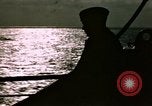
Allied sailors aboard a ship underway in the Atlantic Ocean as they look seaward during World War II.
Allied forces underway in the Atlantic Ocean prior to the Allied invasion of France during World War II. Silhouetted Allied sailor aboard a ship underway in the Atlantic Ocean. Sailors on the deck. One of them looks through binoculars. Sailors on the deck of a ship. A British officer on the bridge of a ship. An officer speaks on a loudspeaker. Water gushes as ship sails through the sea. An officer points towards the sea as he talks to other two officers.
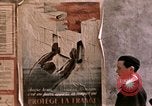
Allied airmen in the European Theater toward end of World War II.
Allied airmen and U.S. war correspondents in the European Theater near end of World War II. A poster in French shows a man erecting a wall and the slogan "Protege La France." A French boy wearing a beret stands beside it. Another poster reads 'Its a long way to Rome' and shows British and American flags superimposed over the city of Rome on a map of Italy. A U.S. Army Air Force airman poses near a small Army Air Force aircraft. A photographer and press correspondent talk to the airman. Another Allied airman wearing sun glasses. He removes his glasses and smiles.
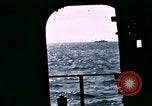
British officers confer aboard a ship underway in the Atlantic Ocean during World War II.
Allied troops aboard a ship underway in the Atlantic Ocean prior to the Allied invasion of France during World War II. Allied ships underway at sea. A landing craft at sea. Allied officers aboard a ship. One of them smokes a cigar. A Landing Ship Tank underway at sea. A number of ships underway. A signalman looks through binoculars. Silhouetted face of a man aboard a ship. The open sea. British officers confer on the bridge of a ship. A man in an overcoat aboard a ship.
CRITICALPAST.COM: About Us | Contact Us | FAQs - How to Order | License Agreement | My Account | My Lightboxes | Shopping Cart | Advanced Search | Featured Collections | Website Terms & Conditions | Privacy Policy ©2026 CriticalPast LLC.
License Agreement |
Terms & Conditions |
Privacy Policy
©2026 CriticalPast LLC.